


BEKE: Real reversal or another dead-cat bounce?
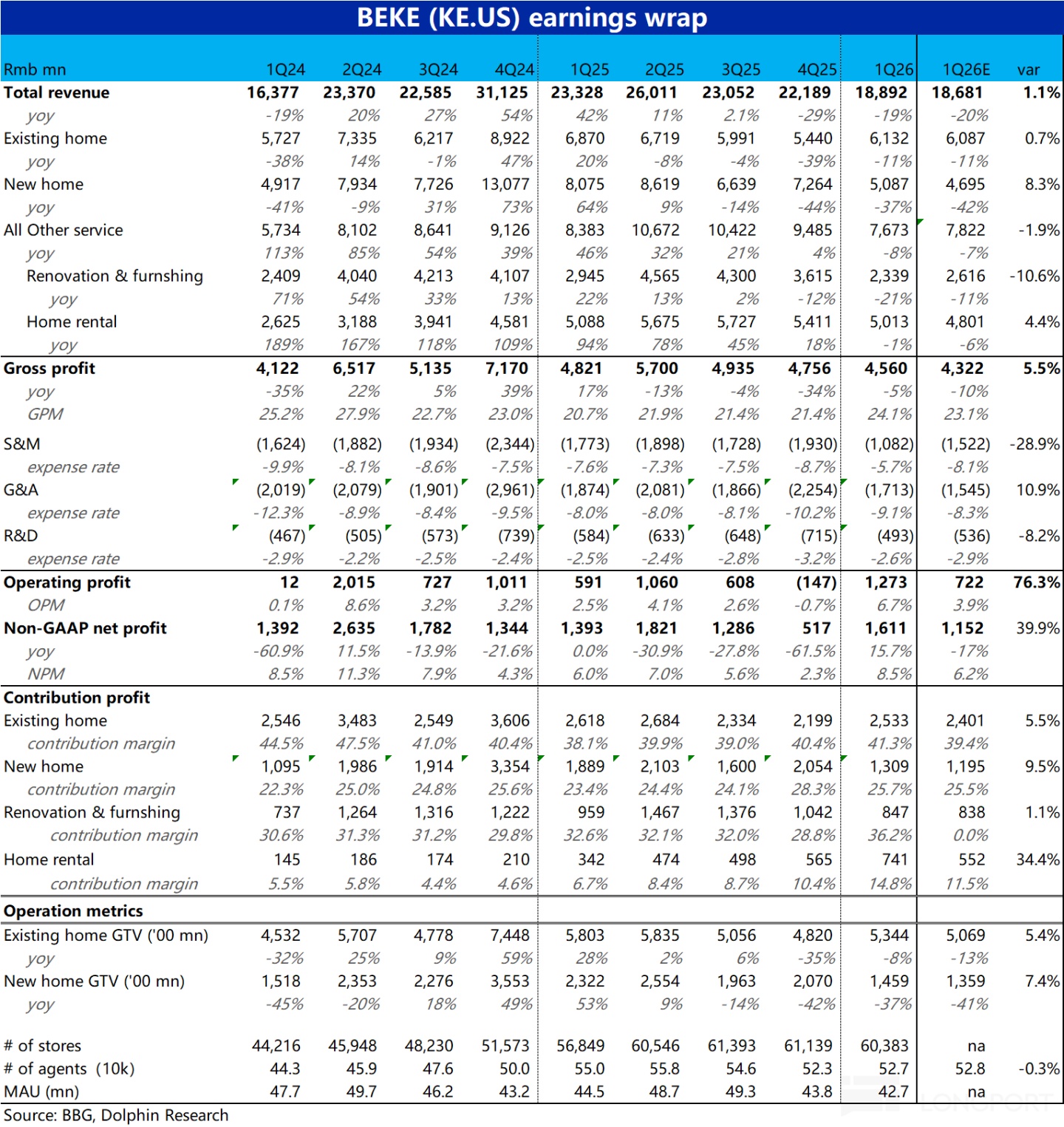
China's leading prop. services platform — $KE(BEKE.US) — posted Q1 FY26 before the U.S. open on May 19. Overall, the housing market is tentatively bottoming but still faces headwinds, and home improvement and rental saw adjustments, so revenue remained deeply negative YoY. That said, headcount rationalization, higher GPM, and tight opex control drove a major beat on profitability. Details below:
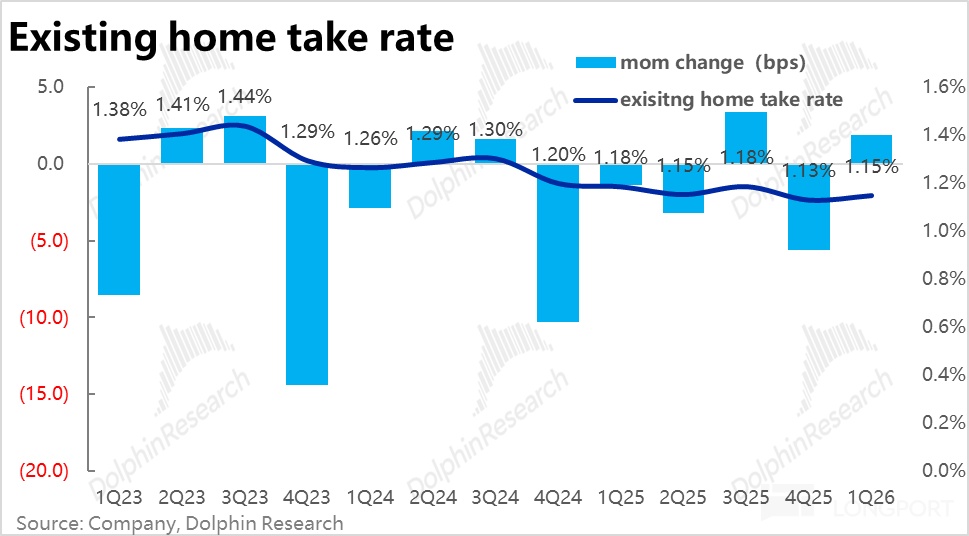
1) Existing-home brokerage is basing: aided by top-tier cities loosening purchase caps and lifting housing fund loan limits in Feb–Mar, the core existing-home business showed signs of bottoming and stabilizing this quarter. GTV was still down about 8% YoY, but rose roughly 11% QoQ. Within that, franchise channels outgrew the Lianjia self-operated channel. As the company improved platform monetization and a resale recovery reduced the need for commission discounts to spur deals, the overall take rate for existing homes rose by 1.9bps QoQ, pointing to improving margins.
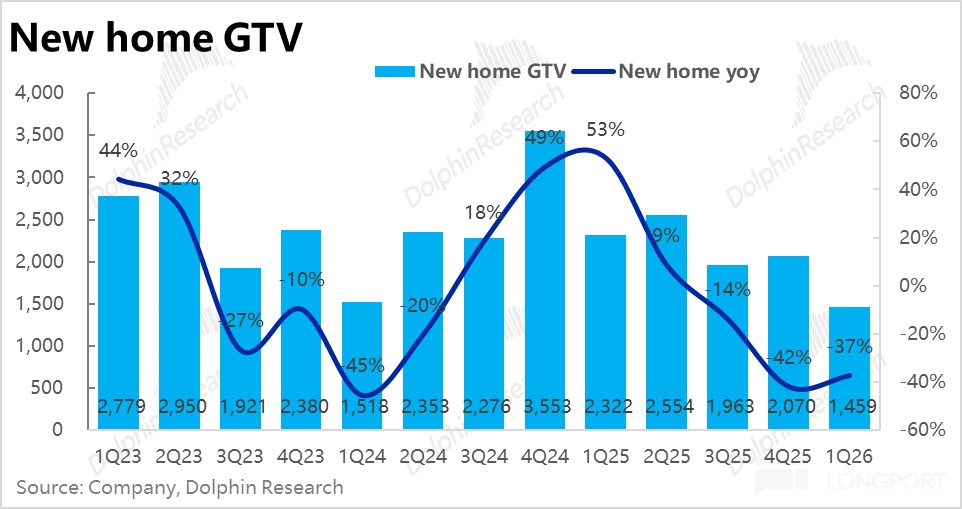
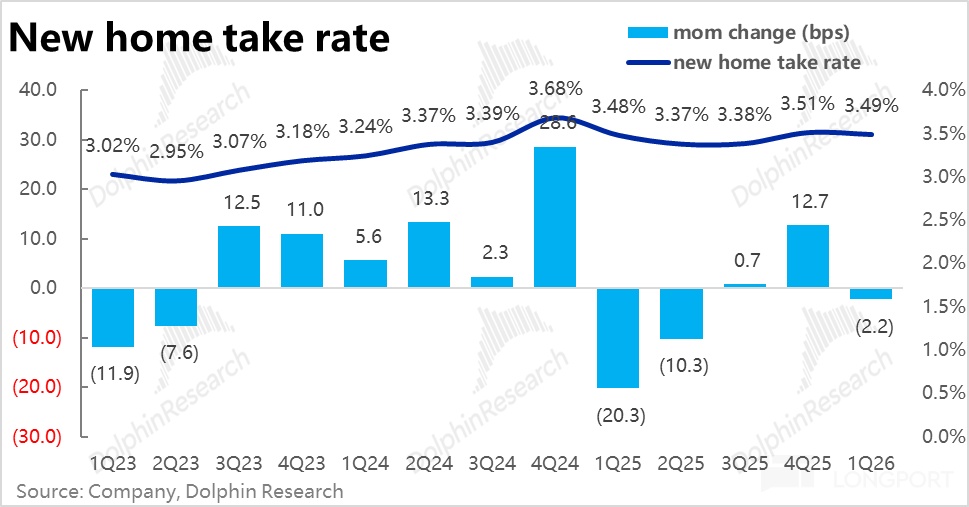
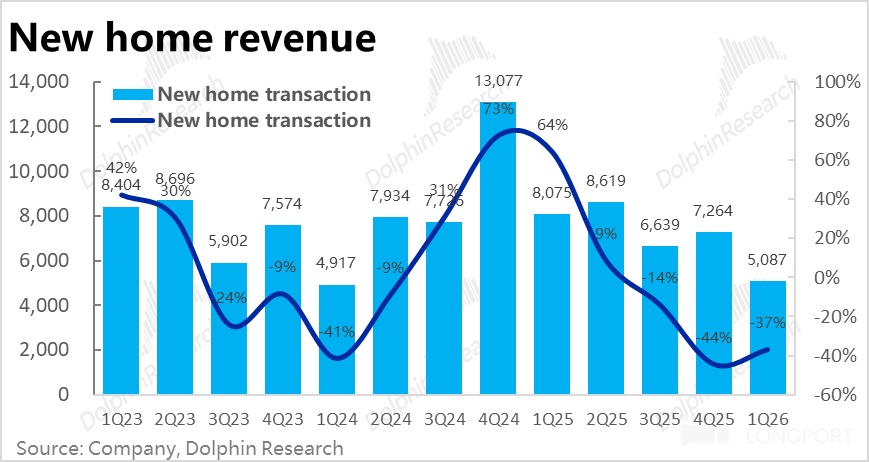
2) New-home pressure remains heavy: the new-home GTV decline improved slightly vs. last quarter but was still about -37% YoY, broadly in line with weak sales of higher-ticket new builds even after city-level easing. The new-home blended take rate dipped by ~2bps QoQ from last quarter’s high, a small fluctuation rather than a trend, but revenue still fell about 37% YoY. Bloomberg consensus was looking for a 42% revenue decline, so new homes beat on expectations.
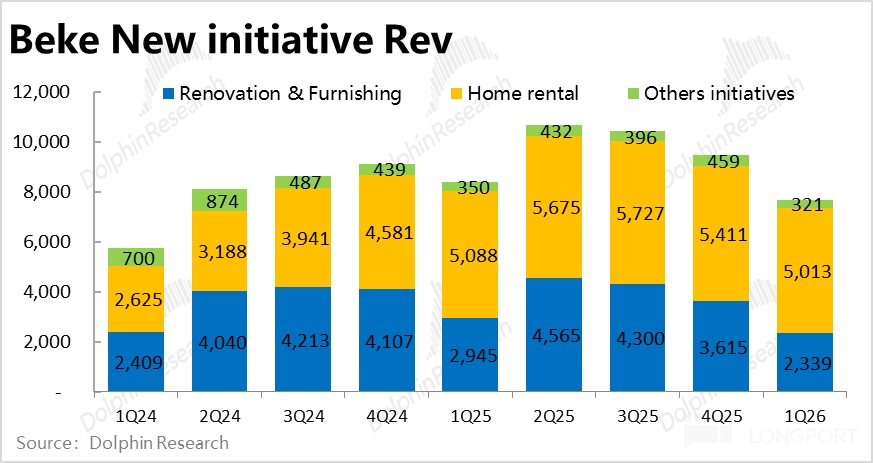
3) Track 2 is also in adjustment: growth looked soft across Track 2, with combined revenue down 8% YoY. The key drag was home improvement, where revenue fell 21% YoY, missing expectations, as weak new-home sales damped demand and the company proactively shut lower-quality businesses and pulled back in some cities. This effectively marks a temporary setback for the ambition to rebuild BEKE via home improvement. Rental revenue dipped 1% YoY due to shifting 'Hassle-free Rent' to a net revenue basis. With units under management up ~47% YoY, underlying growth remained strong after adjusting for the accounting change.
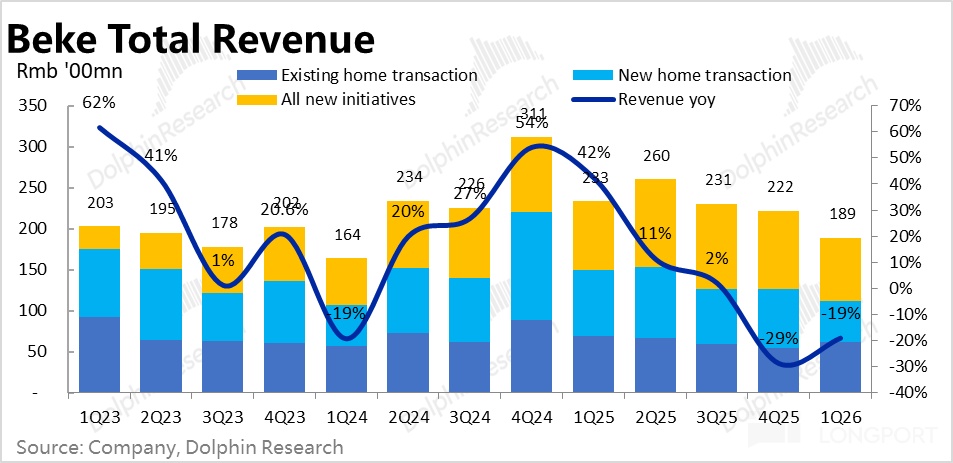
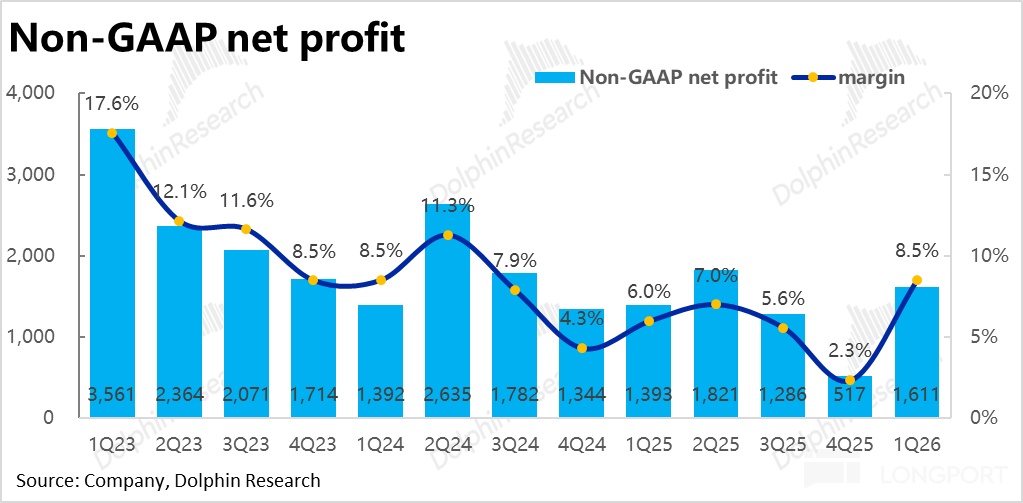
4) The bright spot is profit: total revenue still fell about 19% YoY, roughly in line with expectations. But the story this quarter was not growth, it was solid profit delivery. Adj. net profit was about RMB 1.6bn (+~16% YoY), beating the market’s ~RMB 1.15bn view. Once again, the company demonstrated an ability to release earnings in a downturn.
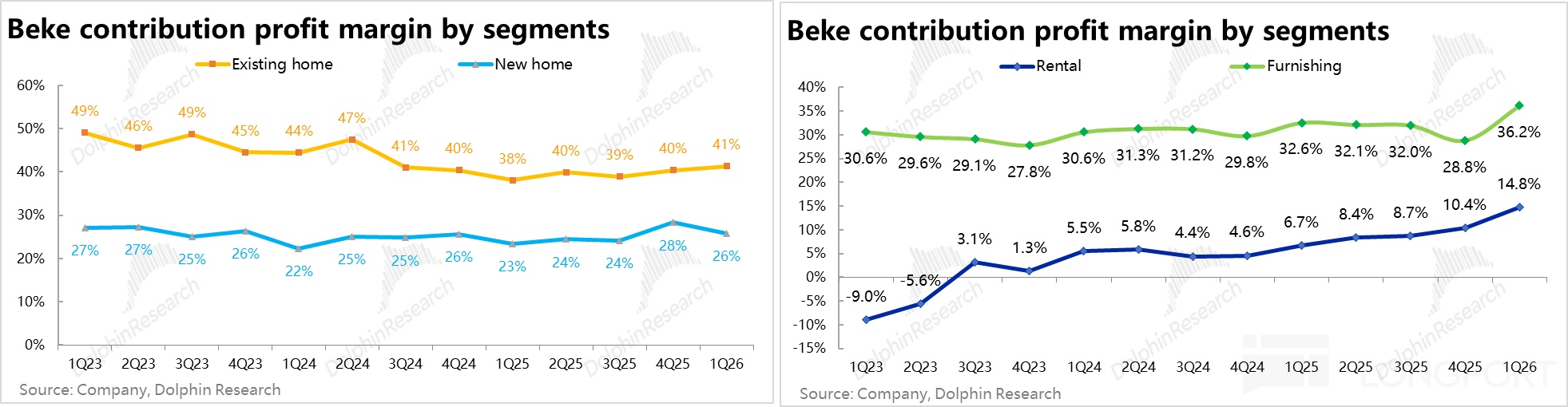
5) Margins improved across segments: despite contracting scale and weaker operating leverage, streamlining stores and headcount lifted productivity, and tight opex control supported margin gains across the board. In Track 1, existing homes’ contribution margin rose 0.9ppt QoQ and 3ppt+ YoY, while new homes still saw a ~2.3ppt YoY margin uplift despite steep GTV declines. In Track 2, home improvement’s contribution margin jumped ~5.6ppt YoY on shedding low-quality business and optimizing the upstream supply chain. Rental’s contribution margin rose ~4.4ppt QoQ to 14.8% as net-revenue 'Hassle-free Rent' grew rapidly, making it the biggest upside surprise.
6) GPM expansion and opex discipline drove profits: total GPM reached 24%, up from 21.4% in Q4, limiting GP decline to ~5% YoY. Beyond the higher GPM in home improvement and rental, Track 1 commission sharing fell 29% YoY, outpacing revenue declines. Strict opex control also helped, with total operating expenses down ~22% YoY vs. revenue down 19%. Marketing fell ~39% YoY as home improvement was intentionally scaled back, reducing promotions and customer acquisition. G&A and R&D dropped ~9% and ~16% YoY, respectively, with G&A benefiting from lower SBC. The improved biz mix plus tight opex delivered the earnings beat.
Dolphin Research view:
In absolute terms, BEKE’s quarter was not strong — even with policy support, existing-home transactions in top-tier cities only showed initial repair. New-home sales stayed soft, and the once high-hope home improvement business effectively entered a phase of retrenchment. A high base from last year also pressured growth, keeping revenue deeply underwater YoY.
From an expectations and marginal-changes perspective, Track 1 brokerage declines narrowed and came in a touch better than bearish views. Track 2 revenue, especially home improvement, missed more than expected, but the proactive pullback delivered far better-than-expected margin gains, largely offsetting the shortfall. Rental continued to perform well with counter-cyclical growth.
More importantly, the company has historically expanded profits in downcycles through strict cost control and efficiency, while in macro upcycles incremental investments dilute operating leverage. Today’s cost/efficiency drive coincides with policy tailwinds, raising the chance of a period of dual recovery in revenue and profit if the company avoids unnecessary expansion. Since late Feb, supportive measures across top-tier cities like Shanghai and Shenzhen have been decisive in helping the sector and BEKE bottom and warm up. The stock has rallied ~30% from early Apr lows, pricing in much of this reversal.
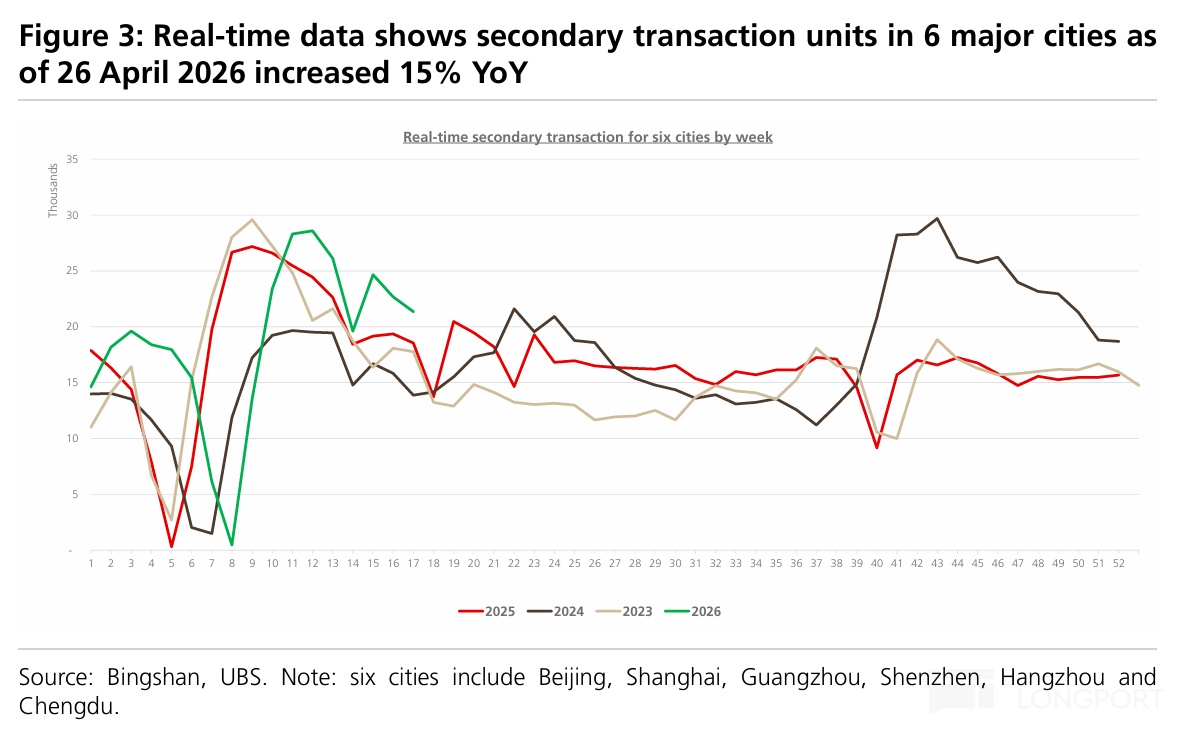
Whether there is still upside now depends on whether the recent rebound is a true bottom and trend reversal or just another policy-driven bounce. Recent channel checks and company disclosures suggest April existing-home transactions in major cities pulled back from Mar but remained elevated, with volumes still up YoY. That implies manageable pressure for Q2.
The real question is H2: the base eases, but can the market stay in positive growth? Management argues this is a trend reversal rather than a short-lived rebound and sees demand spreading from low-price rigid demand to higher-ticket upgrade demand in existing homes. Based on current information, we are not yet convinced the sector has definitively bottomed for a sustained recovery.
We therefore still view BEKE as a trading-range opportunity — buy when policy, sentiment, and the share price are at lows, and take profit when policy, sentiment, and results are relatively elevated.
On valuation, current policies should support at least H1. The company expects next-quarter existing-home GTV to turn to low single-digit growth, with new-home GTV roughly flat. H2 is harder to call, but with an easier base, we now look for FY26 revenue to fall ~5% YoY vs. nearly -10% previously. For the year’s adj. net margin, guidance is 8% (vs. ~5% in FY25) and could end up higher.
At 8.5%, FY26 adj. net profit would be around RMB 7.5bn, implying roughly 19–20x PE at the current mkt cap. After the recent rally, valuation again reflects BEKE’s market position with some faith and premium. Further multiple expansion likely requires clear evidence of a trend inflection in housing and earnings rather than a transient rebound.
Detailed takeaways from this quarter:
I. Existing homes: GTV growth and take rate are bottoming
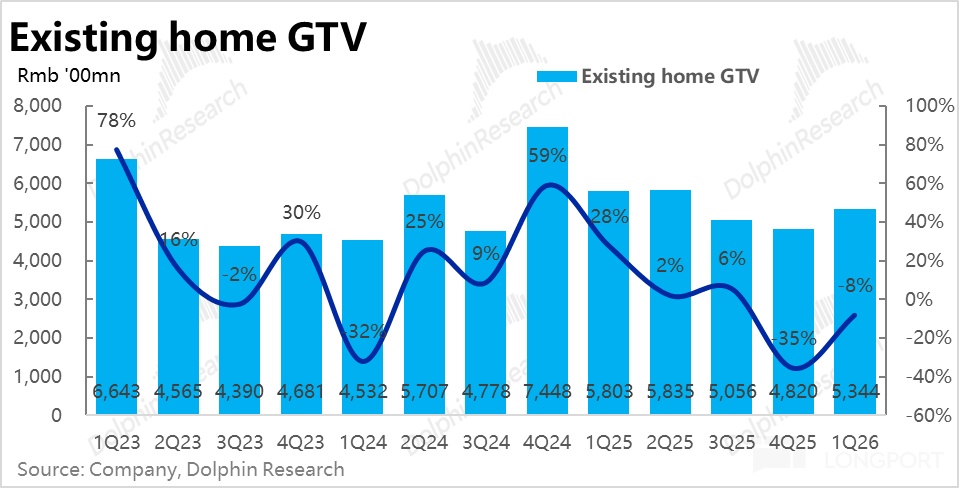
With a series of policy backstops in Feb–Mar, the core existing-home business showed signs of bottoming and stabilization. Due to a high base, GTV fell about 8% YoY but rose ~11% QoQ. Franchises again outperformed Lianjia self-operated stores. Lianjia-led GTV fell nearly 15% YoY, while franchise-led GTV declined less than 4%, likely reflecting store and headcount rationalization and a tilt toward a more resilient platform model.
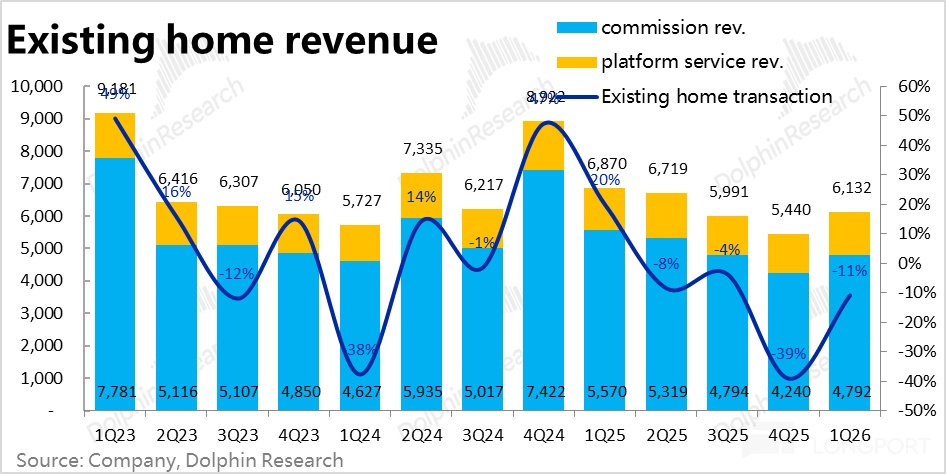
Aligned with GTV trends, self-operated commission revenue was ~RMB 4.8bn, down ~14% YoY. Platform service revenue rose ~3% YoY vs. franchise GTV down ~4%, indicating a higher platform take rate. We estimate the blended take rate across self-operated and platform at ~1.15% this quarter, up 1.9bps QoQ. As resale activity firms up, BEKE likely offered fewer commission discounts to drive transactions.
II. New homes: weaker in absolute terms, better vs. expectations
Unlike existing homes, new-home sales remain under pressure, consistent with resilience in lower-ticket existing homes post-easing while higher-ticket new builds lag. New-home GTV fell 37% YoY, a slight improvement vs. last quarter and vs. expectations but not by much. Third-party data show top-100 developers’ sales down ~25% YoY in Q1, reflecting both sector headwinds and BEKE’s deliberate pullback in new homes.
The new-home blended take rate fell ~2bps QoQ from a recent high but stayed above last year, so revenue also fell ~37% YoY, broadly in line with GTV. Still, versus a -42% revenue decline in Bloomberg consensus, new homes delivered an expectations beat.
III. Track 2 also posted negative revenue growth
Track 2 revenue was ~RMB 7.67bn, down ~8% YoY. Home improvement revenue fell 21% YoY vs. market expectations of -11%, as weak new-home sales curbed demand and management closed low-quality businesses and retrenched in select cities. This was partially by design but signals a temporary failure to scale BEKE via home improvement.
Rental revenue slipped 1% YoY mainly because 'Hassle-free Rent' shifted to net revenue recognition. With managed units up ~47% YoY, underlying growth remained strong. Net-net, Track 1 shows a QoQ bounce but is still down YoY, and Track 2 is also negative for varying reasons, leaving total revenue down about 19% YoY, in line with expectations.
IV. Breaking diseconomies of scale, margins rose against the tide
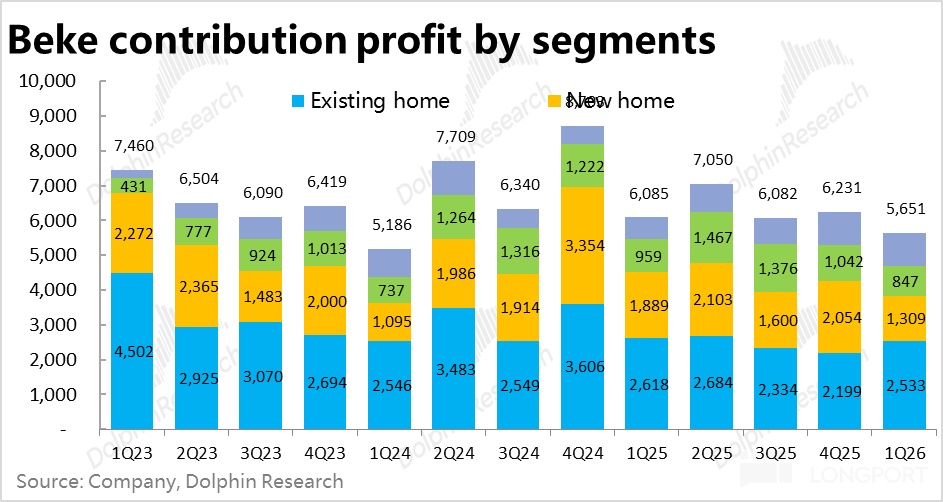
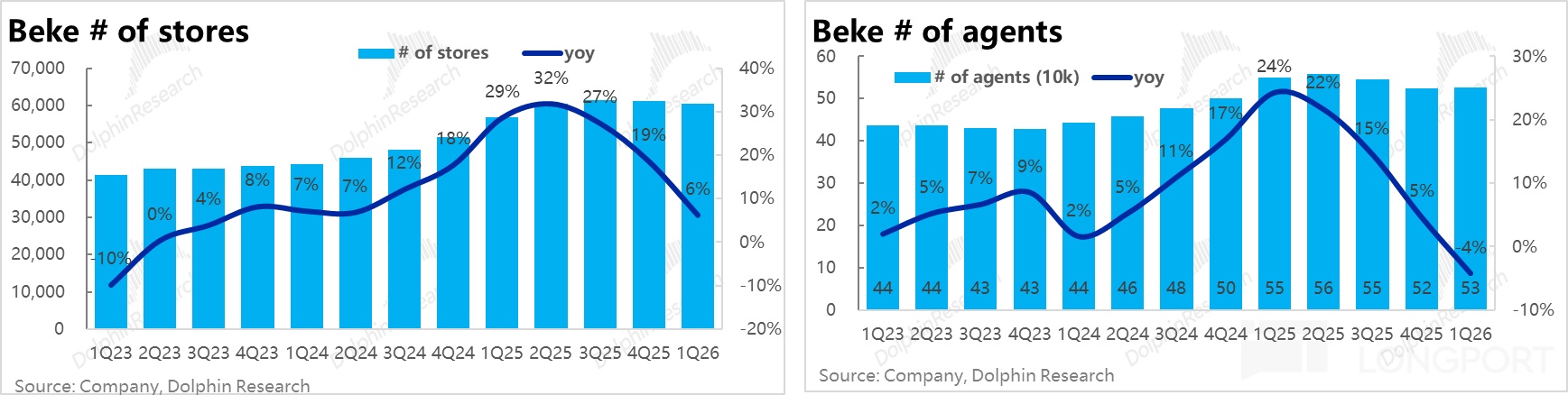
While revenue was soft across businesses, profit delivery was the highlight. Despite weaker scale, store and headcount optimization (total stores in the BEKE ecosystem fell by ~760 QoQ) lifted efficiency (Lianjia deals per capita +26% YoY; commission per capita +20%), and tight opex control drove broad-based margin gains. Specifically: 1) In Track 1, existing-home margin improvement outpaced new homes on a higher platform mix and better productivity. Contribution margin reached 41.3%, up ~0.9ppt QoQ and 3ppt+ YoY. New homes still improved ~2.3ppt YoY on contribution margin despite falling QoQ.
2) In Track 2, home improvement saw a ~5.6ppt YoY jump in contribution margin after shedding low-quality business and optimizing procurement. Thus, despite revenue missing, contribution profit slightly beat. Rental benefited from a higher mix of net-revenue 'Hassle-free Rent', lifting contribution margin by ~4.4ppt QoQ to 14.8%, a new high, with profit ~34% above expectations.
With margin gains across segments, overall contribution profit fell only ~7% YoY (down ~RMB 430mn) despite revenue down ~19%.
V. Efficiency gains and tight opex unlocked profits
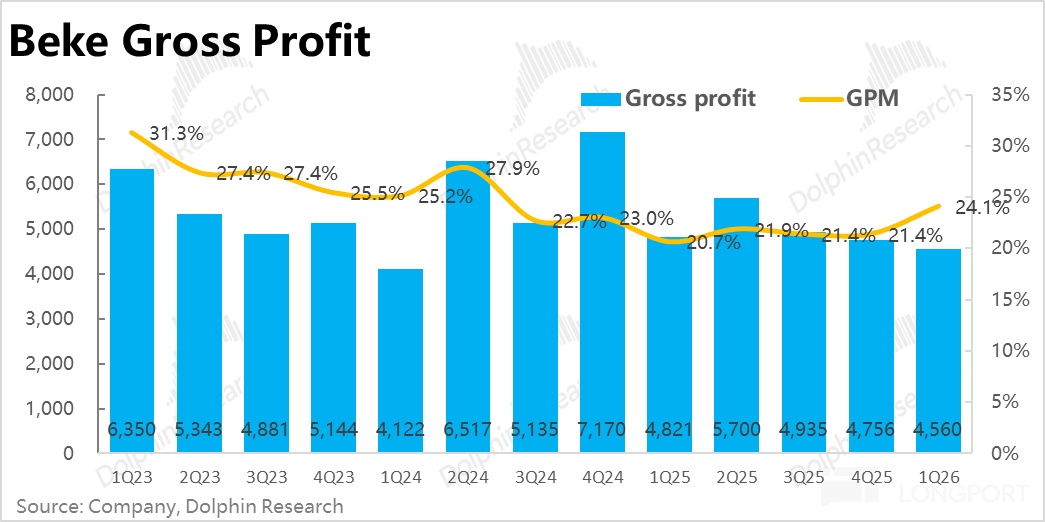
Total GPM reached 24% vs. 21.4% in Q4, limiting GP decline to ~5% YoY. Besides stronger GPM in home improvement and rental, Track 1 commission sharing fell 29% YoY, outpacing revenue declines.
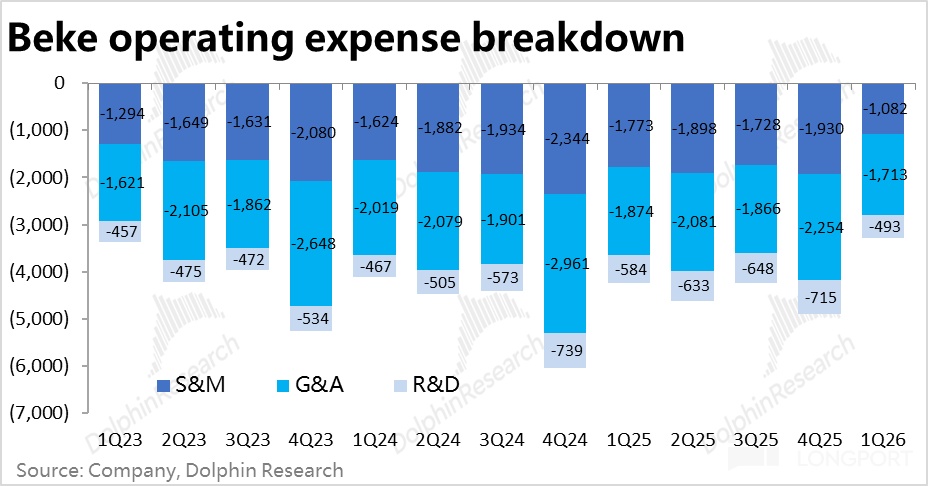
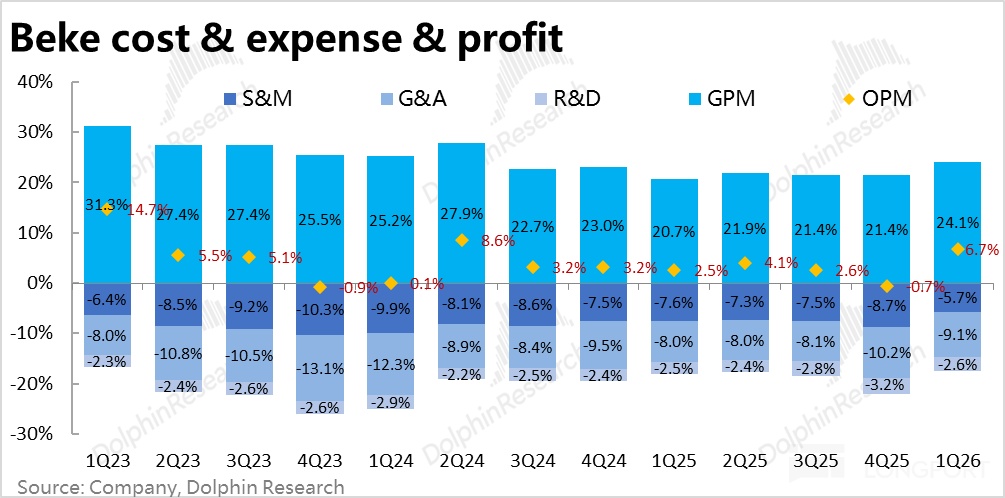
Opex discipline also played a major role: total opex fell ~22% YoY vs. revenue -19%. Marketing dropped ~39% YoY as home improvement scaled back and reduced CAC. G&A and R&D fell ~9% and ~16% YoY, respectively, with lower SBC reducing G&A. As a result, adj. net profit was about RMB 1.6bn (+~16% YoY), vs. ~RMB 1.15bn expected, with GPM beating by ~RMB 240mn and opex ~RMB 160mn lower than expected.
<End of text>
Dolphin Research on BEKE:
Earnings reviews
Nov 10, 2025 Trans: BEKE (Trans): Cost cuts and efficiency are the absolute priority
Nov 10, 2025 Review: BEKE: Is there still hope?
Aug 26, 2025 Trans: BEKE (Trans): Pruning low-efficiency stores and agents in Beijing/Shanghai
Aug 26, 2025 Review: BEKE: With the market cooling again, can looser purchase caps in BJ/SH turn the tide?
May 16, 2025 Trans: BEKE (Trans): If housing worsens in Q3, more support may come
May 16, 2025 Review: Survive the housing roller coaster, and BEKE will be fine
Mar 19, 2025 Review: Market looks hot, but BEKE just 'shouts' without making money?
Mar 19, 2025 Trans: BEKE (Trans): Existing homes keep repairing in 2025, new homes may keep adjusting
Risk disclosure and disclaimer: Dolphin Research disclaimer and general disclosures
The copyright of this article belongs to the original author/organization.
The views expressed herein are solely those of the author and do not reflect the stance of the platform. The content is intended for investment reference purposes only and shall not be considered as investment advice. Please contact us if you have any questions or suggestions regarding the content services provided by the platform.
