


MNSO: AI Spend Turbocharged, But Still Buying Growth
On the afternoon of May 26 Beijing time, MINISO reported 1Q26 results. Stripping out the headline boost from AI investment gains, the core issue remains: revenue is running ahead of profit growth. $Miniso(MNSO.US) $MNSO(09896.HK)
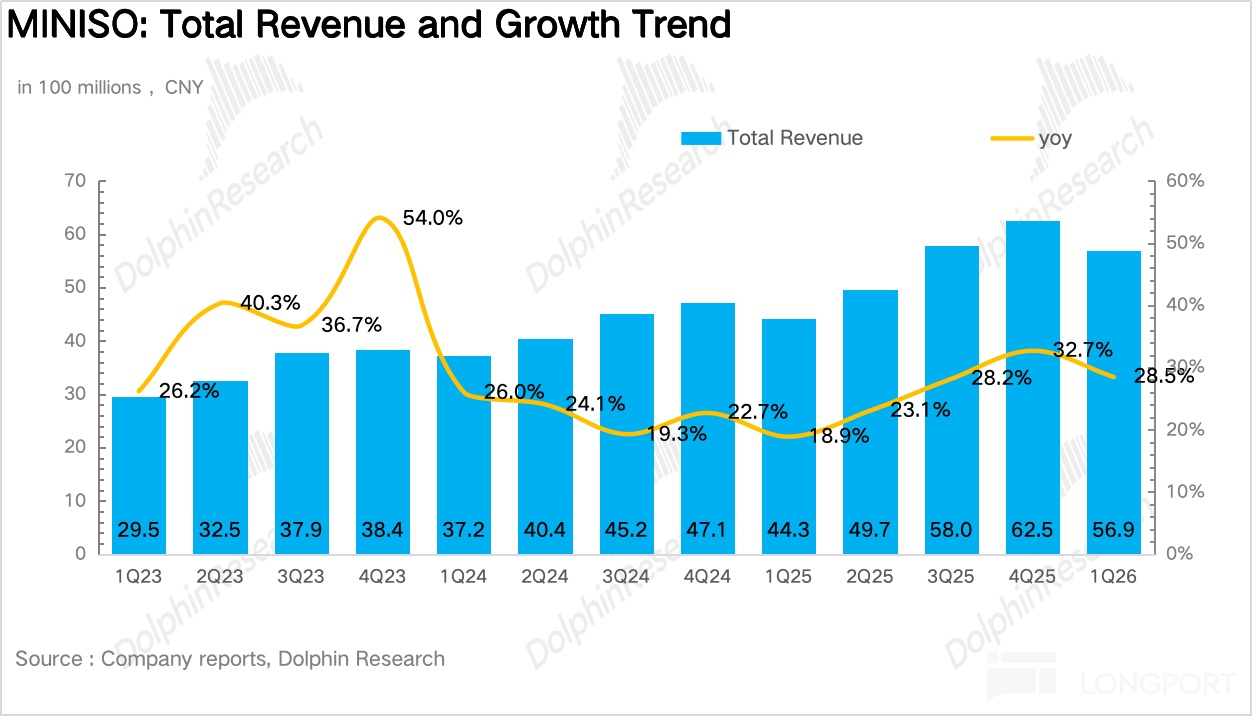
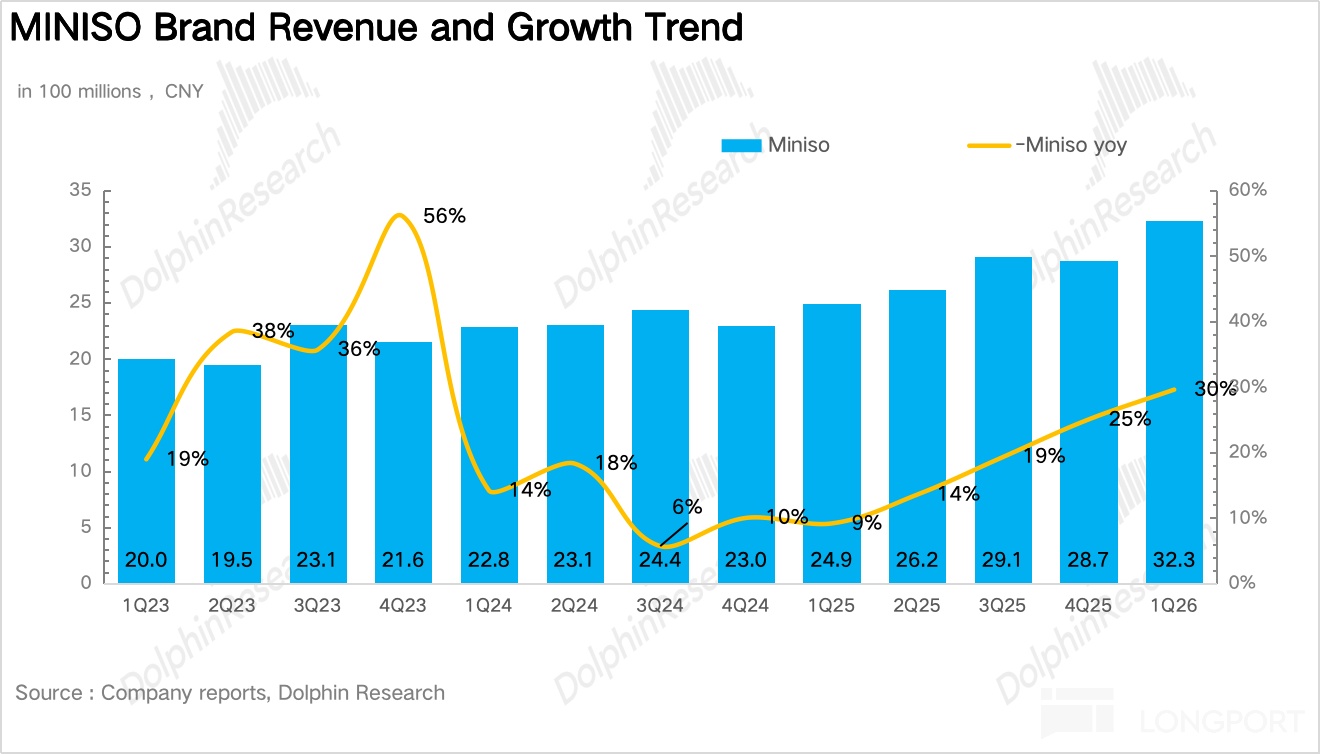
1) Revenue still strong, China beat. MINISO delivered revenue of RMB 5.69bn in 1Q26, up 28.5% YoY, topping the upper end of its prior 'no less than 25%' growth guide. By brand, the core MINISO label rose 30% YoY to RMB 3.22bn, with sequential acceleration. Driven by larger-format and themed stores, IP-led products, and same-store recovery, domestic retail outperformed prior market expectations.
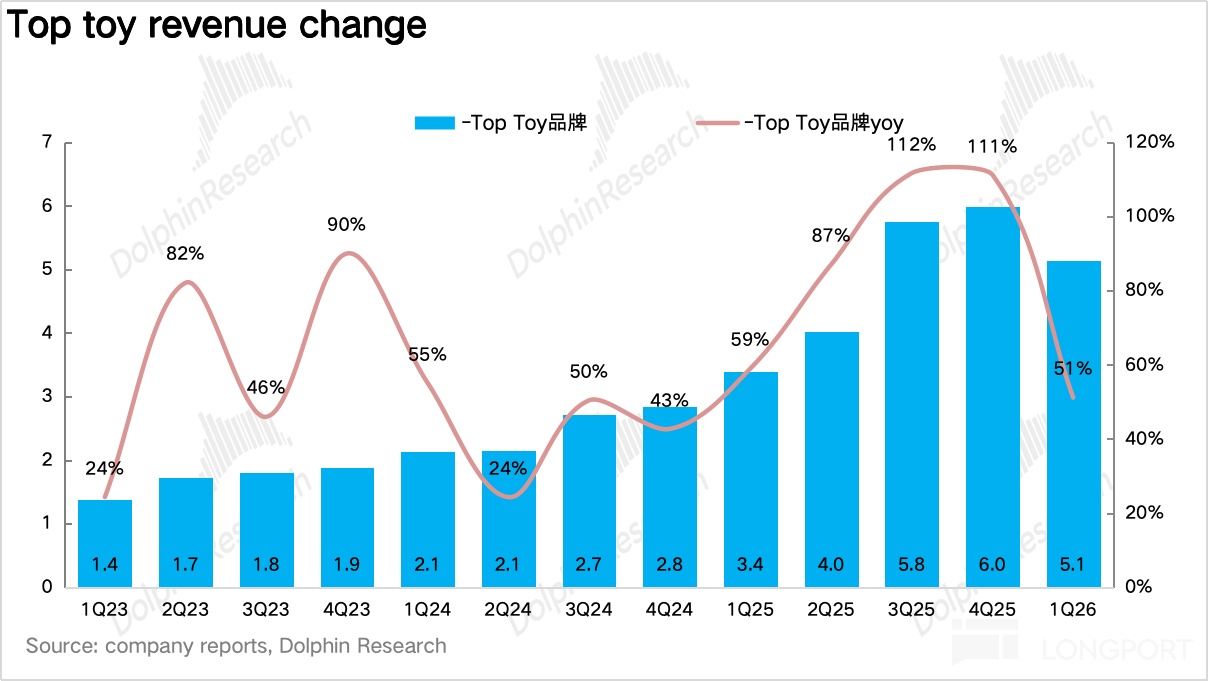
TOP TOY grew 51% YoY. The pace moderated from the 80%+ rates of prior quarters, but remains robust, likely reflecting a high base effect kicking in.
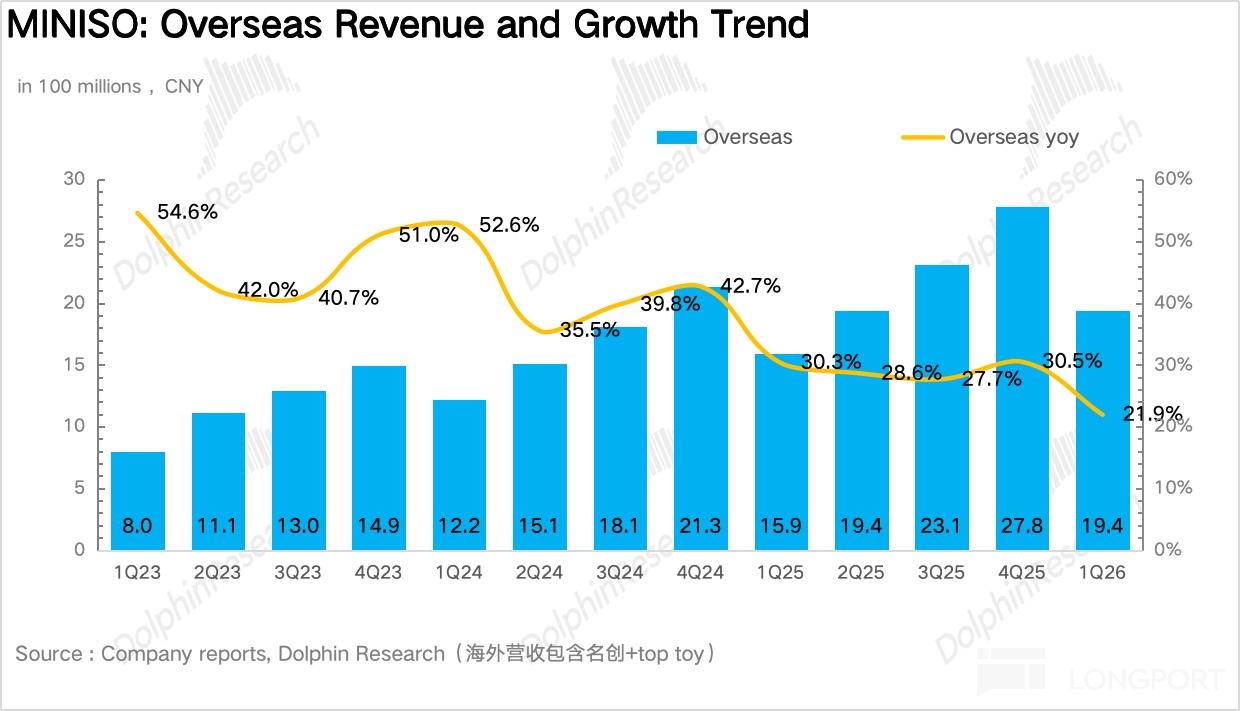
Overseas revenue rose 22% YoY to RMB 1.94bn, a clear deceleration. Southeast Asia is in a channel and merchandise reset with softer comps, and based on channel checks, North America saw only low single-digit same-store growth in the quarter, a weak print.
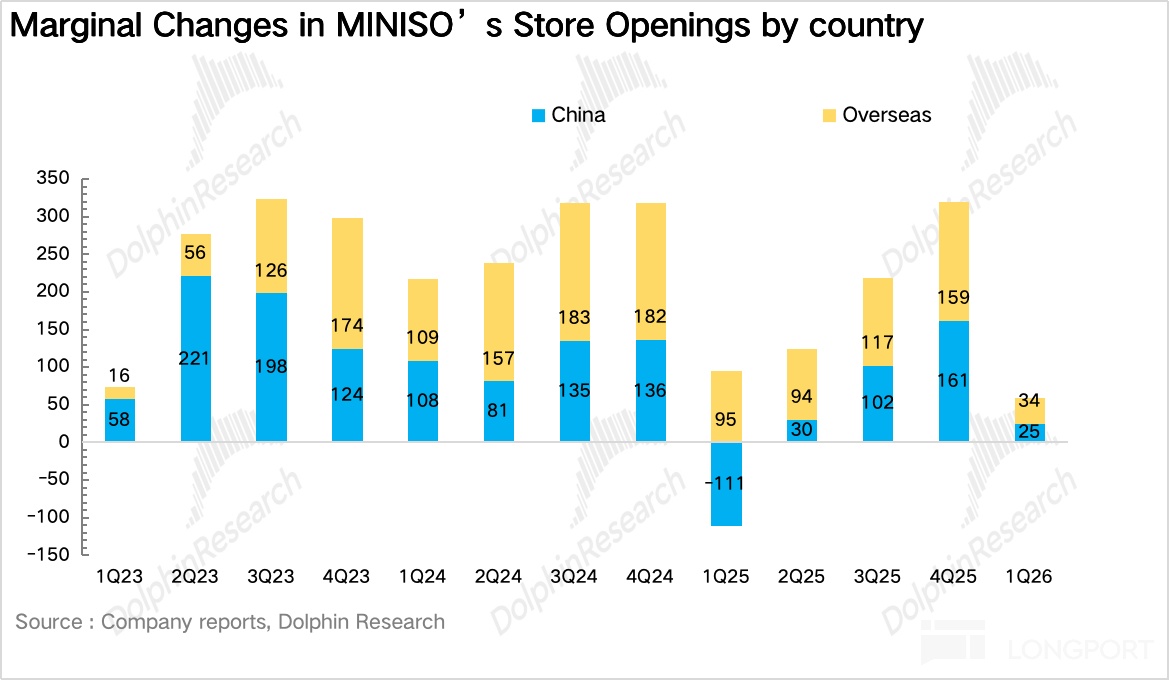
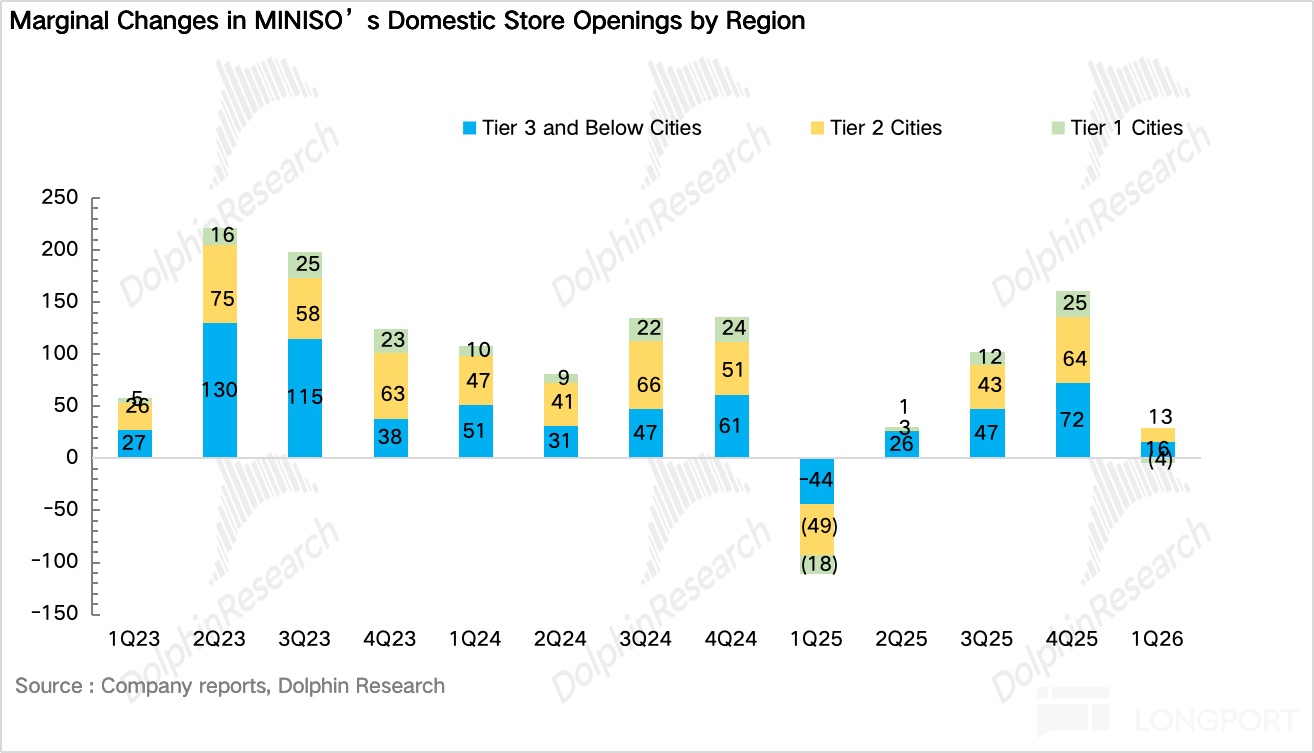
2) Store openings slower, mix improving. The company added a net 80 stores QoQ to 8,565 globally, only ~15% of the full-year target (510–550), implying a slower start and likely acceleration over the next three quarters. Overseas directly operated stores increased by 45 to 745, taking the direct-op mix up to 20.6%. In China, the MINISO brand added a net 25 stores, still skewed to large and 'amusement park' formats, while TOP TOY added 21, including 9 overseas, signaling faster international rollout.
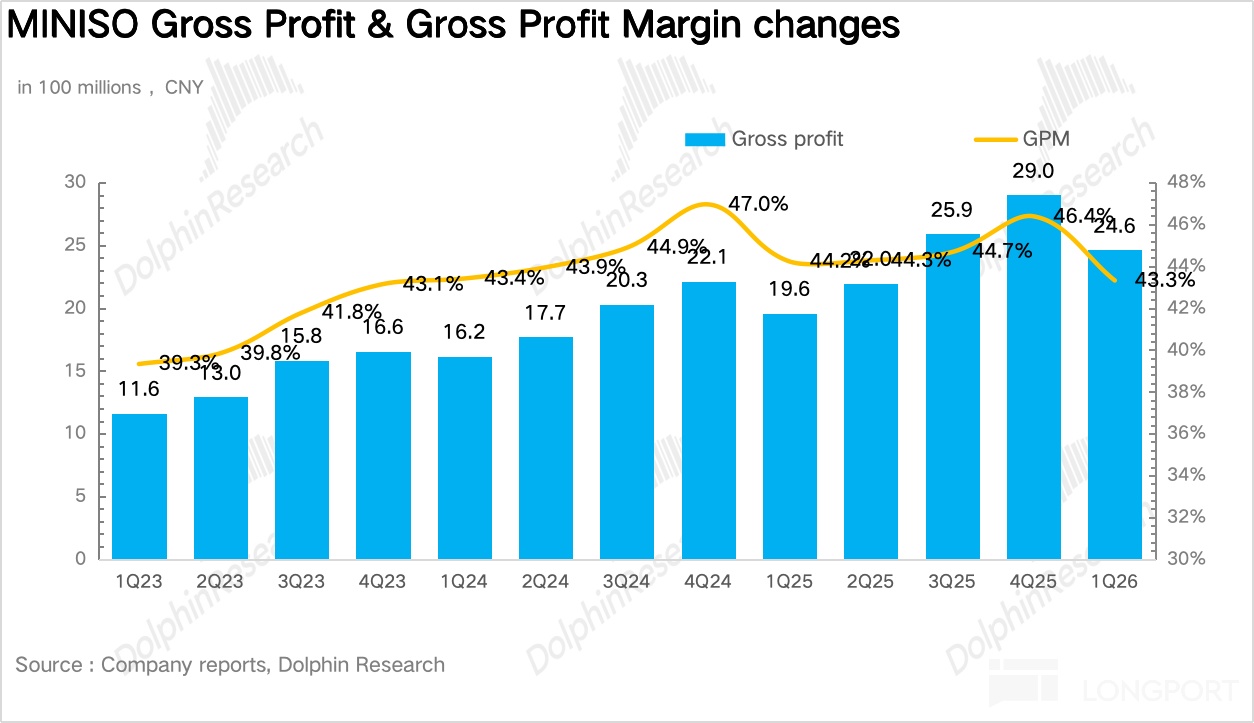
3) GPM edged down. To support rapid expansion in markets such as the U.S., the company increased local direct sourcing and emergency replenishment, lifting unit procurement costs. In addition, a lower contribution from high-margin overseas regions weighed on mix. As a result, GPM fell 90bps YoY to 43.3%.
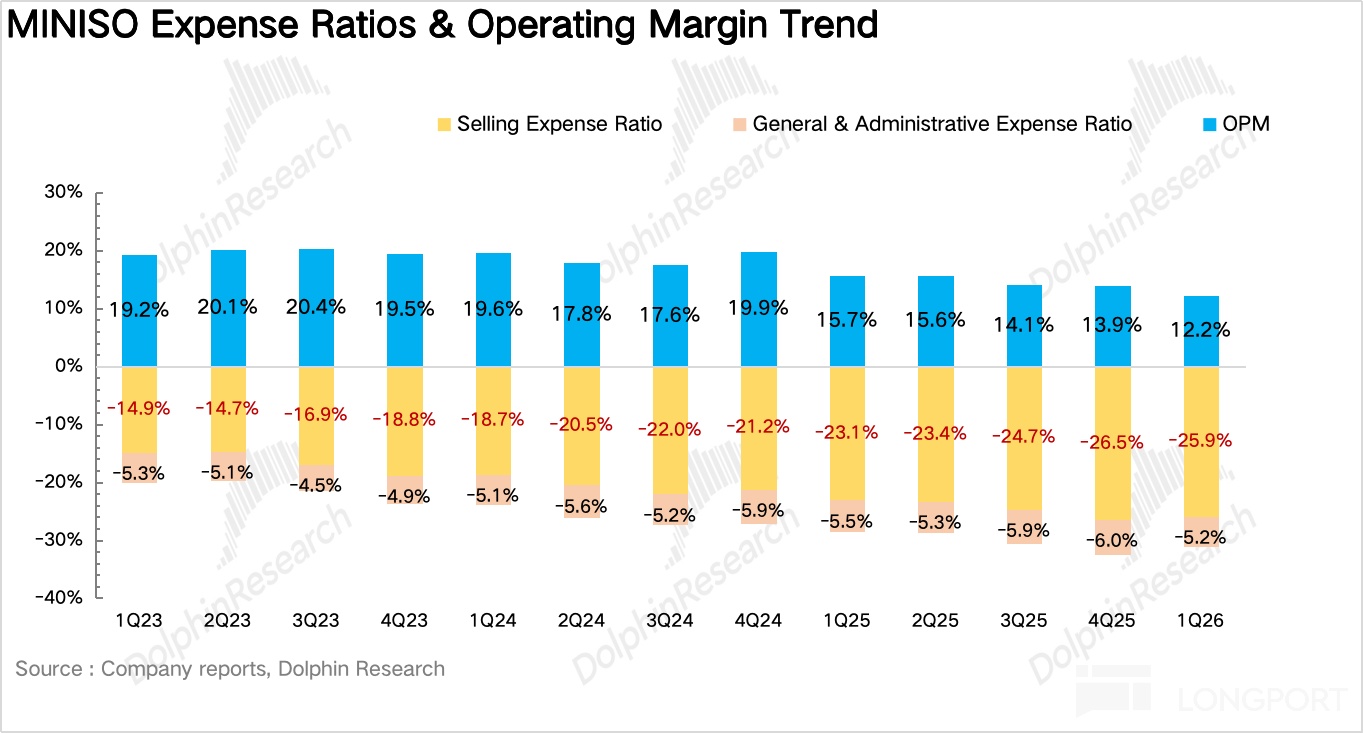
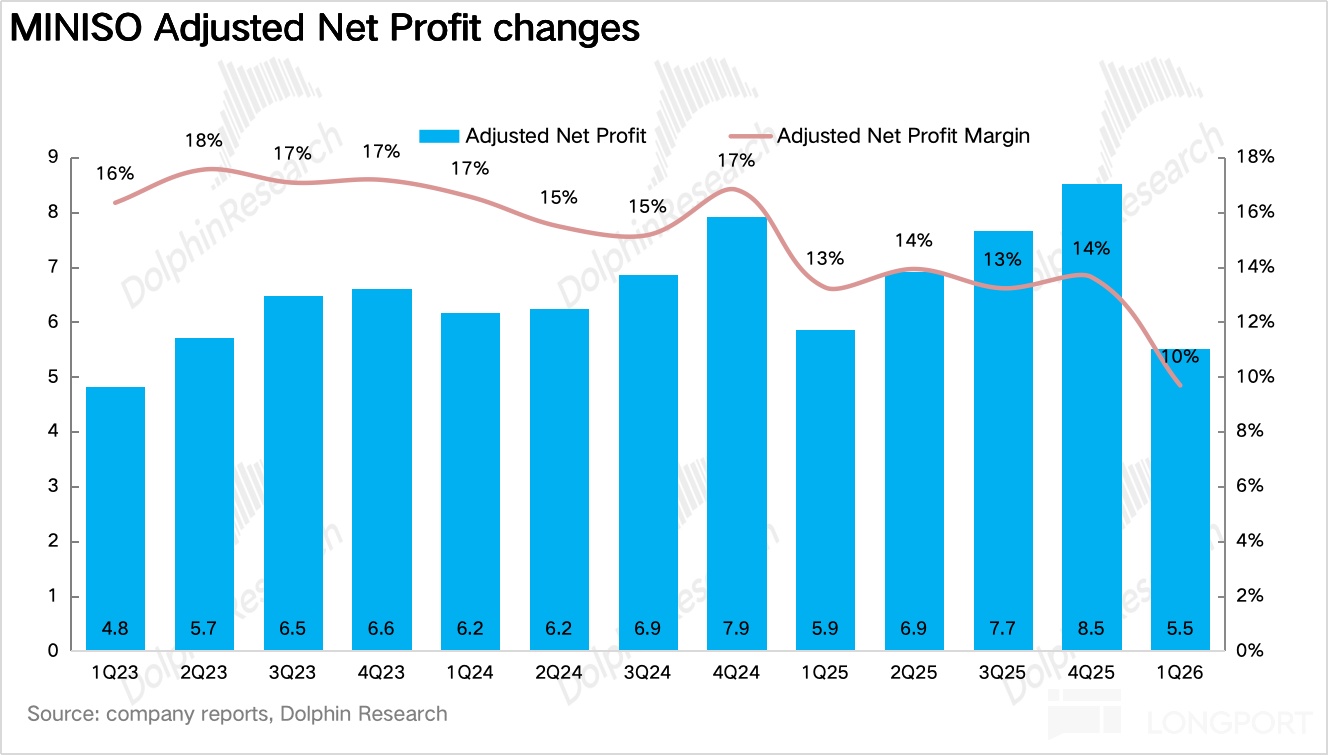
4) AI gains propped up optics; core profit still pressured. Reported operating profit surged 114% YoY, primarily driven by a fair-value gain of approx. RMB 880mn from the MiniMax AI investment. Excluding this boost, adj. OP was RMB 840mn (+14.3% YoY), well below revenue growth. The main drag was sales and marketing: heavy IP licensing fees and front-loaded costs from overseas direct expansion pushed the sales expense ratio up 280bps to 25.9%.
On the positive side, Yonghui contributed RMB 78mn of investment income in the quarter, a notable improvement from a loss YoY and a marginal tailwind.
5) Detailed financials at a glance:
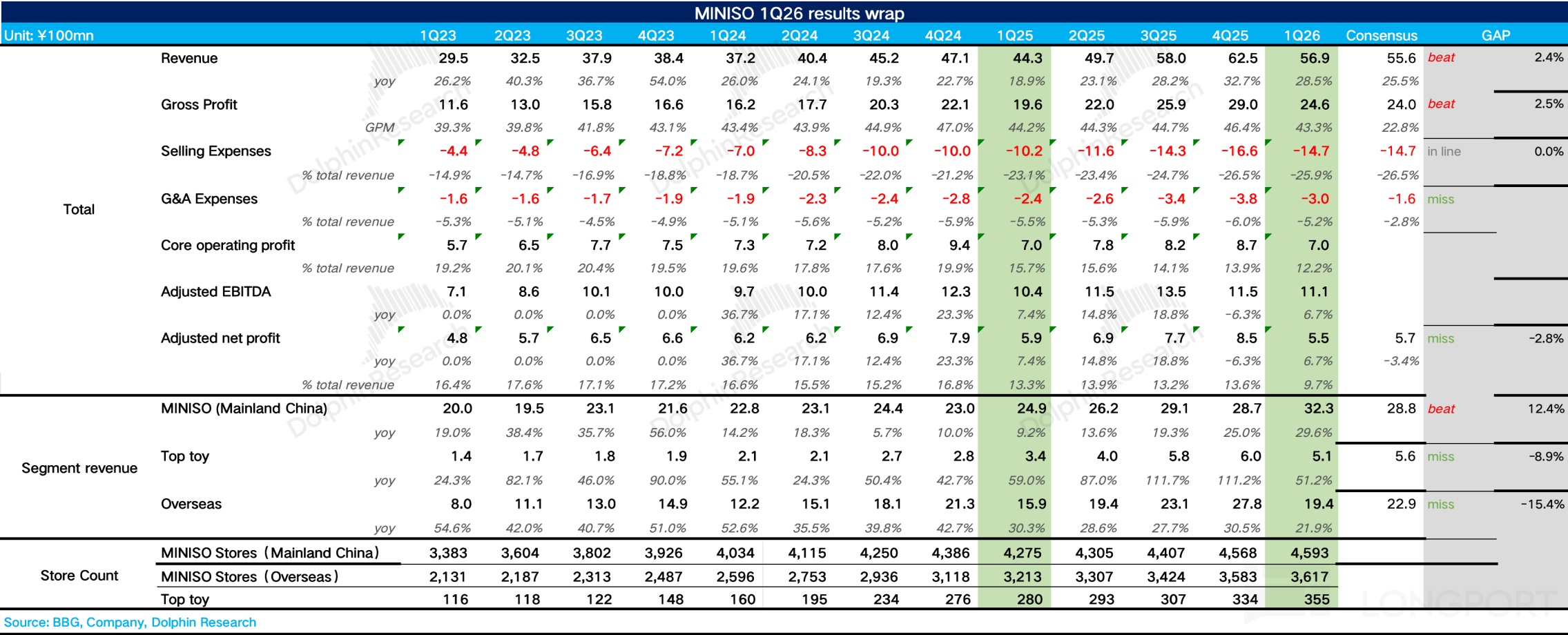
Dolphin Research view:
The apparent doubling of operating profit this quarter looks dramatic, but it does not mean the retail core suddenly turned into a cash machine. Rather, prior financial investments caught a favorable updraft, lifting asset values on the balance sheet. Excluding that profit, the core narrative repeats recent quarters: faster top-line growth paid for by higher opex, more direct stores, and heavier IP operations.
On revenue, the market’s premium multiple for MINISO has been largely a bet on overseas expansion—especially North America—rather than the more mature domestic base. This quarter, China growth outpaced overseas as large-format stores and IP products lifted comps, showing domestic operations still have room for optimization rather than being in a pure rent-collection phase. However, the slowdown overseas is a new concern, and as the share of direct-operated stores abroad rises, organizational complexity will increase.
On profit, our prior take stands: MINISO is not a pure self-owned IP model but closer to an 'Android-like' open ecosystem, using a long tail of co-brands and licenses to drive traffic. The upside is rapid SKU refresh and hit efficiency, but the downside is that IP licensing fees remain a major line item in sales expenses and are hard to cut meaningfully in the short term. That keeps margin leverage constrained.
On valuation, management guided that adj. net profit growth in 2026 will accelerate vs. 2025. Under a base case of 8% growth (vs. 6.5% in 2025), shares trade at ~9x, which is not demanding and arguably already prices in margin concerns and slower growth. Even so, we see MINISO in a 'low expectations, wait-for-proof' zone.
In other words, it is not simply 'cheap so it rallies.' Until we see a) the sales expense ratio peaking and b) self-owned IP and overseas direct operations translating into higher-quality earnings, we remain cautious and prefer to wait and see.
Detailed earnings analysis follows:
I. Revenue beat the top end of guidance
1Q26 revenue was RMB 5.69bn, up 28.5% YoY, extending high growth and beating the prior 'no less than 25%' guide. At minimum, this indicates front-end demand held up under store expansion, same-store recovery, and IP-driven retail. By brand, MINISO core revenue reached RMB 5.17bn, up 29.6% YoY. Channel checks suggest that large-format stores, themed concepts, IP products, and improving comps drove high single-digit same-store growth in China in Jan–Feb, better than the market had expected.
As the trendy-toy label under MINISO, TOP TOY delivered RMB 600mn in Q4 revenue, up 112% YoY and a quarterly record, a standout performance. In 1Q, TOP TOY revenue was RMB 520mn, up 51% YoY; while still solid, growth slowed significantly from the 80%+ pace in prior quarters, signaling a high base effect.
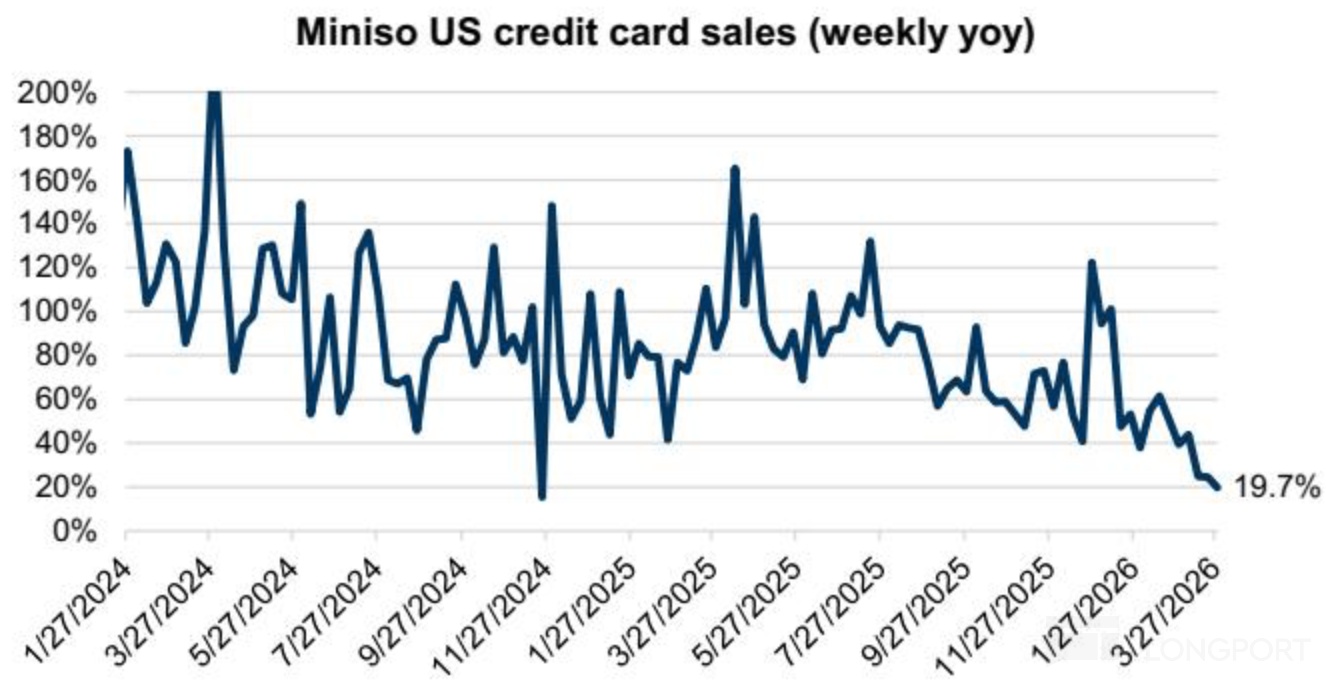
With domestic growth normalizing, MINISO has staked its 'second growth curve' on overseas—especially North America—making offshore trends a key investor focus. Overall, overseas revenue was RMB 1.94bn, up 21.9% YoY, with a sequential slowdown. Based on HF data from foreign brokers, U.S. comps were up 20%+ in Jan–Feb, but credit card data shows growth eased to 19.7% in Mar; a continued deceleration in North America, MINISO’s key overseas engine, is disappointing.
Southeast Asia remains in 'recovery loading' mode, and we stay cautious on this region. These markets often face two risks: slower-than-expected consumption recovery, and organizational frictions during the shift from distributor to direct operations. If Southeast Asia underperforms in 2H, overseas growth and margins could face further pressure.
II. Store pace slower, quality first
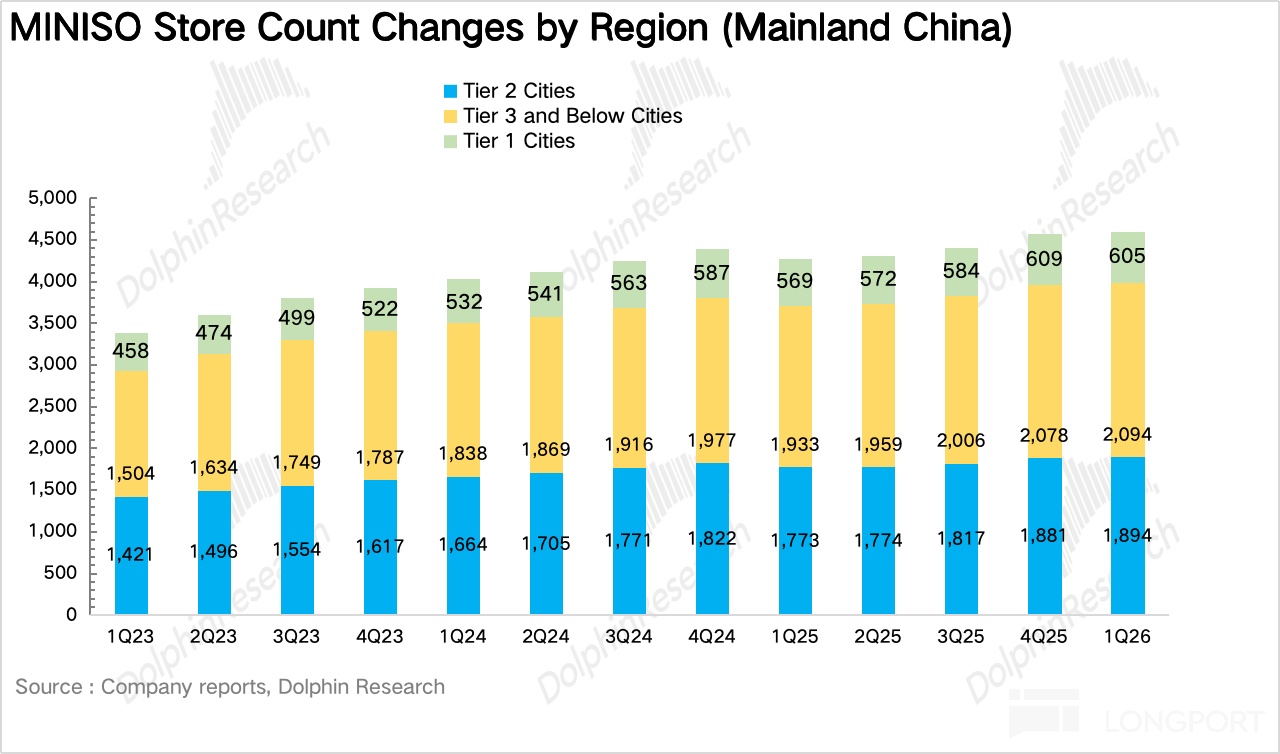
By quarter-end, global stores reached 8,565, a net add of 80 from end-2025. Against the full-year opening plan of 510–550, this is only ~15% complete, clearly slow and implying a catch-up pace in the next three quarters. Mix-wise, overseas direct stores rose by 45 to 745, lifting direct-op to 20.6%. Domestically, MINISO added a net 25 stores, still skewed to large and 'park' formats, while TOP TOY added 21, including 9 overseas, pointing to faster international build-out.
III. Same-store growth eased sequentially
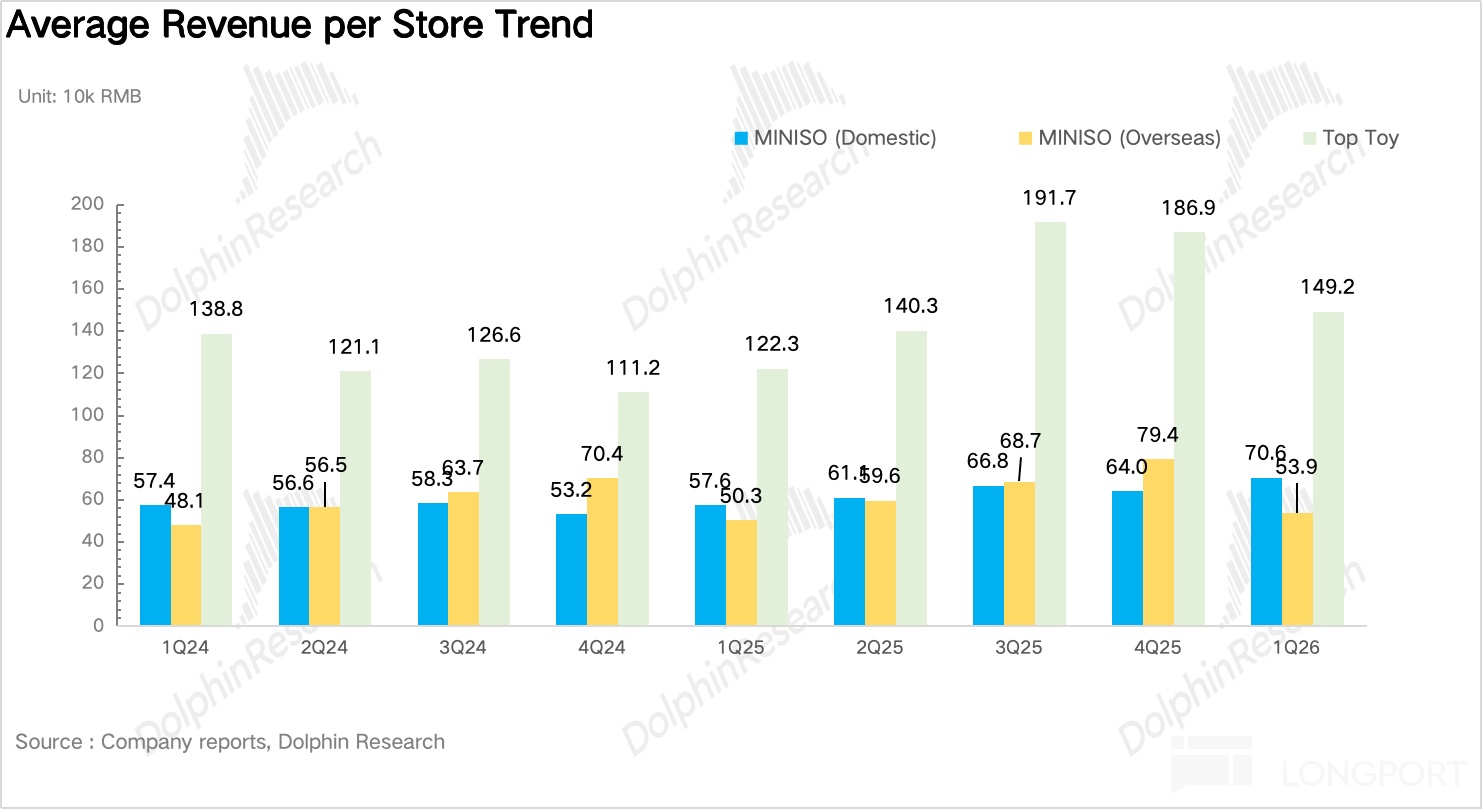
Domestic comps were up high single digits in 1Q26, a slight step down from double-digit growth in the prior quarter, which is reasonable for a chain with 4,000+ stores in China. Overseas comps were up low single digits; drivers were discussed above. Management’s FY26 goal is positive global comps, with low single-digit, healthy growth in China and North America. This implies the 1Q strength was partly transitional, and if store openings do not accelerate, overall revenue growth may face pressure in subsequent quarters.
IV. Lower GPM + higher opex: profit below expectations
GPM declined as the company increased local sourcing and urgent replenishment to support rapid overseas expansion, raising unit costs. A lower mix of high-margin overseas markets also weighed on margins. GPM fell 90bps YoY to 43.3%.
Sales and distribution expenses rose to RMB 1.47bn, up 44.0% YoY, far above revenue growth; the sales expense ratio climbed to 25.9%, up 280bps YoY. In our view, two factors dominate: licensing fees and direct operations. Sustaining product novelty and youth appeal in an IP retail model requires ongoing licensing, marketing, and fresh merchandise; overseas direct expansion also lifts front-end operating costs. Without relief on both, the sales expense ratio is unlikely to fall quickly.
G&A was better controlled: G&A expenses were RMB 300mn, up 22.8% YoY; the G&A ratio was 5.2%, down 30bps from 5.5% a year ago, signaling continued back-office efficiency. That improvement, however, was more than offset by higher front-end spend. On the financing side, interest expense rose to RMB 120mn, up ~40% YoY from RMB 86mn, mainly tied to the Yonghui acquisition loan. Adj. NP was RMB 550mn (+6.7% YoY), well below revenue growth.
<End of text>
Related reading:
Commentary:
Nov 21, 2025 earnings take: MINISO: Revenue 'printing press', spend 'shredder'
Aug 21, 2025 earnings take: MINISO: Big-box to the rescue—has IP retail 'recharged'?
May 23, 2025 earnings take: MINISO selloff? Without an IP 'soul', no next 'Pop Mart'
Mar 21, 2025 earnings take: MINISO: Profitability up another notch—is IP retail a 'cash machine'?
Deep dives
MINISO: From '10-yuan store' roots to the endgame of IP-led hits?
MINISO: Has Shein lost its shine? An offline 'daily goods Shein' stands out
Risk Disclosure & Disclaimer:Dolphin Research Disclaimer and General Disclosure
The copyright of this article belongs to the original author/organization.
The views expressed herein are solely those of the author and do not reflect the stance of the platform. The content is intended for investment reference purposes only and shall not be considered as investment advice. Please contact us if you have any questions or suggestions regarding the content services provided by the platform.
