


 SpaceX Option
Before lending to US companies, please think twice.
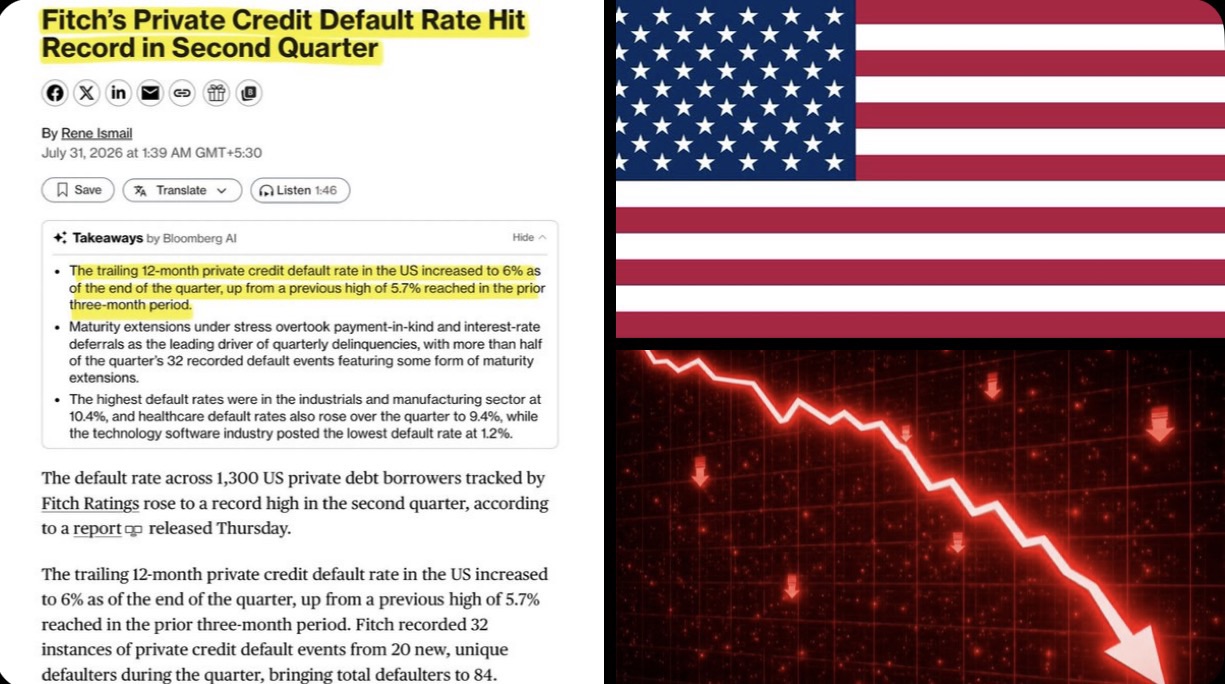
According to Fitch data, the overall default rate for 1,300 US private credit borrowers reached a record high of 6% in the second quarter, up from 5.7% in the previous quarter.
A total of 32 default events came from 20 new defaulters, bringing the total number of default events over 12 months to 84.
The industrial and manufacturing sectors were hit the hardest, with a default rate of 10.4%, nearly double the 5.9% from the previous quarter. The healthcare sector's default rate rose from 6.9% to 9.4%.
Defaults here do not always mean bankruptcy.
More than half of these companies extended their loan terms due to an inability to make timely repayments.
This is due to how these loans operate. Almost all loans use floating rates. SOFR fell by only 0.10 percentage points (10 basis points) in 2026, while lenders have increased risk premiums by approximately 0.50 to 1 percentage point since late 2025.
Borrowing costs are now at levels between 9.15% and 9.65%.
These companies often borrow amounts that are multiples of their annual earnings. When earnings decline while interest rates continue to rise, the same debt becomes unpayable.
Fitch had originally expected the situation to improve. It stated that at the beginning of the year, it anticipated the default rate would ease due to lower interest rates and increased transaction activity.
Instead, the market is now pricing in expectations of rate hikes, and transaction activity remains weak, so Fitch expects the default rate to remain high for the rest of this year.
The software industry is an exception, with the default rate dropping to 1.2%, down from the previous 2.3%, despite numerous concerns surrounding AI.
Weaker companies are paying more for the same debt, while the interest rate relief they hoped for has not materialized.
The copyright of this article belongs to the original author/organization.
The views expressed herein are solely those of the author and do not reflect the stance of the platform. The content is intended for investment reference purposes only and shall not be considered as investment advice. Please contact us if you have any questions or suggestions regarding the content services provided by the platform.
