


The Debate on Long and Short Positions of Anjoy Foods
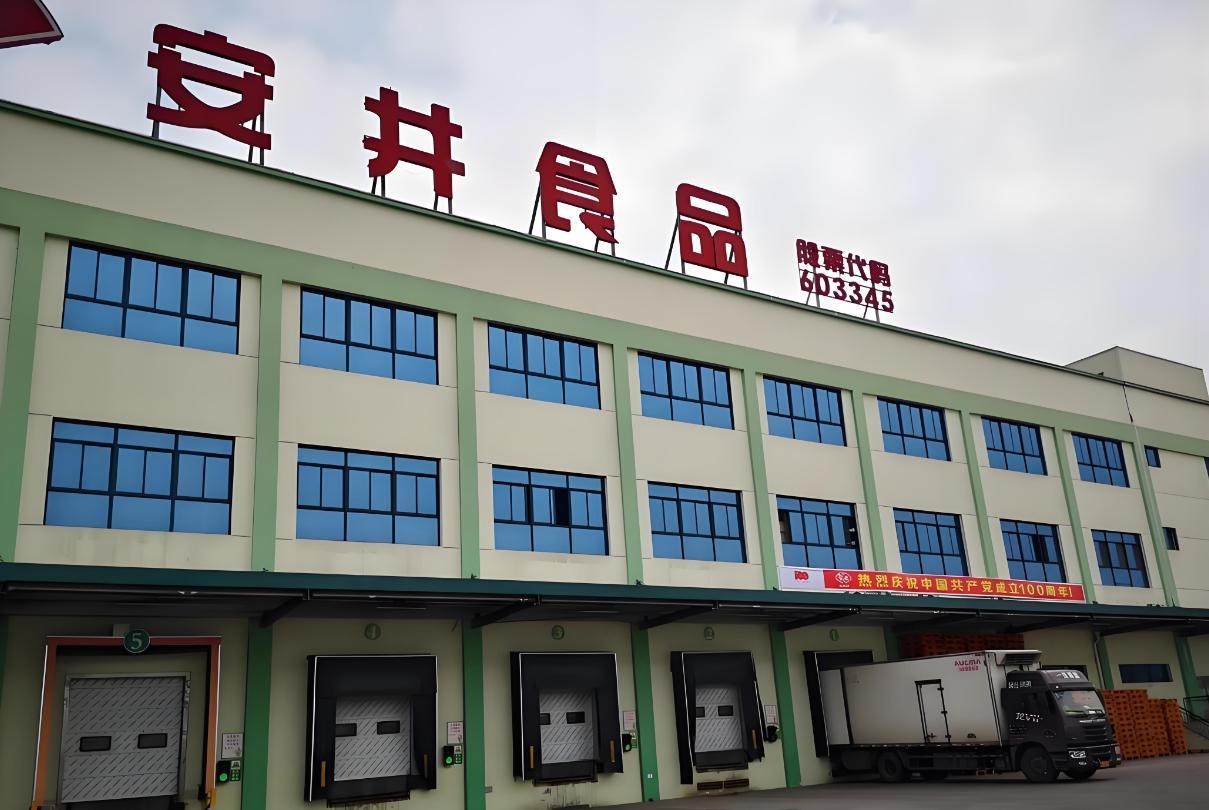
Anjoy Foods is the leading brand in China's frozen food sector.
It went public in February 2017 at an issue price of 25 yuan, surging to around 280 yuan by February 2021—a tenfold increase over four years. However, it has since fallen steadily, with its stock price eroding by 70% from its peak by 2024.
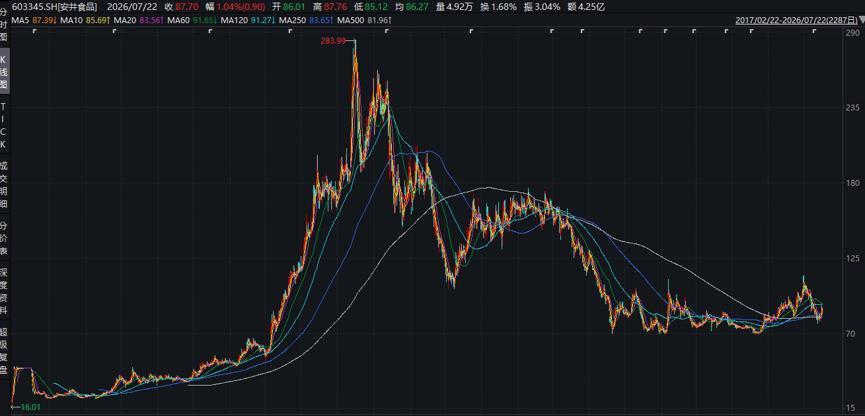
Chart: Anjoy Foods' Tenbagger Stock (Unadjusted)
Currently, the narrative of consumption downgrade looms over the entire industry. Where does Anjoy stand?
01 The Birth and Fading of a Tenbagger
Anjoy's stock price curve can roughly be divided into three phases.
Phase 1: 2017 to February 2021, a tenfold rise in four years.
From 2017 to 2019, the fast-paced lifestyle combined with consumption upgrades allowed Anjoy to massively expand new production capacity in Fujian, Wuxi, Sichuan, and other regions after raising funds through its IPO. Its "produce where you sell" strategy—building factories locally in key sales areas—significantly shortened logistics radiuses, reducing cold chain transportation costs by 5 to 10 percentage points.
Economies of scale enabled Anjoy to crush competitors like Haixin and Huifa in the fish paste product industry, rapidly increasing its market share from about 5% to nearly 10%. During these years, revenue compound annual growth rate remained between 15% and 20%, while net profit growth stayed between 20% and 30%. In the consumer sector at that time, this was a scarce asset with certain growth potential.
From 2020 to early 2021, the "stay-at-home economy" spurred by the pandemic added fuel to the fire.
While the catering B-end faced widespread shutdowns, household C-end demand exploded. Anjoy's "Lock Fresh" series became a must-have hit product for home hotpot. The market suddenly realized that Anjoy was not just a link in the B-end supply chain but also a direct beneficiary of "home emergency reserves" and the "lazy economy."
During this process, its consumer attribute shifted slightly from discretionary to essential. Public mutual funds piled in, pushing the valuation center from 30-40x PE up to 60-80x.
Phase 2: February 2021 to September 2024, dropping 70% from the peak.
The C-end explosion in 2020 透支 ed subsequent demand. By the second quarter of 2021, performance growth plummeted to single digits. Recurring outbreaks slowed the recovery of the catering sector, and the previously expected B-end restocking never materialized.
Although performance continued to grow, net profit growth dropped from 61.73% the previous year to 13.75%. The valuation bubble burst, compressing PE from 80x to 13x, and the stock price fell 76% from its peak.
Phase 3: September 2024 to present, stock price consolidation.
With the introduction of a new round of macroeconomic policies, the stock price quickly recovered somewhat. However, against the backdrop of sluggish consumption, institutions generally avoided consumer stocks, causing the stock price to oscillate within a range.
Revenue grew at a single-digit rate for two consecutive years in 2024 and 2025. Suddenly, the Q1 2026 report showed revenue growth jumping to 30.84%, leading to significant market divergence regarding the sustainability of this growth.
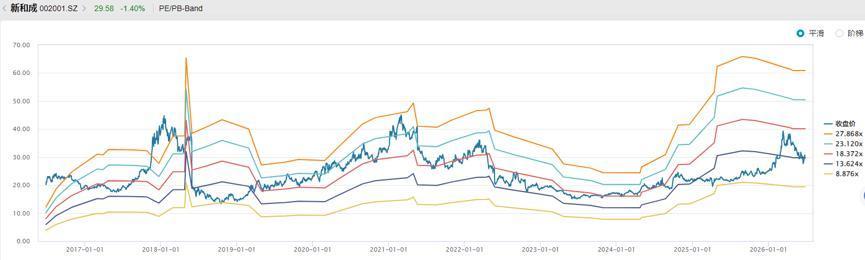
Chart: Anjoy Foods' PE Band Since IPO Experienced Extreme Pull-up, Bubble Formation, and Convergence (Unadjusted)
02 From Differentiated Competition to the Pre-made Dish Bet
Anjoy's history of development is a classic business case of differentiated competition and late-mover advantage, starting with its founder, Liu Mingming.
After graduating from Tongji University in 1984, Liu was assigned to teach civil engineering at Zhengzhou University of Technology. After two years of teaching, he resigned to enter the business world. In 2001, 39-year-old Liu participated in founding Huashun Minsheng Company, the predecessor of Anjoy Foods.
The company's growth can roughly be divided into four key stages:
1. 2001 to 2006: Start-up Phase, Differentiated Competition, Winning Survival Space.
In the start-up phase, the company's funds were extremely tight, and the Wuxi factory almost died in the cradle.
External giants Sanquan and Synear had already captured user mindshare in core categories like dumplings and tangyuan. Anjoy did not confront them head-on but instead produced steamed buns, flower rolls, hand-grabbed pancakes, pumpkin cakes, and other leavened pastries and specialty snacks that giants paid less attention to, while continuing to develop fish paste products.
In terms of channels, it did not compete for first-tier supermarkets but focused on farmers' markets and small-to-medium-sized restaurants.
2. 2007 to 2016: Betting on Hot Pot Ingredients, Creating Hundred-Million-Yuan Hero Products.
2007 was a key turning point. The company shifted its strategic focus to frozen hot pot ingredient products, concentrating resources to create four hero products with annual revenues exceeding 100 million yuan, rapidly building product competitiveness and a brand moat. To support market expansion, production bases were successively built in Xiamen, Wuxi, Taizhou, and other locations.
3. 2017 to 2020: Listing on A-Shares, Evolving from Regional Brand to National Giant.
After listing on the A-share market in 2017, raised funds further expanded nationally. On the production side, tactics like "produce where you sell" and "research where you produce" were used. On the sales side, distributors, supermarkets, special channels, direct sales, new retail, and e-commerce were all utilized simultaneously.
The frozen food track itself 顺应了 the trend of fast-paced and convenient lifestyles, compounded by the wave of consumption upgrades. The company achieved double-digit growth in both revenue and profit every year.
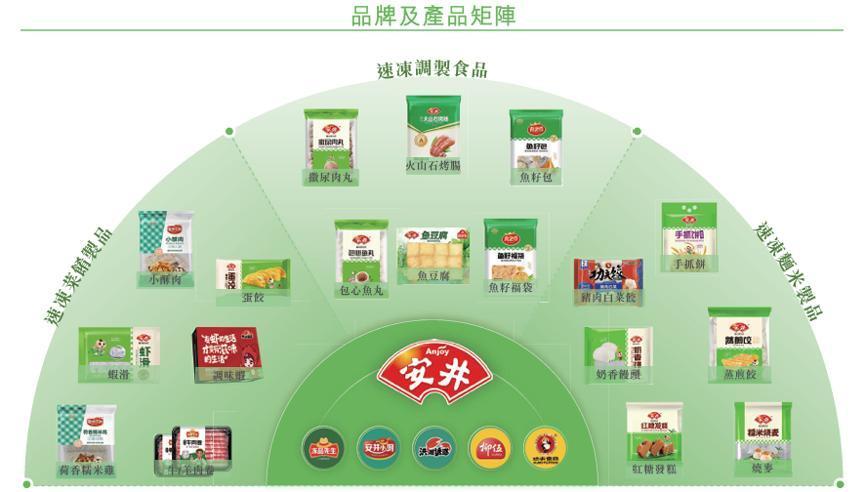
4. 2021 to Present: Layout in Pre-made Dishes, Seeking Internationalization.
Starting in 2021, the company shifted its focus to pre-made dishes while seeking internationalization. It acquired UK-based Kung Fu Food to enter the European market, acquired Xin Hongye and Xin Liuyu to vertically integrate upstream crayfish and freshwater fish paste industries, and in July 2025, acquired Dingwei Tai to enter the frozen baking field.
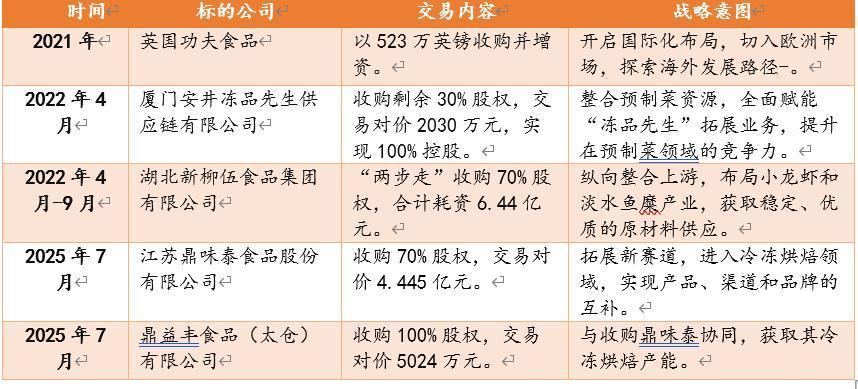
03 The Pain of M&A: The Root Cause of Revenue Growth Without Profit Growth
However, the path of M&A has not been smooth sailing. The two heaviest acquisitions—Xin Hongye and Xin Liuyu—overall fell short of expectations.
In April 2025, Anjoy's board passed a proposal to change the compensation method for Xin Liuyu's original shareholders' performance commitment and goodwill impairment from cash to using Xin Liuyu's equity. The change itself stated a fact: the original shareholders could not pay the compensation obligations. In 2025, the company accrued goodwill impairment losses of 182 million yuan for subsidiaries like Xin Liuyu, which is one of the core reasons for Anjoy's first negative growth in net profit attributable to parents since its IPO.
The acquisition of Dingwei Tai is still in the initial integration stage. While there have been positive contributions to revenue, the final results of the three-year bet still need time.
Breaking down Anjoy Foods' revenue structure, the proportions of frozen barbecue/skewer products, frozen dishes, frozen flour/rice products, and baked goods are 52.18%, 29.77%, 14.82%, and 0.42%, respectively.
Looking at product gross margins, frozen dishes only have 9.49%, and baked foods only 13.46%, both being businesses acquired through M&A. Meanwhile, the gross margins of the company's traditional core businesses are all above 20%. This is the root cause of revenue growth without profit growth.
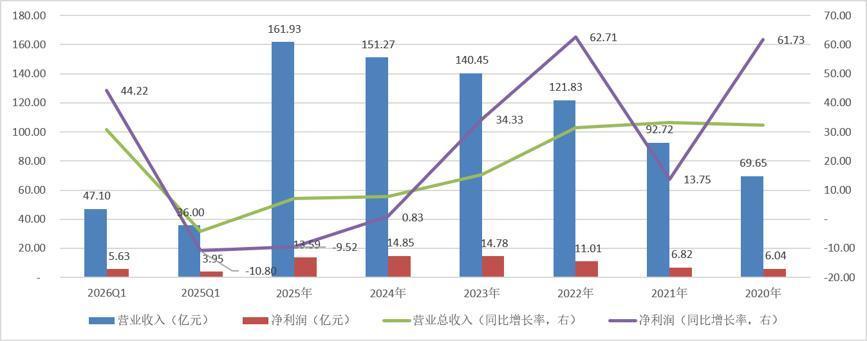
Chart: Anjoy Foods' Revenue, Net Profit, and Growth Situation Since 2020
The hero product of frozen dishes is crayfish. In 2025, the procurement unit price of core raw materials (fresh shrimp) surged 43.75% year-on-year, directly crushing the gross margin. The low gross margin of baked foods is partly due to the pain of integration in the early stages of M&A and partly because economies of scale are needed to amortize fixed asset depreciation.
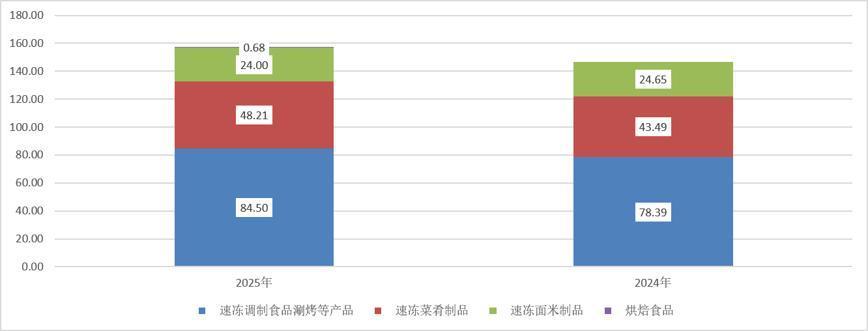
Chart: Frozen Prepared Foods, Barbecue, etc., Accounted for Approximately 52.18% of Revenue in 2025
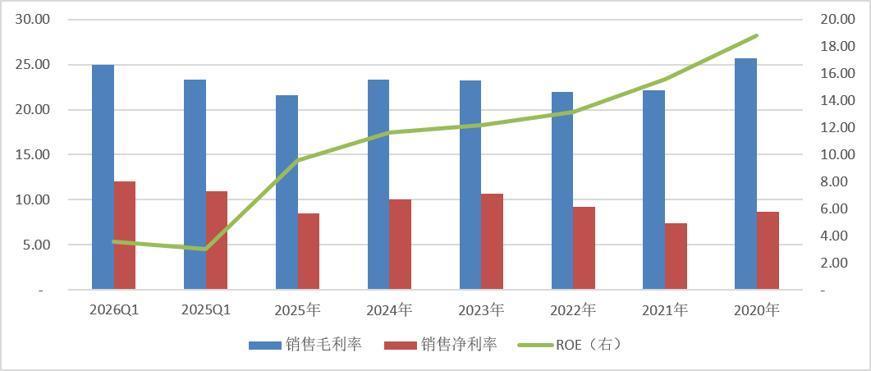
Chart: Overall Gross Margin in '25 was 21.6%, ROE 9.56%; Q1 '26 Report Shows Increases, Unit: %
Selling expense ratios and administrative expense ratios are decreasing year by year, essentially the result of economies of scale. R&D expenses remain around 90 million yuan annually, which is not much, but for a frozen food enterprise, it is not insignificant either.
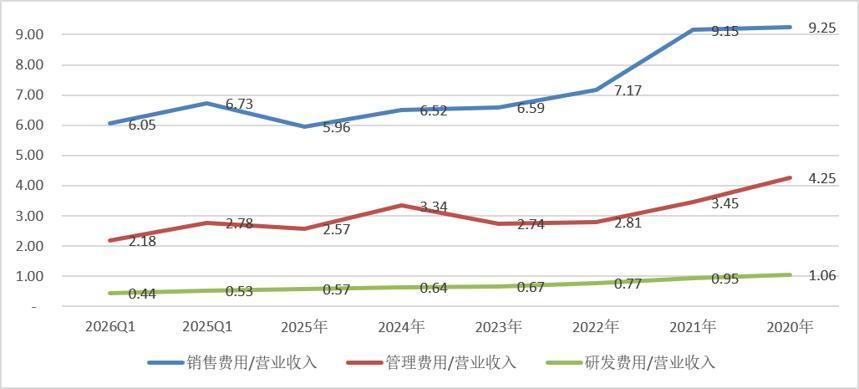
Chart: Anjoy Foods' Selling, Administrative, and R&D Expense Ratios, Unit: %
The Q1 2026 report started brightly, with revenue growth surging above 30%. But the real divergence in the market lies in whether this number confirms a performance inflection point or is merely a one-time pulse 叠加 ed by the peak season effect and a low base.
Historical experience shows that Anjoy's Q1 reports are often driven by Spring Festival stocking and the hot pot peak season. The quality of single-quarter data needs to be verified by subsequent quarters. Furthermore, while revenue is growing rapidly, whether gross margins will repair synchronously and whether losses from M&A businesses will converge are two points that better indicate whether the fundamentals have materially improved than revenue growth itself.
04 An Ordinary Company in a Good Industry
The frozen food track Anjoy operates in 顺应了 the lifestyle of "fast pace plus small families," with growing demand for convenience and health in food. Per capita consumption of frozen food in China is only about 10 kg, far lower than mature overseas markets, leaving ample room for growth. From this perspective, the industry is good: stable demand, continuous growth.
But from another dimension, the top five companies in China's frozen food industry account for only 15% of the market share combined, indicating extreme fragmentation. This means frequent price wars, making it difficult for leaders to gain pricing power, and overall industry profits are constantly diluted.
Anjoy is currently the domestic leader, with a market share approximately 5 times that of the second-place competitor. However, the brand advantage has not widened significantly, inevitably leading to close-quarters combat on price. ROE has been below 15% continuously from 2022 to 2025. By the yardstick of traditional value investing, this is not a company with a wide moat.
In the consumer industry, truly good companies usually possess some "irreplaceability"—brand premium, channel exclusivity, or structural advantages in cost structure. Anjoy still falls short in these dimensions.
On the valuation front, Anjoy's current PE is about 19x. If the growth logic is not certain, this price is not cheap. Looking at comparable companies, it is slightly below the median. Measured by the Price-to-Earnings-Growth ratio (or similar metric implied by context), the ROE of the entire food processing industry ranges from 3.53% to 13.03%, while the median PE is around 19x. The valuation multiples range from 1.26x to 12.97x, meaning the overall valuation level is not low. Anjoy's dividend yield is only 1.88%, offering limited appeal to investors seeking cash returns.
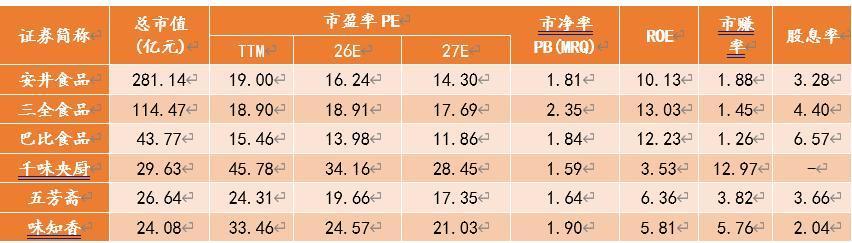
Chart: Peer Valuation Data Comparison. Note: ROE is the trailing 12-month moving average, i.e., using Q2 '25 to Q1 '26. Price-to-Earnings-Growth Ratio = PE TTM / ROE.
Another source of concern is the change in actual controllers. The current actual controllers are Hang Jianying and Lu Qiuwen, who jointly hold 55.09% of Guoli Minsheng's equity through a concerted action agreement, but they do not participate in the company's daily operations. The former actual controller, after handing over control, was promoted to Co-Chairman. The stability of this governance structure needs time to verify. The temperature difference between executive compensation and employee income is another repeatedly raised point of controversy.
The overseas strategy is written large in the prospectus, but the difficulty of food export is often underestimated. Frozen food is not like new energy vehicles or coffee beverages; it faces more complex localization constraints—taste preferences, dietary habits, cold chain infrastructure, retail channel structures—all different in each market.
Anjoy's "hero product" strategy has been proven effective domestically, but whether it can be replicated in Europe or Southeast Asia depends on whether the company can flexibly adapt its domestic experience to a new battlefield with completely different culture, taste, and competitive landscape. This is a long-term strategic test, not a short-term tactical copy.
05 Conclusion
Anjoy enjoyed a dual valuation premium from consumption upgrades and growth logic. Over ten years, it ran from a second-tier brand competing via differentiation to become the leader in frozen foods.
But the old ship cannot carve the new sword. The current market no longer pays a premium for "growth stories." It is waiting for Anjoy to deliver a more substantial answer: not a one-off pulse in the Q1 report, but consistent revenue and profit growth over several quarters; seeing the gross margins of M&A businesses truly recover; and seeing the overseas strategy take root on shelves in Europe and Southeast Asia.
There are no shortcuts for these things; they can only be proven quarter by quarter through financial reports.
This article is written based on public information, solely for information exchange purposes, and does not constitute any investment advice.
The copyright of this article belongs to the original author/organization.
The views expressed herein are solely those of the author and do not reflect the stance of the platform. The content is intended for investment reference purposes only and shall not be considered as investment advice. Please contact us if you have any questions or suggestions regarding the content services provided by the platform.
