


iPhone16 爆料汇总:大底主摄、新显示屏、更快的充电功率

The iPhone 16 series will feature a larger main camera, a new display, and faster charging power. The Pro series will have a larger screen, upgraded cameras, increased battery capacity, and charging power. The new iPhone will adopt a completely new screen packaging technology with the narrowest borders. The four new iPhone models this year will have completely different sizes. In terms of colors, there will be three colorful versions: pink, green, and blue. The Pro version will retain the silver, black, and titanium colors

Objective Lab, Author: Lu, Cover: Generated by Midjourney
The iPhone 16 series will feature a larger main camera, a new display, and faster charging power.
• 📱 New screen technology, larger screen for the Pro series
• 📷 Upgraded cameras, especially for the Pro models
• 🔋 Increased battery capacity and charging power
Today's topic is the highly anticipated iPhone 16 series leak summary. I believe many people, like myself, are eagerly looking forward to this. So let's get started.
Firstly, as expected, this year's new iPhones will still come in 4 models: iPhone 16, 16 Plus, 16 Pro, 16 Pro Max.
Larger Display
According to leaked information, the Pro series this year will increase the screen size, with the Pro model reaching 6.27 inches, compared to the current 6.1 inches of the iPhone 15 Pro, and the Pro Max model will reach 6.86 inches, while the current 15 Pro Max is 6.7 inches. Additionally, Apple will use a new screen packaging technology on the new iPhone, making it the narrowest bezel iPhone ever.
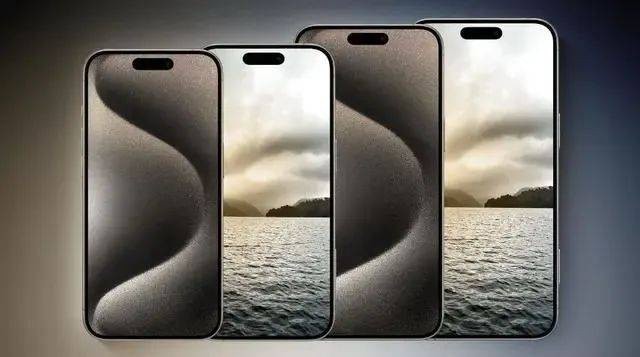
Moreover, there are reports that Apple will use micro-lens technology in the 16 series to increase the brightness of the display or reduce the power consumption of the display while maintaining the same brightness.
4 iPhones, 4 Sizes
The three-dimensional dimensions of the devices will also be slightly larger than the standard versions. If this information is accurate, then the sizes of the 4 new iPhones this year will be completely different. Pro Max users are advised to visit the Apple store to see if they can handle this size of phone.
In terms of colors, the digital series this year will have pink, green, and blue color versions, in addition to the usual black and white.
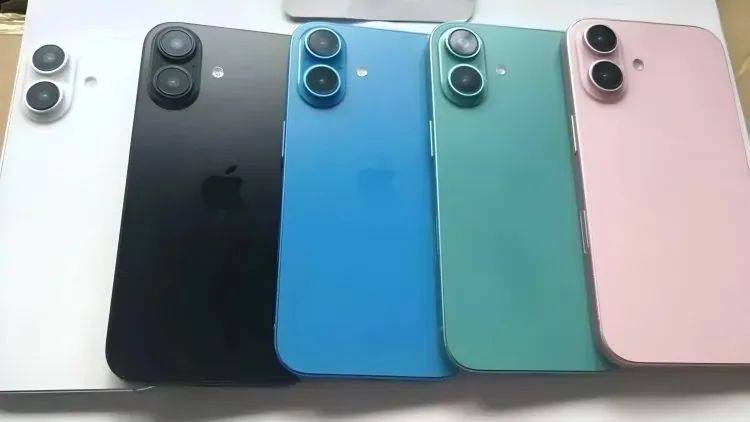
The Pro models will maintain the current silver, black, and titanium colors. It is worth noting that this year's black color may return to the pure black of the iPhone 5 era, rather than the previous deep space gray ![] (https://img.huxiucdn.com/article/content/202408/09/111502666382.jpg)
The digital version of the "nostalgic" iPhone 12's camera layout
This is mainly for the digital models, which means that the iPhone 16 and 16 Plus will adopt a vertical rear camera layout. The reason is simple, to accommodate the spatial video and photo shooting function of Vision Pro, which requires two lenses to simulate human eyes, so the previous diagonal layout is no longer suitable.
![] (https://img.huxiucdn.com/article/content/202408/09/111503891126.jpg)
This is actually quite interesting, because when the iPhone 13 was released, there were reports that Apple arranged the lenses diagonally because the size of the lens sensor had increased, so it couldn't fit vertically. But why is it now possible to fit them vertically on the iPhone 15?
Considering that the lens size has not decreased in recent years, I am more inclined to believe that the new layout of the iPhone 13 was purely for the sake of introducing a completely new appearance design for users to buy iPhones.
Upgrade of Pro model camera group
It is reported that in the iPhone 16 Pro series, Apple will upgrade both ultra-wide lenses of the two products to 4800W pixels to improve the shooting effect of ultra-wide angles in low-light environments.
In addition, the 16 Pro series will use a larger size IMX903 sensor as the main lens, which is Sony's latest Stacked Pixel sensor, which can maximize the light input and saturation of the photosensitive components. The IMX903 will distribute the pixel transistors outside the control transistor on the substrate layer without photodiodes, which can further enlarge the size of the transistors, bringing better noise control and detail performance.
It is said that its performance will surpass the current one-inch sensor, so photography enthusiasts can look forward to it.
Finally, the iPhone 16 Pro will most likely also be equipped with a 4-fold reflective prism periscope telephoto lens, but whether it will be the same as the one on the 15 Pro Max or an upgraded version remains unknown.
Anti-reflective optical coating
Previously exposed documents show that Apple is testing a new anti-reflective optical coating to reduce ghosting and glare caused by sapphire lenses, but it is currently unclear whether this coating will be used in the iPhone 16 series.
Performance improvement
Unlike the 15 series strategy, this year's four iPhone models will all be equipped with the latest A18 processor, with the 16 and 16 Plus using A18, and the Pro and Pro Max using A18 Pro, which will have better performance and power consumption Due to the main selling point of this year's iPhone being AI, all 4 models of the iPhone will come with a minimum of 8GB of RAM, and the Pro models may be upgraded to 12GB of RAM.
In addition, there is a possibility that the Pro series will upgrade the maximum storage version to 2TB to handle professional video and photo shooting formats.
Furthermore, there will be Wi-Fi 7 and a new Qualcomm modem. The Pro models have confirmed support for Wi-Fi 7 and will use the Snapdragon x75 modem, enabling higher download and upload speeds, while the 16 and 16Plus will continue to use the X70.
New integrated button
From the leaked images so far, aside from the Action Button, the Pro models will have a new integrated button on the side of the device, supporting user customization. Users can set it to wake up Siri or take photos, among other custom functions.
The mute switch button on the 16 and 16Plus will also be upgraded to the Action Button.
Changes in charging power and battery capacity
Based on the current exposed information, the battery capacity of the iPhone 16 will be upgraded from 3349mAh to 3561mAh, while the 16Plus will decrease from 4383mAh to 4006mAh.
The battery capacity of the 16Pro will be upgraded from 3274mAh to 3577mAh, and the ProMax will be upgraded from 4422mAh to 4674mAh.
The reduction in battery capacity for the 16Plus does not necessarily mean that its body size will be thinner. It may simply be that Cook believes the previous Plus models had too strong battery life and did not sell external battery packs.
The new irregular battery module will be encapsulated by the entire stainless steel cover plate and will use a new adhesive fixing method. The official statement is that it will be easier to repair.
Furthermore, the charging power of the Pro models this year will be upgraded from 27W to 40W, a slight improvement. The wireless charging power will also be upgraded from 15W to 20W, which is better than nothing.
Apple AI
In simple terms, users who have upgraded to Beta may know that currently, due to Apple AI not completing the filing and other work, Chinese iPhones cannot use any AI functions. This is a hardware limitation, not an Apple ID or network limitation, so it is quite troublesome.
However, Apple has stated that they are actively promoting the landing of AI in mainland China, so I believe Chinese users will eventually be able to use it.
It is important to note that many people think Apple's AI is just a shell for GPT, which is incorrect. In fact, Apple has its own AI large models on both the mobile and cloud sides. When these two AIs cannot be used, users can choose whether to use the GPT large model in the options. Therefore, it is not the case that Apple cannot use AI functions in China without cooperating with companies like Baidu and Toutiao. Everything needs to wait for approval and landing after filing In addition, when the new iPhone is released in September, the default system version should not have AI functionality. It may take until 2025 for AI functionality to be fully implemented, so there is still time.
Non-Objective Lab, Author: Lu
