


马斯克弄不进来的 Cybertruck,竟然被天津港搞定了

Tesla Cybertruck successfully registered through the parallel import channel at Tianjin Port in China, becoming the first legally roadworthy Cybertruck in the country. The vehicle is listed on the second-hand market for 3.6 million RMB, far exceeding the selling price in the US market. The article provides a detailed introduction to the regulations and procedures for parallel imported vehicles, emphasizing the legality of the Cybertruck and market response

Negative review X.PIN (ID: chaping321), author: Neck Brother, article: Daydream, editors: Neck Right Twist, Surface Line, cover image from: Visual China
Tesla Cybertruck successfully registered in China through the Tianjin Port parallel import channel.
• 🚗 Cybertruck enters the country through parallel import channels.
• 📜 The article details the regulations and processes of parallel imported cars.
• 💰 Cybertruck is priced at 3.6 million yuan on the second-hand platform.
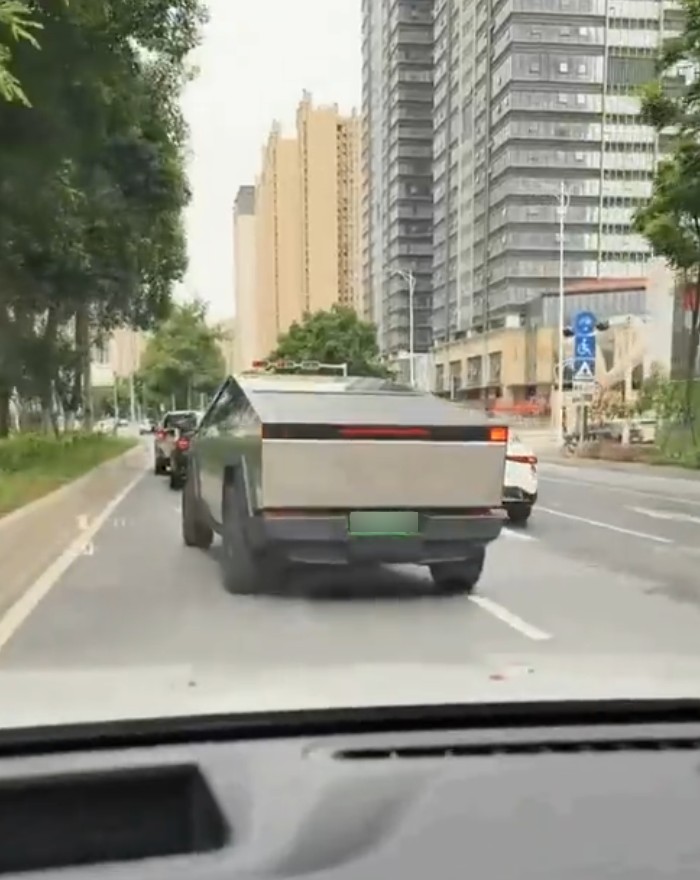
These days, many people may have seen that a Tesla Cybertruck has already been registered in China and is driving on the road.
To be honest, when Neck Brother saw the picture for the first time, the reaction was: Huh? Is this for real?
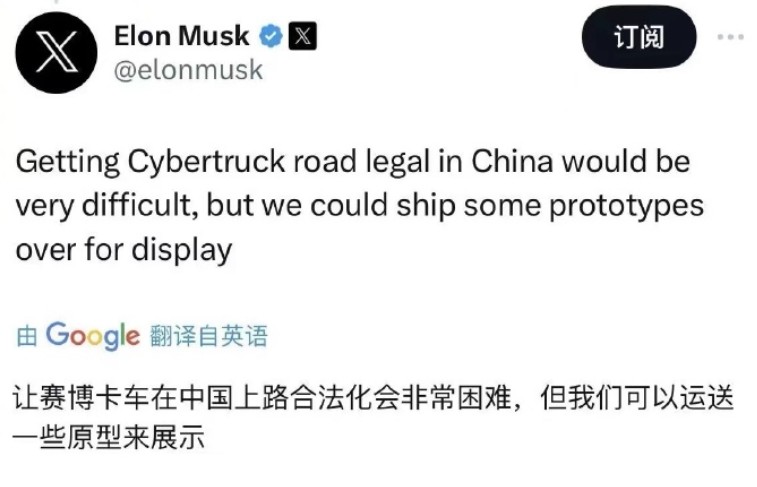
After all, Musk had said long ago, it would be difficult for this car to be legally driven in China.
Earlier this year, Tesla shipped a batch of display cars to China, but these display cars could only be driven on closed roads, and were transported on flatbed trucks on public roads.
However, after browsing through photos and videos online, I realized that it was not a fake, it was indeed registered. The photos taken so far all show the same car, with a license plate starting with "Jin A".
How did this car come to be? We asked people from Tesla, and they said that the official channel did not import it, so it should be a parallel import.
Therefore, this may be the first one in the country, and probably the only Cybertruck with a green license plate at the moment.
Someone has already listed this car on the second-hand platform, founder's edition, with the car's system in English, using Google Maps, and only 800 kilometers on the odometer.
Since it's the first one in the country, the price is not going to be low-key, 3.6 million yuan. Keep in mind that the highest configuration of this car in the U.S. is priced at 114,000 dollars, equivalent to 810,000 yuan.
At 3.6 million, it's like asking for money.
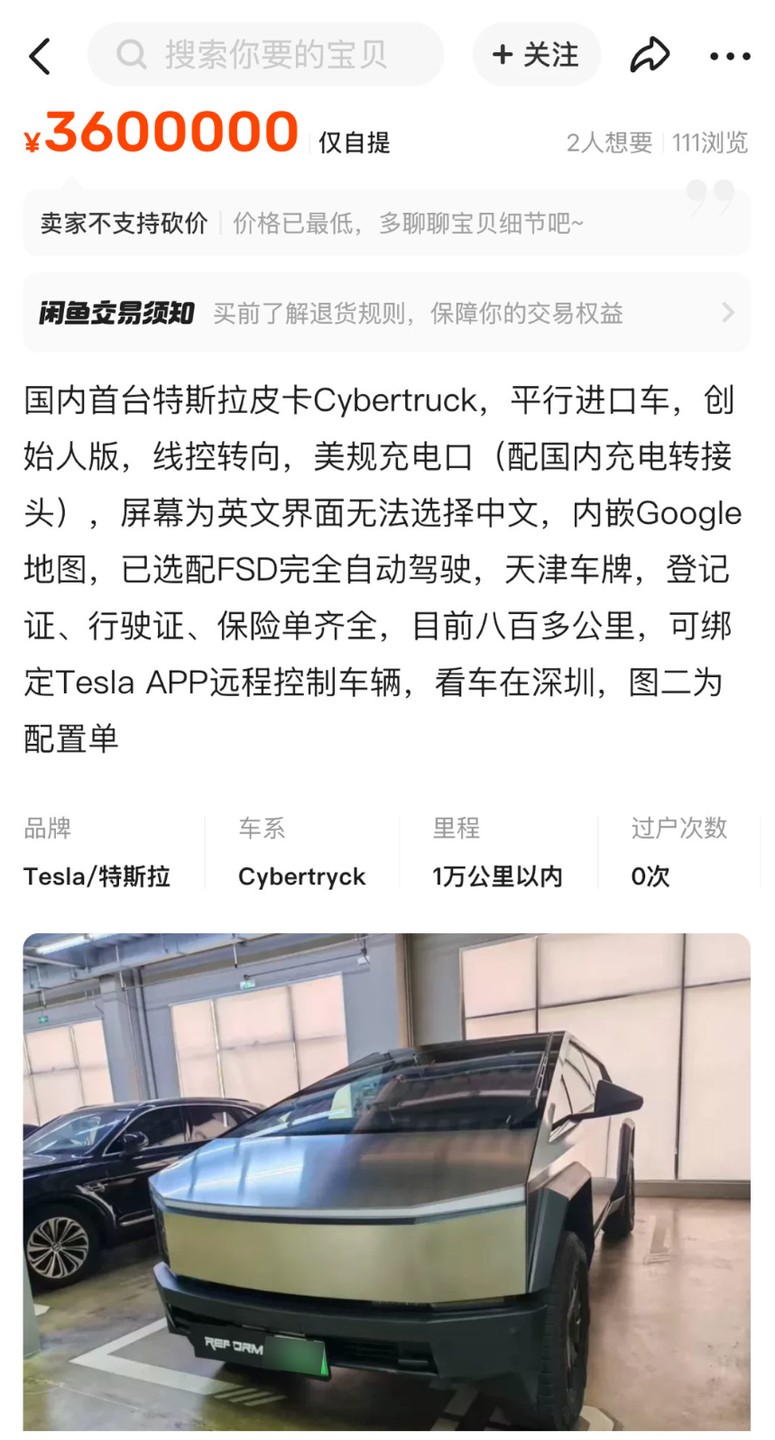 After confirming that the car is genuine, Neck Brother immediately mobilized various connections, inquiring with car industry insiders and parallel import car dealers to figure out how it came into the country.
Before that, let me briefly introduce what parallel imports are.
A dozen or twenty years ago, cars could only be sold through dealers approved by the brand. Vehicles brought in through other channels were considered shady and couldn't be registered.
Until 2014, the State Administration for Industry and Commerce issued a regulation, ceasing the filing of general distributors and authorized brand dealers, meaning that car dealers no longer need to obtain authorization from manufacturers to sell cars.

Parallel imports emerged from this, allowing dealers to source vehicles from around the world, bring them back to China, complete the necessary procedures, and then register them like regular cars. For example, the Mercedes-Benz G500 4×4², which was not officially introduced by the manufacturer, could not be purchased in China before, but with parallel imports, it is now possible.
It's like having an additional channel to supplement official imports. And because there are no layers of dealerships involved, some models of parallel imports can be cheaper than those from official channels.
Therefore, the volume of parallel imports is increasing. In 2015, parallel imported cars accounted for 10% of total imports, and by 2019, it had risen to 15%.

Although the policy has been relaxed, this business is not easy.
Parallel imported cars are generally classified based on the import location, such as US version, Middle East version, Canadian version, European version, Mexican version, etc.
You have to source the vehicles from these locations, and they must be brand new, refurbished or nearly new cars are not allowed. Different countries have different regulations, and the same model may have different configurations. Successfully bringing the car over and understanding the configurations is not simple.

After the cars arrive, they cannot be sold immediately; they must comply with domestic automotive regulations.
According to information from the "Customs Release" official account, parallel imported cars need to be modified at designated locations to comply with national safety technical standards such as the "Technical Conditions for Automotive Safety Operation" (GB 7258).
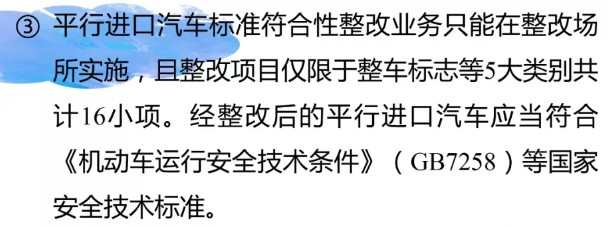
For example, some US version cars have red rear turn signals, which must be changed to yellow before they can be registered. These modifications must be carried out by the dealers themselves The most troublesome thing is that both the cost and sales risks are not small.
Obviously, these imported cars are not cheap, often costing tens of millions to hundreds of millions, and that's just the bare car cost, not to mention the comprehensive taxes, customs clearance, showroom expenses, and labor costs, etc. Bringing in a batch of a dozen or so cars will require millions of funds in no time.
After finally passing the customs, the market situation may still change. You might think that many people will buy them, but it turns out to be all slogans. If the cars remain unsold, the funds may have trouble turning over.
It can be said that bringing in cars that are not available domestically is not easy, not to mention the Cybertruck, getting it officially licensed is even more difficult.
Previously, people said it couldn't pass the domestic regulations mainly due to three issues: pedestrian protection, external protrusions, and steer-by-wire steering.
Here, let's insert a point, based on our understanding, this Cybertruck is more likely to be introduced as a pickup truck. The reason for mentioning this is that common passenger cars belong to the M1 category, while pickup trucks belong to the N1 category, and there are some differences in regulations between the two. Next, we will discuss these two categories together.
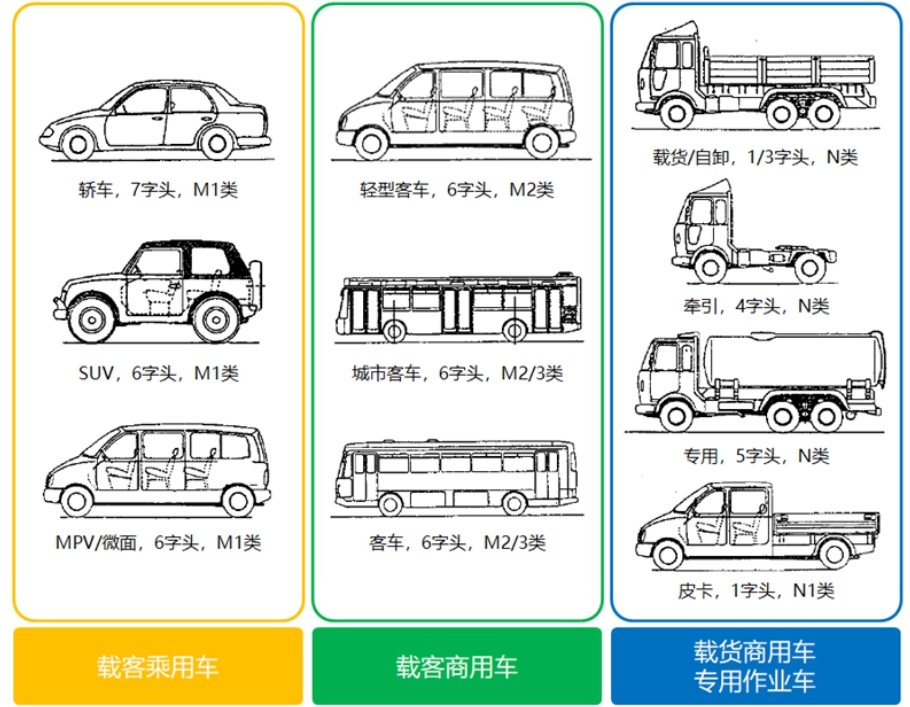
OK, let's discuss them one by one.
The current national standard for pedestrian protection is "Collision Protection of Vehicles for Pedestrians" (GB/T 24550-2009).
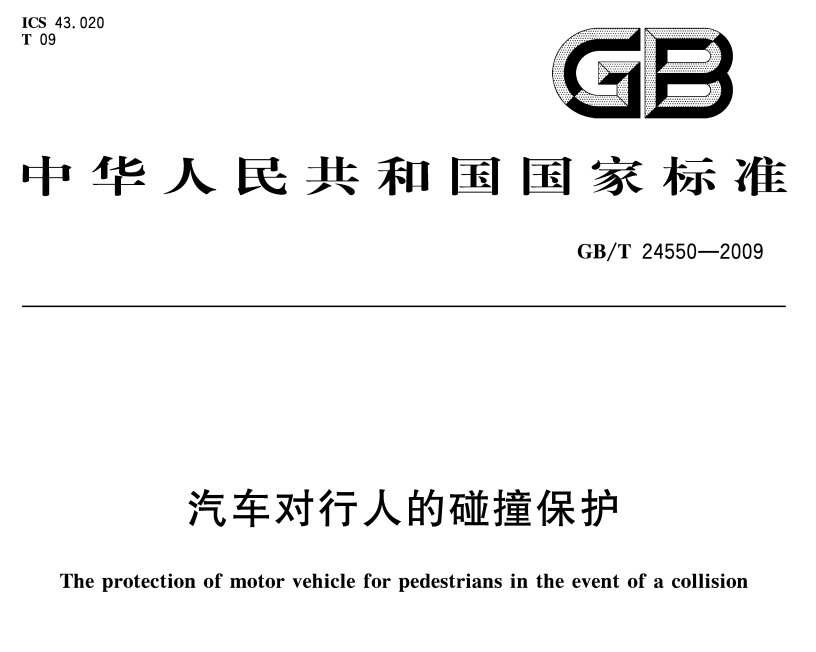
It requires that the vehicle's bumper and hood can absorb energy to protect pedestrians. However, the Cybertruck's front end looks different from other cars, it's straight and flat, and the key is that its stainless steel body surface is very hard, bulletproof even, so if a pedestrian hits it, it might cause double the damage.
In my personal opinion, it probably won't pass the pedestrian protection regulations.
However, there are two questions here.
First, this regulation states "excluding M2 and N category vehicles with a horizontal distance less than 1000mm between the driver's seat R point and the front axle centerline". Pickup trucks belong to the N category, we don't know the data for the Cybertruck, so maybe it doesn't need to comply with this.
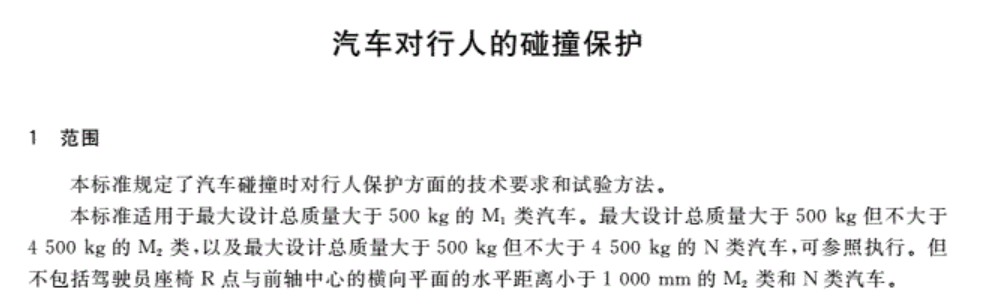
Second, this regulation is a recommended national standard by GB/T, not mandatory. This national standard will be updated to a mandatory one on January 1st next year, and the new standard will be stricter.
 So there is also a saying that the window for Cybertruck to enter China is from now until New Year's Day next year, and it will be even more difficult to introduce it later.
Moving on to the second point, external protrusions.
Unlike passenger cars, the national standard for passenger cars is "External Protrusions of Passenger Cars" (GB 11566-2009).
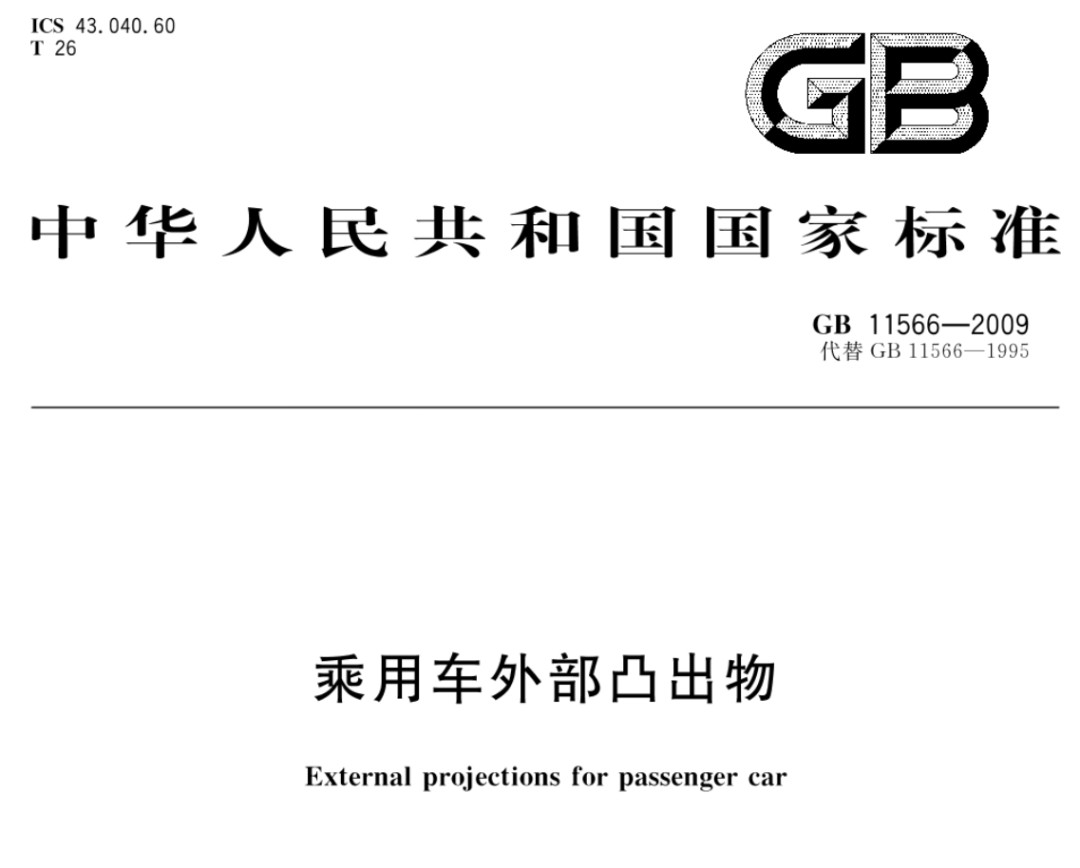
One of the constraints for Cybertruck is that the rounded corner radius of protruding parts on the body surface should not be less than 2.5mm.
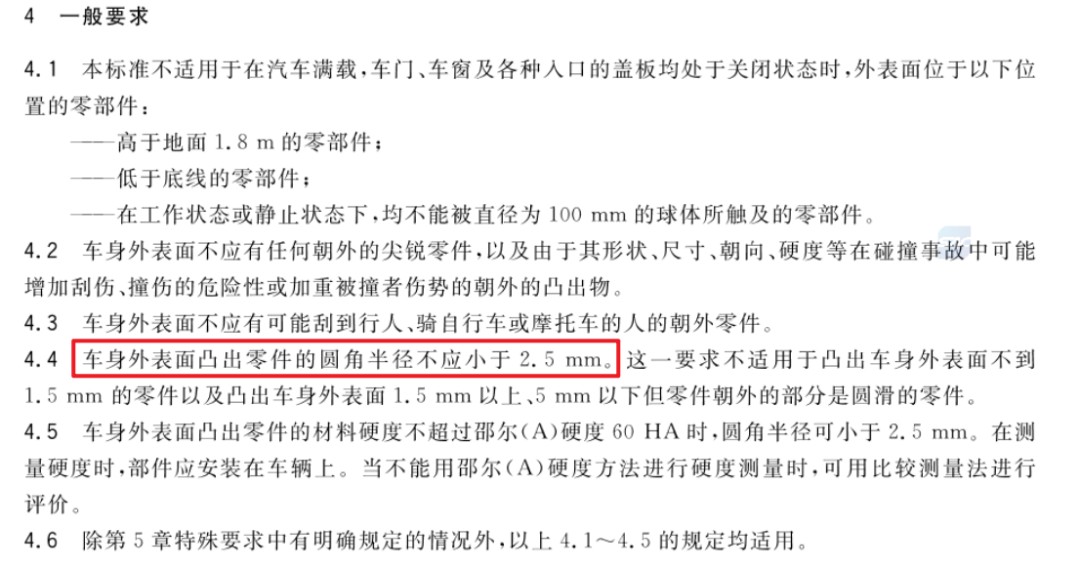
There may be some friends who are not very familiar with the concept of rounded corners. Simply put, the larger the rounded corner radius, the smoother the object, and the smaller the rounded corner radius, the sharper the object. This regulation is also to prevent the body's protruding parts from being too sharp and causing harm to others.
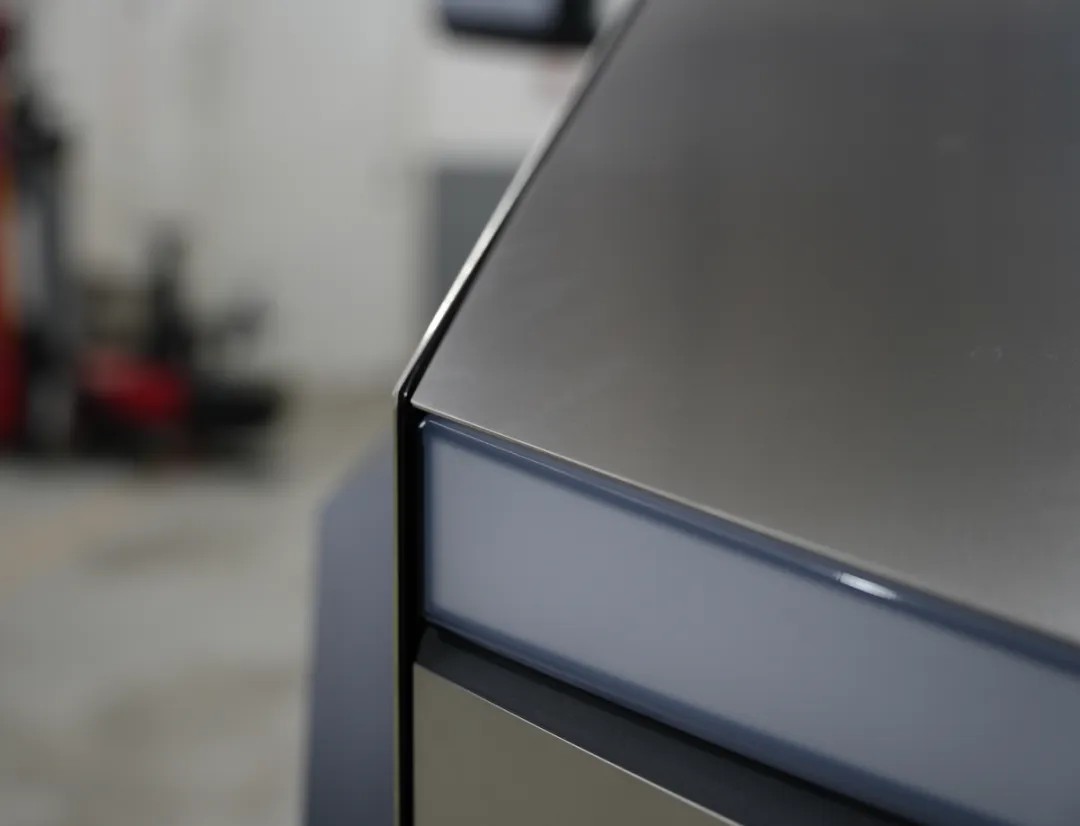
Moreover, the 30X stainless steel used in Cybertruck is thick and hard, making it impossible to be processed into curves like conventional car body panels. It can only be welded and bent in a simple way, which is the main reason why Cybertruck has sharp angles all over its body.
A senior vehicle development engineer told me that Cybertruck is having a hard time passing the 2.5mm "protrusion" requirement.
As for pickups, the corresponding national standard is "External Protrusions of Commercial Vehicle Cab" (GB 20182-2006).
In the general regulations, there is no requirement for rounded corner radius, only in special regulations for decorative parts, commercial symbols, and other components.
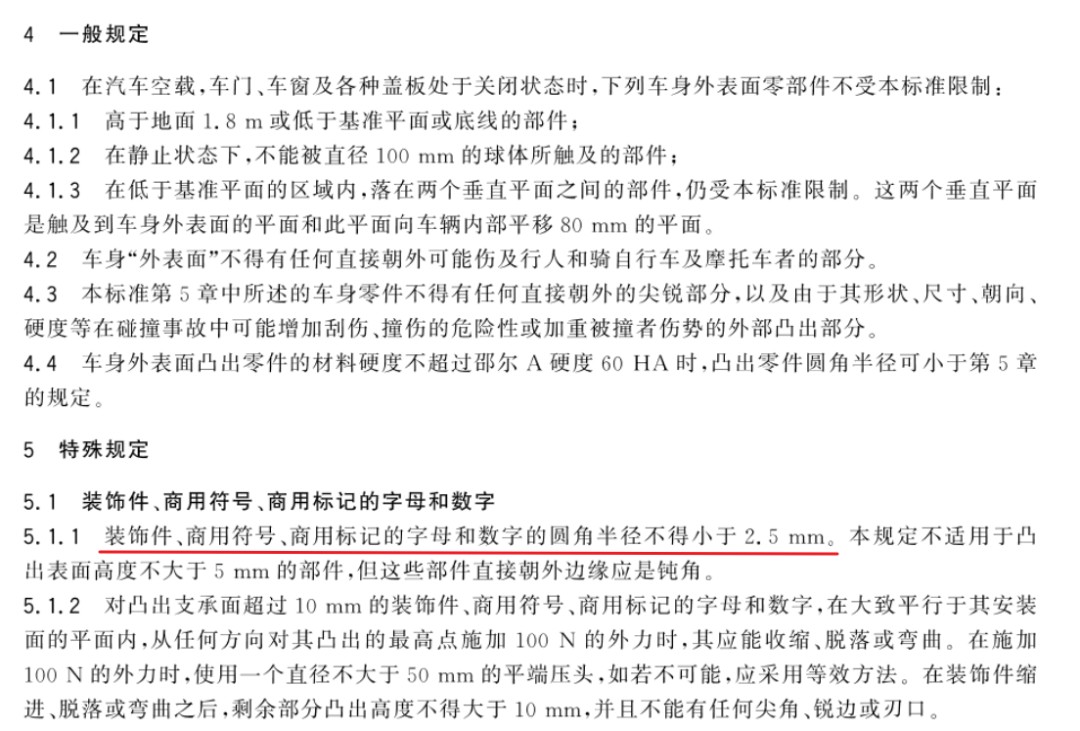
In this case, if Cybertruck were a pickup truck, it might be able to bypass this requirement. However, the engineer mentioned above told me that when he was developing pickup trucks before, he also had to comply with the 2.5mm "protrusion" requirement.
Lastly, steer-by-wire, the corresponding national standard is "Basic Requirements for Automotive Steering Systems" (GB 17675-2021), applicable to both passenger cars and pickup trucks.
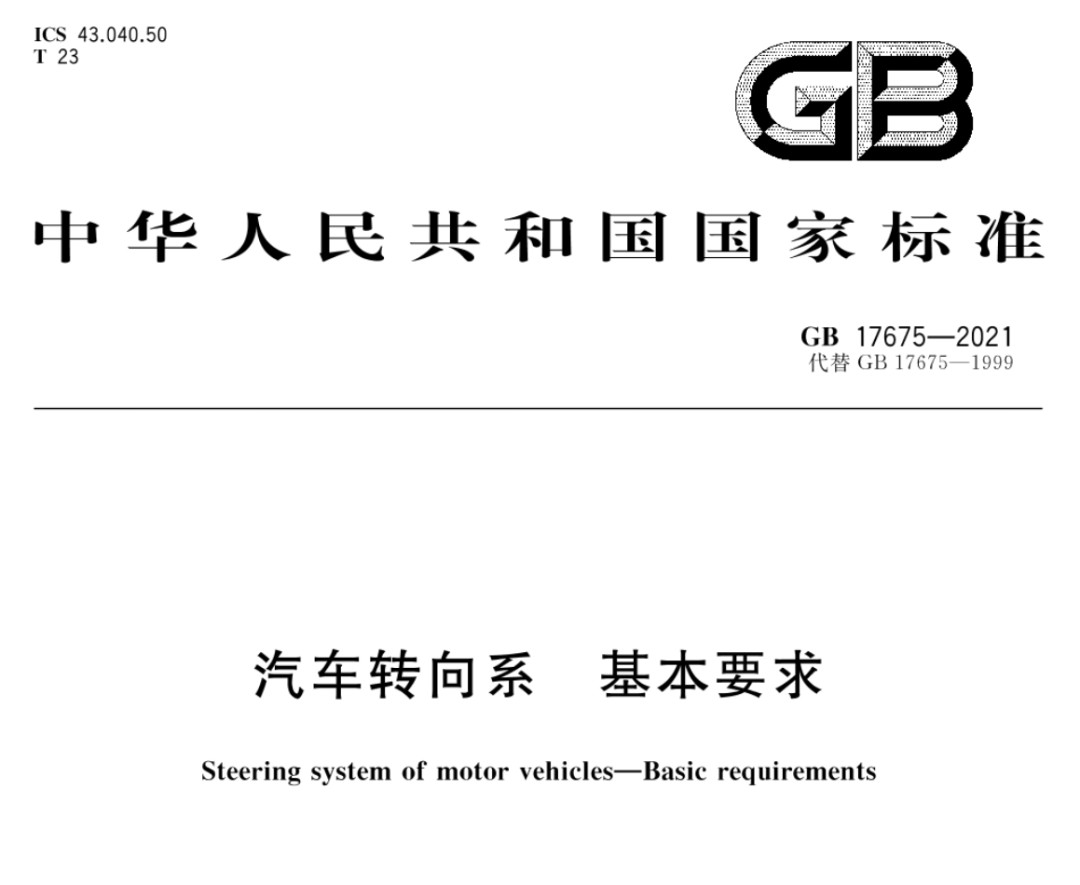 I roughly translated it, and there are descriptions in sections 4.1.3 and 4.3.1.1 respectively:
The direction of the car's steering operation should be consistent with its driving direction, and the steering angle should correspond continuously to the deflection of the steering control device.
If these components fail and cause the vehicle to lose control, these components should be made of metal or materials with equivalent characteristics, and significant deformation should not occur when the steering system is working normally.
Putting these words together, it basically means that the line-controlled steering and variable steering ratio on the Cybertruck were overlooked.
Previously, the Lexus RZ had a unique steering wheel and line-controlled steering overseas, but when it entered China, the line-controlled steering was removed due to regulatory issues.
In any case, after researching, Brother Bo feels that Jack Ma's understanding is very accurate. Under the current regulations, it is indeed very difficult for the Cybertruck to enter China, at least through official channels, it is almost impossible without modifications.
But this time it actually entered and got licensed, the Tianjin A license plate indicates that it most likely came through Tianjin Port.
I consulted several parallel import car dealers, and they mentioned that for a certain scale of import, certification and testing are required.
One car dealer mentioned that at least 3 vehicles need to be presented, 1 for frontal collision, 1 for side collision, and 1 for high and low-temperature testing.
In addition to scale imports, for some rare models, there is also a "one car, one certificate" practice.
For example, rare luxury cars like Pagani, which cost tens of millions for one unit, some models are so rare globally that there are only a few, almost impossible to crash, yet there are some Pagani cars with blue license plates in China.
This method incurs very high costs, whether the Cybertruck follows this path is hard to say.
But what can be slightly confirmed is that the first introduction of a new model is the most troublesome, once it enters, it should be easier afterwards, and the price should also drop.
Just recently, a car dealer casually sent me another source of Cybertruck, priced at 1.88 million, shipped from Bremen, Germany Brother Bo has long experienced the Cybertruck, so he won't argue with everyone. Please take it quickly, my less capable friends.
In fact, if it weren't for the introduction of the Cybertruck, parallel imported cars would have faded from everyone's view.
In 2023, the national sales of parallel imported cars were only 39,300 units, just a fraction of previous years. A car dealer said that the peak was in 2016 and 2017. Since 2018, the profits of parallel imported cars have significantly decreased, and many people have long since quit.

There are many reasons behind this, such as the stricter National VI emission standards, a decrease in luxury car sales, and official price reductions.
This is destined to be a niche market. After all, if the market is large, manufacturers would take the initiative.
With the efforts of domestic car manufacturers and the increase in the penetration rate of new energy vehicles, the demand for parallel imported cars may further shrink. Therefore, it can be foreseen that in the future, it will only be a way for wealthy tycoons to play with foreign toys.
Image and data sources:
GB/T 24550-2009, "Collision Protection of Pedestrians by Vehicles"
GB 11566-2009, "Protrusions on Passenger Cars"
GB 20182-2006, "Protrusions on Commercial Vehicle Cab Exterior"
GB 17675-2021, "Basic Requirements for Vehicle Steering System"
Customs Announcement, Interpretation | Understanding the Development of "Automobile Parallel Import" New Policies in One Picture
Du Yongchen, Analysis of China's Parallel Imported Car Certification System
Negative Review X.PIN (ID: chaping321), Author: Brother Bo, Writing: Daydream, Editing: Brother Right Twist, Surface Line
