


8 连跌!“资本开支最高” 的亚马逊跌入熊市,投资者对 Mag 7“用脚投票”
Amazon has fallen 21.4% from its recent high, officially breaking below the bear market threshold, while Microsoft is the first member of the Mag7 to enter a bear market, with its stock price falling into a bear market on January 29. Meta's stock price is just 2.3% away from the bear market threshold. Investors are lacking confidence in whether these companies' AI spending will yield sufficient returns, with Amazon planning the highest capital expenditure in 2026, reaching $200 billion
Amazon's stock officially entered a technical bear market after falling for eight consecutive trading days, becoming the second company in the Mag 7 to fall into a bear market. Investors have strongly resisted the tech giant's aggressive artificial intelligence spending plans, leading to significant declines in these star stocks.
On Thursday, Amazon's stock closed at $199.60, down 21.4% from recent highs, officially breaching the bear market threshold. Among the four major cloud service providers, Amazon plans the highest capital expenditure for 2026, reaching $200 billion. The combined capital expenditure of Amazon, Microsoft, Meta, and Alphabet in the AI sector is expected to total $650 billion by 2026.
Meta may become the next Mag 7 member to enter a bear market, with its stock price just 2.3% away from the bear market threshold. Although Meta's fourth-quarter revenue and earnings exceeded Wall Street expectations, increased AI spending and margin pressure have undermined investor confidence.
Microsoft was the first Mag 7 member to enter a bear market. The company's stock fell into a bear market on January 29, after the previous day's announcement that Azure cloud business growth did not meet investor expectations. As of Thursday's close, Microsoft's stock was down 25.9% from recent highs.
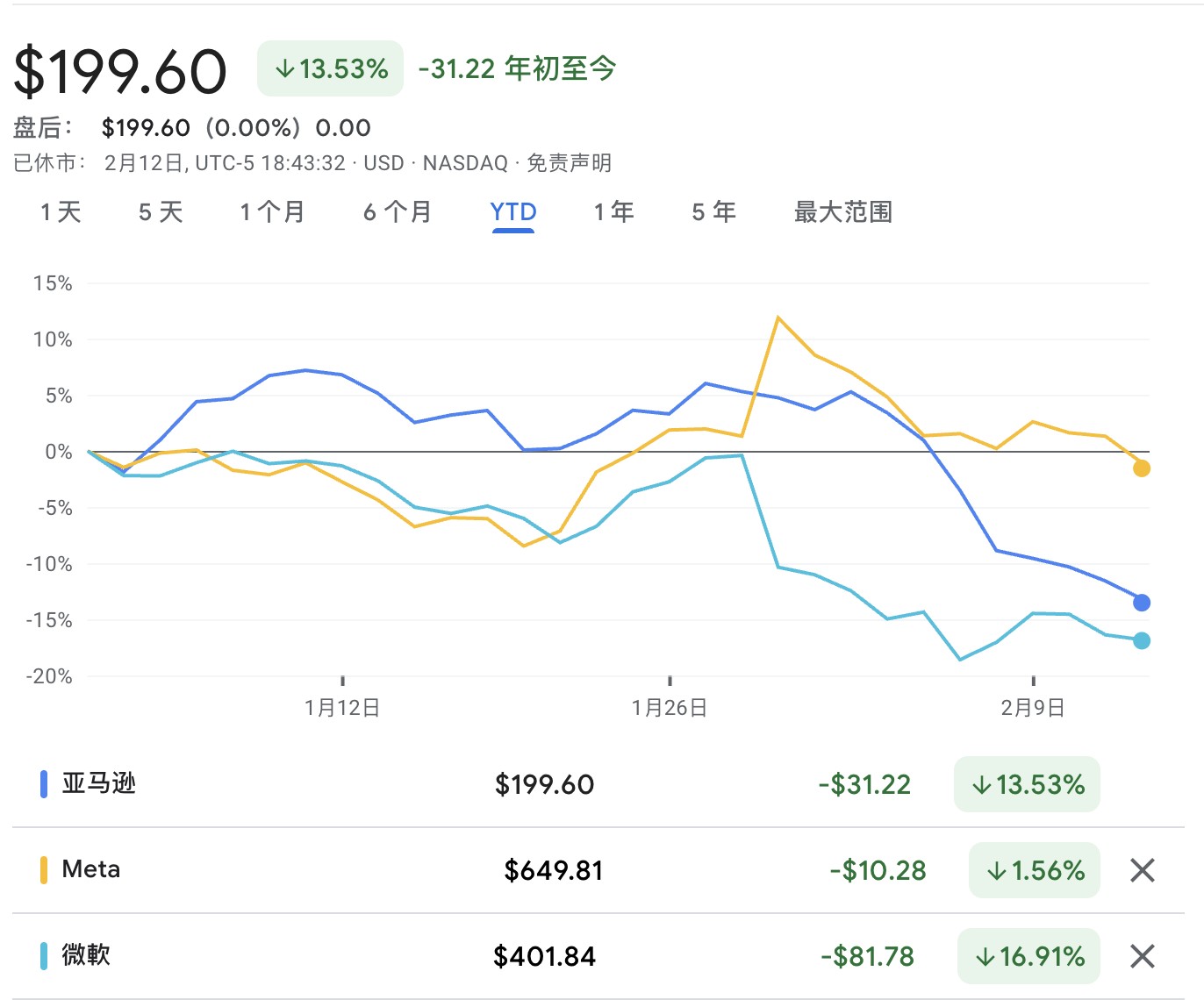
Investors Rotate Within Mag 7, Free Cash Flow Pressure Highlights
Mike Treacy, Vice President of Risk at Apex Fintech Solutions, stated that the recent sell-off highlights the widening divergence among Mag 7 members. Since last fall, investors have withdrawn from OpenAI trades associated with Microsoft, Nvidia, and Oracle, favoring the Alphabet and Broadcom ecosystems instead.
Treacy pointed out that Alphabet's vertically integrated tech stack somewhat mitigates concerns about overspending, shielding the stock from the most severe impacts of the tech stock sell-off. Alphabet's stock closed down 9.2% from recent highs on Thursday. Treacy noted that Google's self-sufficiency should command a premium relative to other companies that may be adversely affected by issues in certain segments of the supply chain.
Amazon, Microsoft, and Meta's stocks have suffered greater impacts as investors are skeptical about whether these companies' AI spending will yield sufficient returns. For Amazon, the increase in capital expenditure levels could lead to negative free cash flow this year, meaning the company may need to start entering the debt market to raise more capital.
Treacy believes that the next significant catalyst for AI trades will be Nvidia's earnings report released on February 25. This report will indicate whether the AI boom is cooling off, or whether Nvidia has successfully captured billions of dollars in investments from its largest customers in this field
