今年收益 43%,東吳基金陳偉斌:貿易摩擦是情緒擾動,市場短期獲利調整,整體機會大於風險,把握 AI、創新藥兩條主線

Chen Weibin from Soochow Fund shared his outlook on the market on October 13, pointing out that the China-U.S. trade friction affects market sentiment but is not decisive. In the short term, the market may experience fluctuations and adjustments, but the overall opportunities outweigh the risks. He suggested focusing on two long-term industry trends: AI and innovative drugs, believing that the AI industry is still in its early stages and that liquid cooling technology has huge market potential; in terms of innovative drugs, the PD-1/VEGF dual antibodies and ADCs and other sub-sectors are worth paying attention to
The current Sino-U.S. trade situation is tense; how will the market unfold in the future?

On the morning of October 13, Chen Weibin from Soochow Fund shared his outlook on market trends.
The investment class representative summarized the key points as follows:
- The topic of the global trade war does not have a decisive impact; it is more likely to affect the fundamentals, especially market sentiment.
Such news is more of an emotional disturbance. After experiencing the "black swan" event of the global trade war in April this year, the most extreme shock may have already passed.
-
In the short term, influenced by the overseas trade war, we believe the market may have an inherent demand to digest profit-taking through fluctuations. However, after the adjustment ends, as long as there are no liquidity issues, we still maintain the judgment that opportunities outweigh risks for the entire market.
-
Against the backdrop of overseas risks, we recommend that investors focus on directions with long-term industrial trends. We have identified two areas: AI and innovative drugs.
-
AI represents a transformation similar to the PC internet revolution. Calculating in terms of a decade, it has only just begun, having gone through a little over two years, and is likely still in the early stages of the AI industry.
-
There is still space in the upstream of AI, but the downstream has even greater potential.
The upstream mainly involves the construction of computing power infrastructure, including optical modules, PCBs, power supplies, and liquid cooling. We believe that the future potential for liquid cooling will be greater.
This year marks the explosive year for liquid cooling, and it is at a point of explosion; it has just started, with next year being the first complete year. The industry's growth rate may reach 500% next year.
The global market space for liquid cooling this year may be in the range of tens of billions, while next year it is expected to reach hundreds of billions.
- Innovative drugs have only progressed for two or three quarters and are likely still in the first half. Looking ahead, there is still potential in terms of both time and space.
From a segmented perspective, we recommend focusing on: one is PD-1/VEGF or PD-1 plus dual antibodies; secondly, ADC; and also upstream directions like CXO.
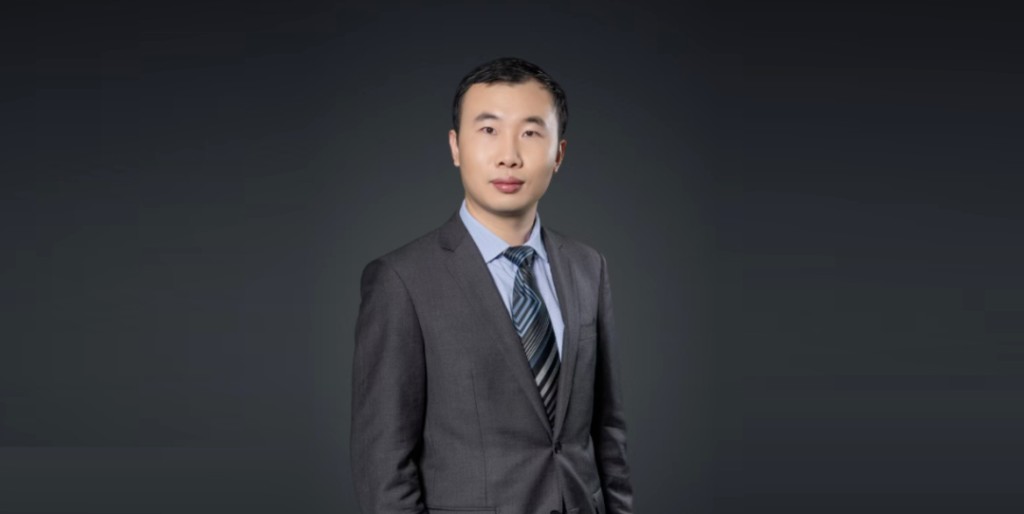
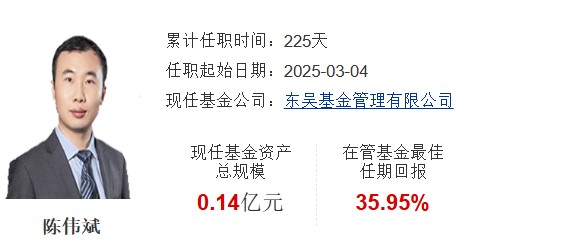
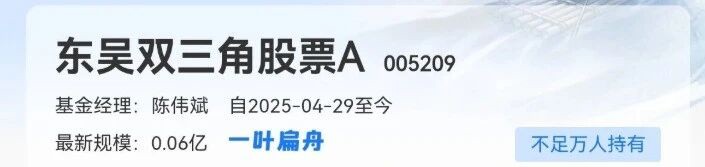
Chen Weibin is a manager at Soochow Fund, with just over 7 months of fund management experience. He joined Soochow Fund in August 2020, previously serving as a senior industry researcher, assistant general manager of the research planning department, and investment manager. He currently serves as the assistant general manager of the equity investment headquarters and general manager of the equity research department, as well as a fund manager. He has been the fund manager of Soochow Double Triangle Stock Securities Investment Fund since March 4, 2025.

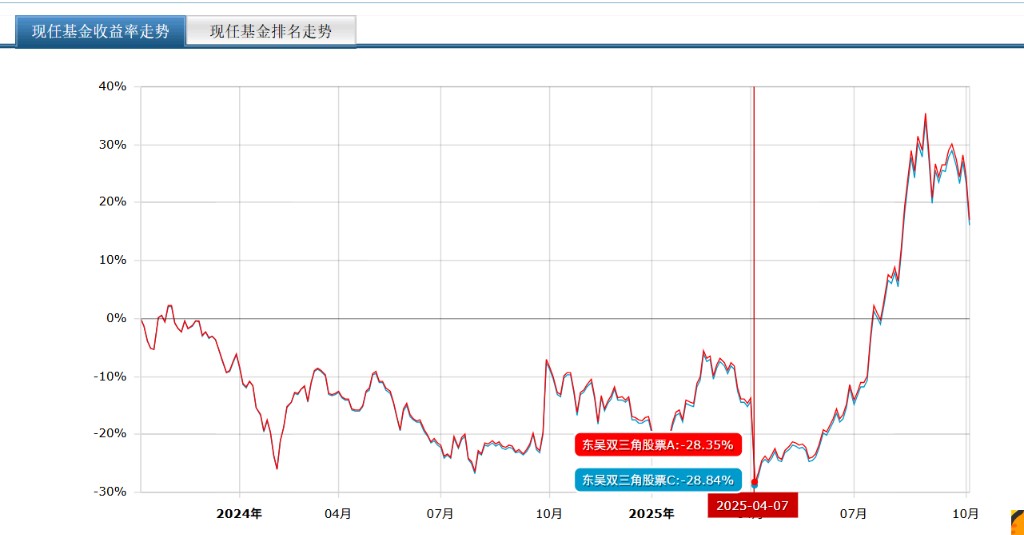
His management scale is only 0.14 billion, managing only one fund—Soochow Double Triangle Stock. For example, the Soochow Double Triangle Stock A has achieved a return of 42.5% this year. Although it does not match the doubling of returns for the top 20 public funds in the first three quarters of this year, the performance is still acceptable


As seen from the above image, Dongwu Double Triangle Stock A and Dongwu Double Triangle Stock C both experienced a rapid increase in returns after being managed by Chen Weibin in April this year.
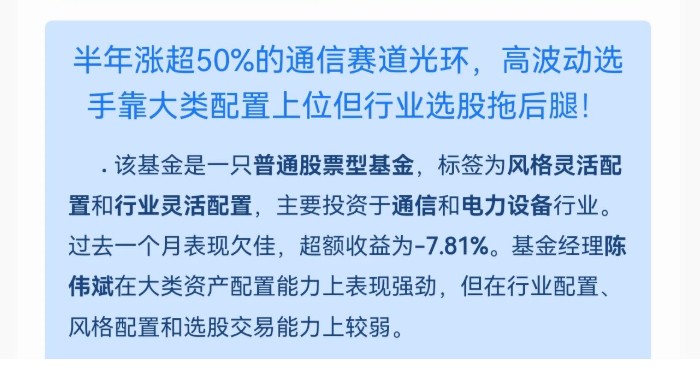
The Homework Navigation Index believes that although Dongwu Double Triangle Stock A performed poorly in the past month, Chen Weibin still demonstrated strong capabilities in asset allocation.


How will the fund perform in the future? You can click on the original text at the end to view the analysis from the Homework Navigation Index.
Below are the highlights shared by Chen Weibin, organized by the investment representative of Homework (WeChat ID: touzizuoyeben), shared with everyone:
Short-term market fluctuations and adjustments, but overall opportunities outweigh risks
The topic of the global trade war discussed a lot over the weekend does not actually have a decisive impact; it is more likely to affect the fundamentals, especially market sentiment.
We have mentioned in previous live broadcasts that the market may experience fluctuations in the short term, but in the long term, opportunities still outweigh risks.
The short-term market fluctuations are mainly due to the accumulation of profit-taking after several months of continuous market rises.
At the current position, the market itself also has a demand to digest profit-taking through certain fluctuations and adjustments. The market is likely to undergo overall adjustments through fluctuations.
In this context, we see overseas risk events during the holiday period and the calls for a global trade war—according to public news media reports, President Trump proposed to impose a 100% tariff on imported goods—such news is more of an emotional disturbance.
Because similar trade war concerns have already occurred once in April this year. We previously mentioned that in terms of risk appetite, after experiencing the "black swan" event of the global trade war in April this year, the most extreme impact may have already passed.
Even if there are some reversals in the second half of the year, the impact is likely to be weaker than the shock in April this year.
This is a similar viewpoint we have previously shared with investors in our live broadcasts. Now it is just a verification of our previous views In summary, for the entire market, we believe that opportunities still outweigh risks, with the core focus being on grasping the key variable of liquidity. As long as there are no issues with liquidity, we maintain the judgment that opportunities outweigh risks for the entire market.
In the short term, influenced by the overseas trade war, we believe the market may experience internal demand for profit-taking through fluctuations and adjustments. However, after the adjustment ends, it is highly likely that opportunities will still outweigh risks. This is our overall view of the entire market.
Focus on Two Main Lines: AI and Innovative Drugs
Returning to the larger sector level, at this point in time, many investors will ponder how to grasp the main lines in the future against the backdrop of overseas risks. Our overall view is that we recommend investors focus on directions with long-term industrial trends.
We can observe the trends in the equity market, especially during bull markets, where there are likely several main lines that run through the entire market, as well as some that are more stage-specific.
In this round of equity market trends, we suggest that everyone pay attention to directions with long-term industrial trends. We have identified two such directions: AI and innovative drugs. From a fundamental perspective, these two major industrial trends currently have no issues.
AI is still in the early stage of an industrial revolution, with more space upstream, but even greater space downstream
We believe AI is an industrial revolution that will last 5 to 10 years, and we are currently just over two years in, likely still in the early stages.
From the industrial chain perspective, it can be divided into upstream computing power, infrastructure construction, and downstream AI applications. There is still space upstream, but even greater space downstream.
In the upstream computing power infrastructure construction, we have identified the "Four Kings of Computing Power": optical modules, PCBs, power supplies, and liquid cooling.
We believe the potential opportunities for liquid cooling may be greater in the future. One of the main reasons is that its industry growth rate is expected to reach 500% next year. This growth rate is higher than that of other computing power segments such as optical modules and PCBs.
Additionally, the industry space for liquid cooling next year is also substantial. We estimate that the global industry space for liquid cooling could reach 100 billion RMB next year. This industry space scale is expected to exceed that of AI PCBs and approach that of AI optical modules, indicating a relatively large industry space.
Furthermore, from a timing perspective, next year will be the first complete year of the liquid cooling explosion, not one that has already been developing for several years.
This year is the inaugural year for liquid cooling, and next year marks the first complete year of its explosion. Based on these reasons, we recommend that everyone pay attention to this direction with long-term industrial trends.
Moreover, on the downstream side, we can see AI software, AI hardware, etc. Within AI hardware, there are subdivisions such as intelligent driving, AI robots, AI glasses, and AI edge devices. These are also directions with significant potential and large space for future development, and are equally worthy of research and attention from investors.
Innovative drugs represent a 2-3 year upward industrial trend, with three directions to focus on
Next, I will briefly share my views on another direction - innovative drugs.
Since July, especially in August and September, innovative drugs have been in a sideways fluctuation process. Many investors may have previously paid attention to innovative drugs, but during this sideways fluctuation, they gradually lost patience and began to worry whether the market for innovative drugs has ended.
Here, we will briefly explain our views on innovative drugs. This round of innovative drugs is also an upward industrial trend, and we expect this upward industrial trend to likely continue for two to three years. We have only just gone through two or three quarters, and we are likely still in the first half of this upward trend.
The main basis for our judgment is that we see overseas multinational pharmaceutical companies facing the issue of patent expiration, known as the "patent cliff."
This round of patent cliffs for overseas multinational pharmaceutical companies is concentrated between 2025 and 2028. To prevent a significant decline in sales revenue after patent expiration, they need to prepare next-generation innovative drug blockbusters in advance.
This is the main catalyst for the business development (BD) of domestic innovative pharmaceutical companies going overseas.
After years of accumulation, Chinese innovative pharmaceutical companies have made significant progress and can provide higher quality innovative drug pipelines at lower costs and in shorter timeframes. Meanwhile, overseas multinational pharmaceutical companies have a strong demand for preparing next-generation innovative drug blockbusters during these two to three years.
Therefore, they are coming to China to "buy, buy, buy." The needs of both parties happen to align perfectly, achieving a seamless connection.
Thus, we say that the catalyst for this round is the BD of Chinese innovative pharmaceutical companies going overseas. Overseas multinational pharmaceutical companies have concentrated procurement and reserve needs before patent expiration, and both sides can achieve a relatively perfect fit.
Regarding the main line of innovative drugs, taking tumor innovative drugs as an example, we see one direction is the upgrade of monoclonal antibodies. For instance, the upgrade direction of PD-1 monoclonal antibodies is "PD-1 plus," including PD-1/VEGF and PD-1/IL2, etc.
Therefore, dual antibodies like PD-1 plus or PD-1/VEGF are a main line worth our attention in the field of innovative drugs.
Another direction is the upgrade of chemical drugs, with the mainstream direction being ADC (antibody-drug conjugates), which connects a toxin to an antibody through a linker to give it targeting capability. This is also a direction worth paying attention to.
Furthermore, in the upstream industry, innovative drugs are positioned in the downstream of the entire pharmaceutical industry chain, with their upstream being the CRO, CDMO, and other CXO fields. This is also a direction to focus on within the innovative drug industry chain.
So to summarize regarding innovative drugs:
This round of innovative drug market is likely an upward industrial trend lasting 2 to 3 years, and we have only gone through two or three quarters, likely still in the first half. Looking ahead, there is still potential in both time and space.
From the perspective of sub-sectors, we recommend focusing on: one is dual antibodies like PD-1/VEGF or PD-1 plus; secondly, ADC; and also the upstream CXO and other directions Source: Investment Workbook Pro, Author: Wang Li
For more insights from industry leaders, please follow↓↓↓

Risk Warning and Disclaimer
The market has risks, and investment should be cautious. This article does not constitute personal investment advice and does not take into account the specific investment goals, financial situation, or needs of individual users. Users should consider whether any opinions, views, or conclusions in this article are suitable for their specific circumstances. Investment based on this is at one's own risk