


特朗普釋放關税緩和信號 新興市場股市創四年新高

Affected by the easing of tensions in China-U.S. trade, emerging market stock markets reached a four-year high, rising 1.5% on Monday. Trump stated that the tariffs on Chinese goods are "unsustainable" and maintains a good relationship with Chinese leaders, expecting to meet in South Korea. Market sentiment has improved, and some analysts believe that China may relax its export controls on rare earths, although the future trade situation remains uncertain. Most Asian emerging market currencies strengthened against the U.S. dollar
According to Zhitong Finance APP, driven by signs of easing tensions in China-U.S. trade, emerging market stocks have climbed to their highest level in over four years.
On Monday, an emerging market stock index rose by 1.5%, reaching its strongest level since June 2021. Stocks such as Taiwan Semiconductor Manufacturing Company (TSM.US), Tencent Holdings (00700), and Alibaba (09988) topped the gainers list. An emerging market currency index also increased by 0.2%.
The improved market sentiment stems from U.S. President Trump stating in an interview on Sunday that tariffs on Chinese goods are "unsustainable," although they "will still be maintained for now." He added that he has a good relationship with Chinese leaders and expects both sides to meet in South Korea. The Asia-Pacific Economic Cooperation (APEC) meeting will be held in South Korea later this month.
Trump also pointed out that rare earths, fentanyl, and soybeans are core issues in U.S.-China negotiations.
Chris Weston, head of research at Pepperstone Group, wrote in a report: "Although the future developments of the trade situation remain unclear, the current market pricing seems to indicate a positive outcome, or at least that things will not get worse."
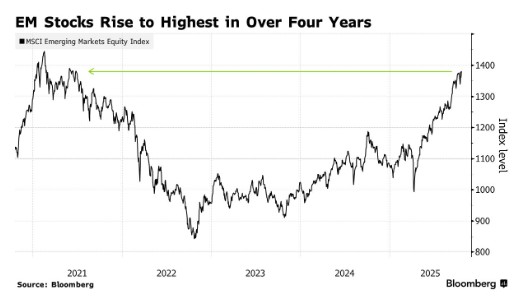
Weston stated that the market's basic expectation seems to be that China will relax its export controls on rare earths, which could extend the current tariff truce. "However, some may question whether the market is underestimating the risk that China will not make concessions."
Most Asian emerging market currencies strengthened against the U.S. dollar, with the South Korean won and Indian rupee leading the gains.
Analysts at Barclays Bank, including Lefteris Farmakis, stated in a report: "Given the strategic importance of the current contentious issues, we have ample reason to believe that the U.S.-China dispute will remain within a controllable range for now."
