Just now, QT has officially ended, and the use of repurchase facilities has surged. What does this mean for overall liquidity?

Although the Federal Reserve's quantitative tightening (QT) has officially ended, the usage of the Standing Repo Facility (SRF) has reached the second-highest level since 2020, indicating that liquidity in the financial system has not shifted to a loose state; this suggests that the market will enter a new phase dominated by the Federal Reserve—central banks need to provide liquidity to the market through targeted bond purchases, and this process will also lead to selling pressure on mortgage-backed securities (MBS), complicating the overall liquidity outlook
The Federal Reserve's quantitative tightening (QT) process has officially come to an end, but recent turmoil in the short-term funding markets, including a surge in the use of a key emergency repurchase tool, indicates that liquidity pressures are far from over.
The market is entering a new phase, with the Federal Reserve set to absorb a large amount of newly issued Treasury bills, while a massive amount of mortgage-backed securities (MBS) will be pushed into the market. This complex dynamic combination makes the future path of overall liquidity highly uncertain.
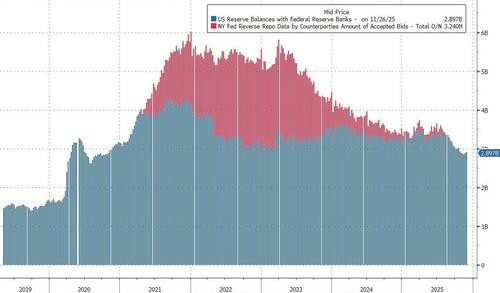
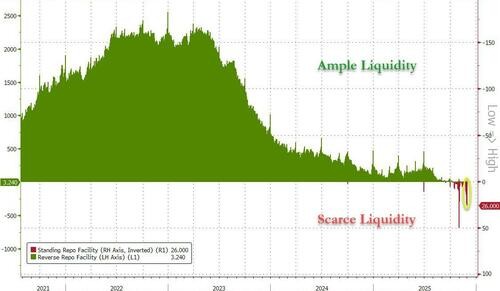
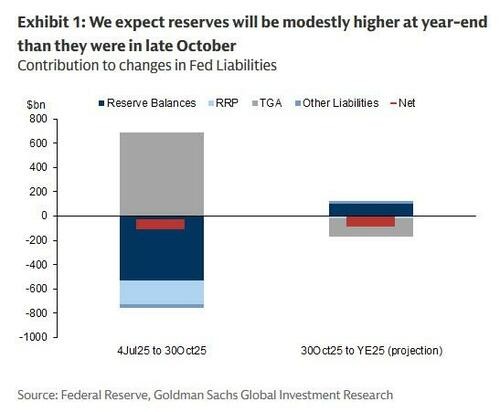
According to the Federal Reserve's plan, the balance sheet reduction process that began in mid-2022 officially ended on December 1. Prior to this, the process had led to a significant decline in the level of reserves in the banking system, especially after the resolution of the U.S. debt ceiling impasse in mid-2025, which led to the rebuilding of the Treasury General Account (TGA), causing the usage of the overnight reverse repurchase (RRP) tool to approach zero and reserves to plummet sharply.

Although the active "balance sheet reduction" has stopped, tensions in the funding markets have not eased. Data shows that on December 1, the usage of the Standing Repo Facility (SRF) by the Federal Reserve reached $26 billion, the second-highest level since 2020. This indicates that even after the end of QT, systemic liquidity remains scarce, and some traditional market transmission channels may still be blocked.

This situation has shifted the market focus from the end of QT to the Federal Reserve's next asset-liability management strategy. Analysts generally expect that to prevent further declines in reserves and stabilize the financial system, the Federal Reserve may soon need to restart asset purchases. The performance of the funding markets in the coming months, particularly the volatility of repo rates, will be key in determining when and at what pace the Federal Reserve will expand its balance sheet again.
New Fed Strategy: From Balance Sheet Reduction to Targeted Bond Purchases
With the end of QT, the size of the Federal Reserve's balance sheet will remain stable in the short term.
According to its previous statements at the Federal Open Market Committee (FOMC) meetings, the portfolio size of the System Open Market Account (SOMA) will be maintained at around $6.1 trillion. However, this is not completely static; the Fed will allow agency debt and agency MBS to mature naturally and will use the proceeds to purchase Treasury bills.
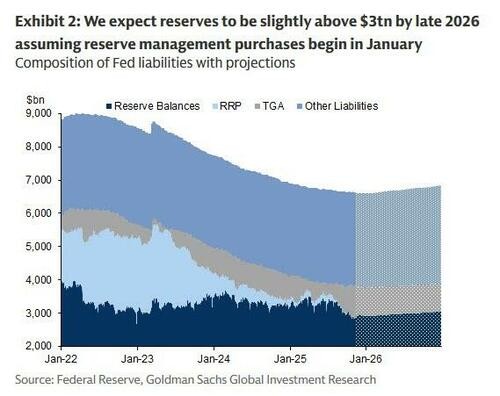
Goldman Sachs interest rate strategist William Marshall predicted in a report that the Federal Reserve's reserve level is expected to stabilize at around $2.9 trillion by the end of 2025.
More importantly, Goldman Sachs' baseline forecast is that the Federal Reserve will launch a "reserve management purchase" program in January 2026, which involves directly purchasing approximately $20 billion in Treasury bonds each month, in addition to reinvesting about $20 billion in MBS principal that matures each month into Treasury bonds. This move aims to absorb the growth of cash and other liabilities in circulation and gradually raise the level of reserves to over $3 trillion.

Supply and Demand Restructuring: New Buyers Enter the Treasury Market, MBS Faces Selling Pressure
The shift in Federal Reserve policy will profoundly reshape the supply and demand dynamics of the bond market.
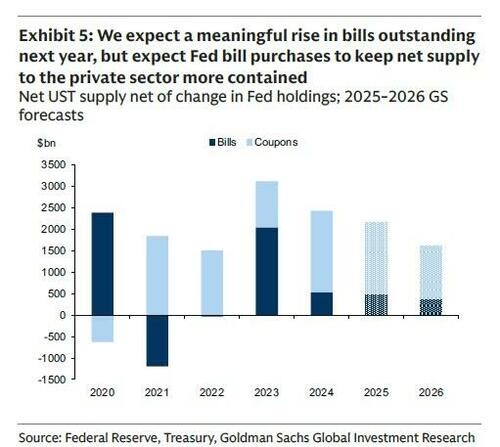
According to Goldman Sachs' forecast model, the U.S. Treasury is expected to net issue $870 billion in Treasury bonds in 2026, of which the Federal Reserve will purchase about $480 billion through reserve management and MBS reinvestment. This means that the net supply that needs to be absorbed by non-Federal Reserve buyers is only $390 billion, significantly reduced compared to 2025, marking the slowest growth in free circulation since 2022.

However, the flip side is that the mortgage-related market will face significant supply pressure.
According to analysis by repo market expert Scott Skyrm, as approximately $2.05 trillion in agency debt and MBS in the Federal Reserve's SOMA account gradually matures and enters the market, a "massive collateral reconfiguration" will occur in the coming years. This will not only create financing pressure in the MBS market but may also pose further challenges to the already pressured real estate market.
Tight Funding Conditions: Repo Market Pressure Remains Unresolved
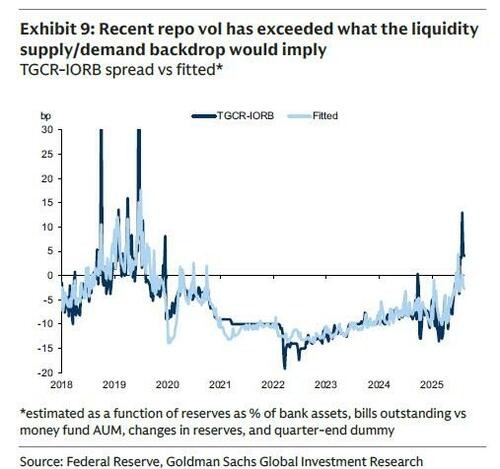
Although QT has ended, the pressure in the secured financing market is sharper than what long-term frameworks based on liquidity levels and supply-demand variables would suggest. Data shows that in recent weeks, the actual transaction levels of the Tri-Party General Collateral Repo Rate (TGCR) and the Secured Overnight Financing Rate (SOFR) have averaged about 6 basis points higher than their fair value.

There are two explanations for this phenomenon in the market. One view suggests that this may reflect a structural rightward shift in reserve demand, meaning the Federal Reserve may need to take more aggressive measures than expected to expand its balance sheet to stabilize short-term funding costs and their volatility.
A more optimistic view is that this is merely a short-term friction in the market as it adapts to a reduced liquidity environment, as articulated by Dallas Fed President Logan, where the temporary rise in funding costs will prompt the market to return to a lower long-term demand curve Currently, the forward rate market seems to lean towards the latter view, expecting that funding costs will ease after the first quarter of next year.
The Fed's "Trump Card" and Market Expectations
Looking ahead, the market generally expects that the Federal Reserve will ultimately ensure that the system has ample liquidity, keeping the repo rate anchored near the Interest on Reserve Balances (IORB), while the Standing Repo Facility (SRF) will continue to serve as a tool to address point-in-time fluctuations such as tax periods.
Goldman Sachs believes that if there is potential instability in the funding market, it is likely to be exposed in the coming months (for example, during the tax season in April next year), which will further strengthen the Fed's rationale for initiating asset purchases.
As for other policy tools, the Fed does not seem inclined to make adjustments in the short term. The likelihood of lowering the IORB is low, as there is still room between the effective federal funds rate (EFFR) and the upper limit of the interest rate corridor.
Similarly, unless there is sustained pressure from funding outflows, the Fed is also unlikely to adjust parameters such as the SRF rate or clearing mechanism. Ultimately, the ongoing tension in the funding market will become a key observation indicator, closely influencing the Fed's decision on when and to what extent to restart the expansion of its balance sheet