Hassett is set to be appointed as chairman, will the Federal Reserve be "extremely dovish" next year? But can inflation hold up?

Wallstreetcn
2025.12.02 13:04
portai
I'm PortAI, I can summarize articles.

Hassett is seen as a strong candidate for the next Federal Reserve Chair, reinforcing the market's dovish bets, but stronger growth and stubborn inflation in 2026 are challenging this narrative. In the short term, signals of a policy shift are driving U.S. stocks and interest rate cut expectations to rise in tandem; however, if inflation rises again next year, the central bank's credibility will be put to the test, and the market may tighten financial conditions in response, leading to a significant increase in volatility

For the market, regardless of who the next Federal Reserve Chair is, the institutional credibility in combating inflation remains an unshakable bottom line. Although the market is currently immersed in expectations of loose monetary policy, the strong growth and stubborn inflation outlook for 2026 pose a severe challenge to this dovish narrative.

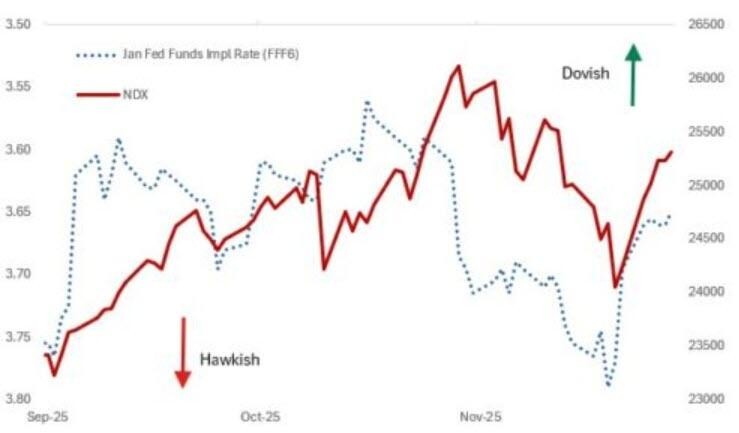
Recent market fluctuations have highlighted investors' high sensitivity to monetary policy. Last month, Federal Reserve Chair Jerome Powell's hawkish remarks after the FOMC meeting caused the Nasdaq 100 index to drop about 8% from its peak. However, New York Fed President John Williams' dovish speech on November 21 quickly reversed market sentiment, not only pushing the stock market to almost fully recover its losses but also raising the market's expectation probability for a rate cut in December to 85%.

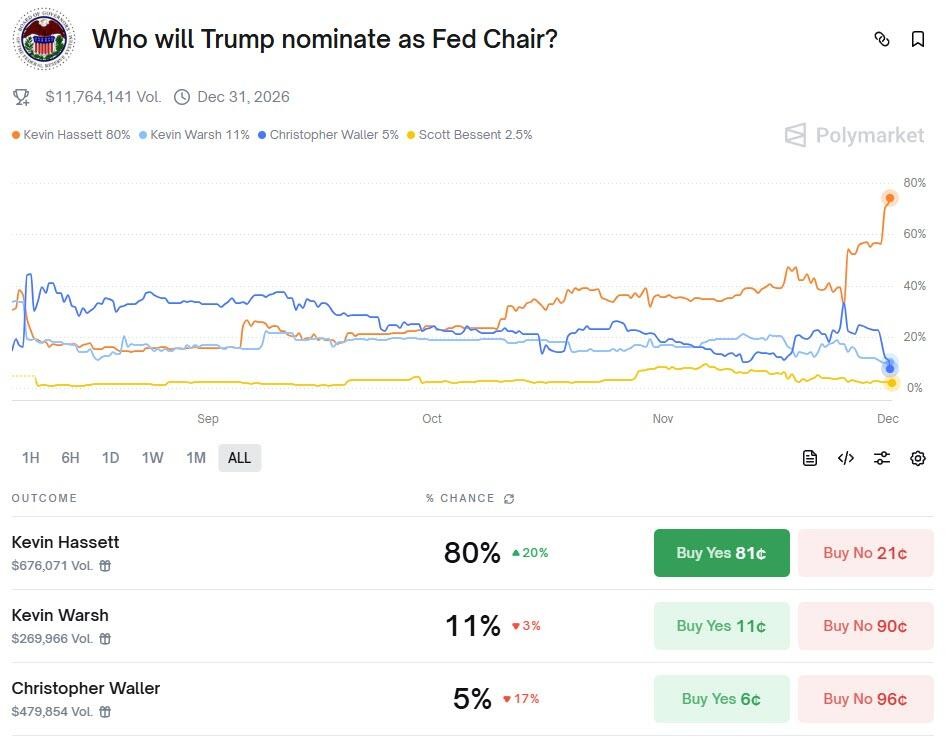
Meanwhile, discussions about the next Federal Reserve Chair have also become a market focus. On Tuesday, according to a report by Wall Street Journal reporter Nick Timiraos, known as the "new Federal Reserve news agency," President Trump seems inclined to choose long-time advisor Kevin Hassett for the position. According to Polymarket data, his nomination probability has risen to 80%. Hassett is widely viewed by the market as an advocate of loose monetary policy, further reinforcing the market's dovish expectations.

Although current concerns about the health of the U.S. labor market provide a reasonable basis for implementing loose measures such as rate cuts in the short term, this short-term consensus masks the long-term challenges ahead. If macroeconomic data in 2026 shows inflationary pressures returning, regardless of who leads the Federal Reserve, their ability to maintain loose policies and institutional credibility will face strict scrutiny from the market. If inflation expectations become unanchored, it could lead to rising long-term interest rates and currency depreciation.

Dovish Expectations Heat Up, Market Calm in the Short Term

Currently, financial markets seem to be preparing for a dovish new Federal Reserve Chair. Investors generally expect that after Powell's term ends, the Federal Reserve will implement more rate cuts, with the market pricing the terminal rate at around 3%, reflecting a fairly dovish policy outcome.

Under this expectation, market performance has been stable: the dollar exchange rate has stabilized, the yield curve has fluctuated within a range, the yield on 30-year U.S. Treasury bonds has remained below 5%, and the 10-year breakeven inflation rate is also at the lower end of the 2.25% range.

According to Citigroup analyst Nohshad Shah, the current discussions around rate cuts are not unfounded; genuine concerns about a weakening labor market provide credible reasons for a policy shift. This means that regardless of the personal policy inclinations or credibility of the next Chair, the policy direction in the short term—favoring looseness—seems certain. **

Dual Challenges of Growth and Inflation, Macroeconomic Outlook for 2026 Not Optimistic

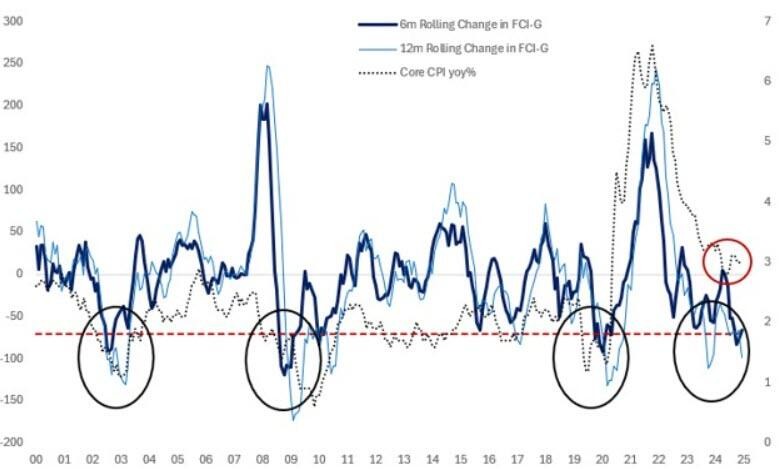
However, looking ahead to 2026, the macroeconomic outlook may force monetary policymakers to reassess their dovish stance. Analysis shows that active fiscal stimulus and persistently loose financial conditions could provide significant additional momentum for economic growth in 2026.

According to the Federal Reserve's Financial Conditions Index (FCI-G) and estimates of fiscal impulses, the two major factors are expected to contribute about 100 basis points to economic growth in 2026. Considering that the long-term trend growth rate for the U.S. after tightening immigration policies is about 1.75%, this means that the real GDP growth rate in 2026 could reach around 2.75%. This forecast is well above the median growth expectation of 2% from 42 professional forecasters at the National Association for Business Economics (NABE).

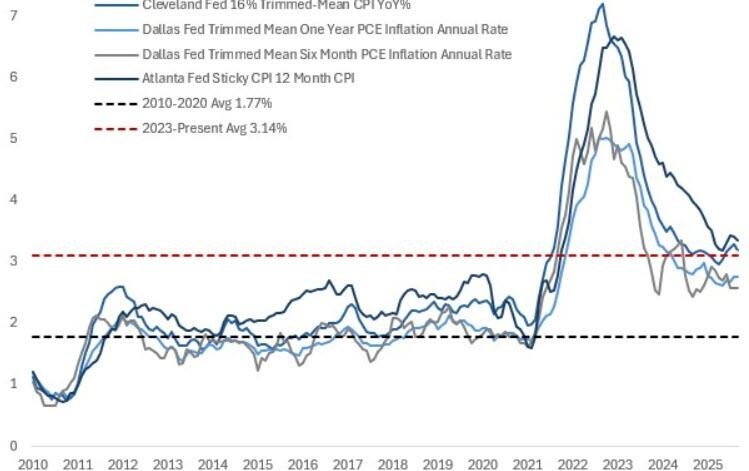
While the growth outlook is strong, inflation remains a tricky issue. Currently, the core inflation rate is still about 1 percentage point higher than the Federal Reserve's target of 2%, and the downward momentum has stalled. With a positive output gap of 100 basis points in the economy, analysts find it hard to see deflationary pressures emerging next year. Nohshad Shah expects inflation to stagnate at 3.0% or even higher. If this scenario materializes, the nominal GDP growth rate in the U.S. will reach 5.75%, creating a typical "re-inflation" environment.

Central Bank Credibility Under Test, Market May Act as "Policy Brake"

In a re-inflation environment, any central bank that maintains a dovish stance will face a significant test of credibility. If the Federal Reserve continues to cut interest rates below 3% in the face of rising growth and inflation, the market may seek its own balance, acting as a "policy brake."

Historical experience shows that when central bank credibility is damaged, more aggressive "overcorrection" is needed to bring inflation back to target, which often triggers a more severe economic recession than expected, ultimately having a long-term negative impact on the stock market. Therefore, if the market perceives the Federal Reserve's policies as becoming unreliable, it may actively tighten financial conditions by selling bonds and stocks, for example, pushing up the yield on 10-year Treasury bonds and suppressing the stock market.

While in the short term the market may interpret "pro-cyclical" easing as favorable for corporate profits, this only means that interest rates will ultimately need to rise more significantly to offset this effect. Once the yield on 10-year U.S. Treasuries approaches the 4.5%-5% level, it will quickly become a resistance for the stock market.

Asset Price Outlook Balanced, But Volatility Likely to Increase

Overall, the outlook for asset prices is balanced. Positive growth prospects and loose monetary and fiscal policies provide support for the stock market. However, on the other hand, uncertainty surrounding the monetary policy reaction function and the overvaluation of some companies in the artificial intelligence sector also mean that recent market volatility is likely to persist Especially in the AI field, the phase of "a rising tide lifts all boats" has ended, and investors are becoming more discerning, beginning to scrutinize the scale of debt issuance by certain companies. At the same time, competition within the industry is becoming increasingly fierce, such as the competition between Google and NVIDIA for chip dominance, which is causing the valuation gap in the market to narrow sharply, requiring investors to identify winners and losers.

Looking ahead, market risks are accumulating, primarily including: synchronized growth and inflation rising in a re-inflation environment, a significant weakening of the labor market leading to recession, and a substantial reversal of AI optimism. This means the market needs to price for a broader range of outcomes, with potential volatility expected to increase