


Bond giants warn: "Sue Powell" is Trump's "own goal," it will only raise interest rates

DWS Americas believes that the U.S. government does not want to push up long-term yields, but the questioning of the Federal Reserve's independence may lead to this result. Brown Brothers Harriman points out that threats to the Federal Reserve's anti-inflation credibility could accelerate the decline of the dollar's role as the primary reserve currency. On Monday, U.S. Treasury yields rose, but remained well below the early panic highs, with the 10-year yield slightly up by 1 basis point
Multiple large bond investment institutions have warned that the Trump administration's attacks on the independence of the Federal Reserve are at odds with its goal of lowering interest rates.
Wall Street Insight mentioned that last Sunday, the U.S. Department of Justice threatened to sue Federal Reserve Chairman Jerome Powell. Gregory Peters, co-chief investment officer of fixed income at PGIM, which manages approximately $900 billion in assets, stated:
The market will feel very uneasy about the Federal Reserve, as it could lead to instability.
He compared the government's pressure to an own goal in soccer, where a player accidentally kicks the ball into their own net. He said:
This action will undoubtedly trigger a risk-averse sentiment. It shakes institutional norms again and will have medium- to long-term effects.
Although U.S. Treasury yields continued to rise on Monday, they remained well below the panic highs seen earlier in the day, with the 10-year yield slightly up by 1 basis point.
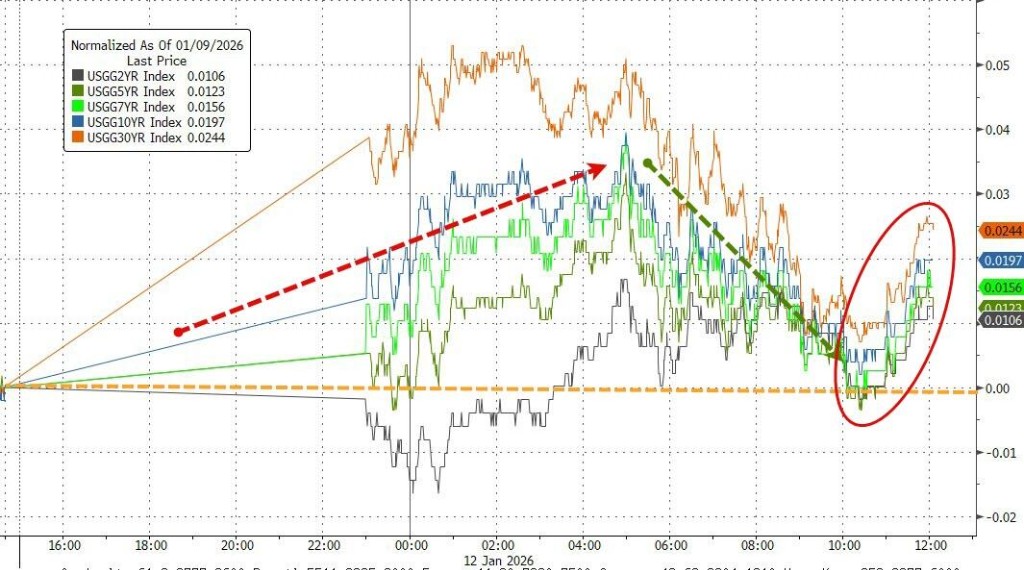 (Intraday movement of U.S. major term bond yields)
However, investment institutions still warn that if this uncertainty persists, it will push up the risk premium for long-term interest rates and may even weaken the dollar's status as the primary reserve currency.
Market Remains Resilient Temporarily, But Risks Persist
The market's response on Monday was relatively restrained, indicating that investors still have confidence in the legal and political processes to protect the independence of the Federal Reserve.
The 10-year U.S. Treasury auction received robust demand, with the winning yield slightly lower than the market level at the time of bidding. Bloomberg strategist Brendan Fagan pointed out:
Despite the news regarding the Federal Reserve's credibility issues, the bond market has maintained its recent range, indicating that buyers may be willing to step in at appropriate price levels.
The futures market shows that traders still expect only two rate cuts this year, each by 25 basis points, consistent with expectations over the weekend. This suggests that government pressure is unlikely to affect the Federal Reserve's recent interest rate decisions in the short term.
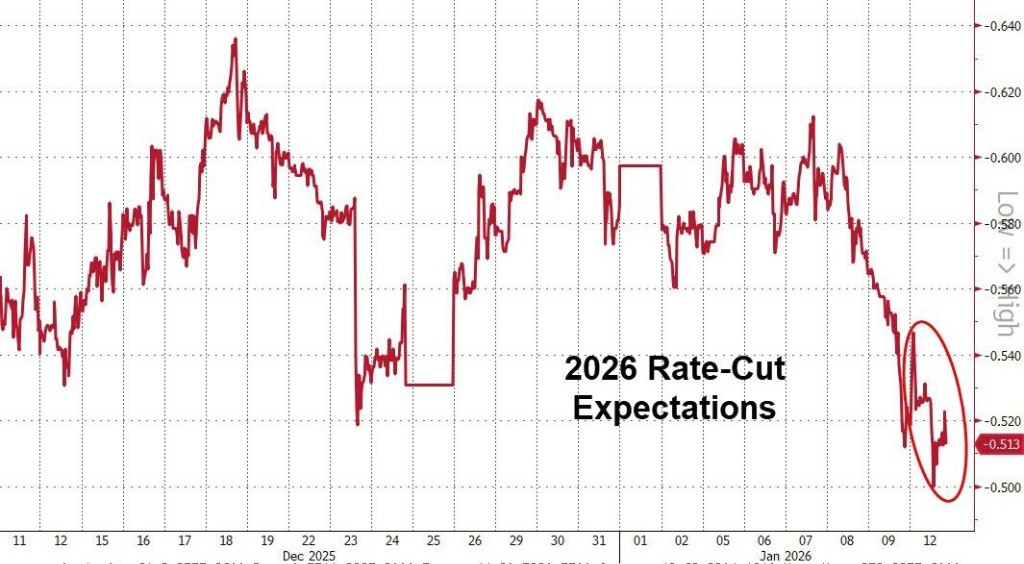
Pimco Chief Investment Officer Daniel Ivascyn stated that the market's response on Monday reflects confidence that legal and political processes are sufficient to protect the Federal Reserve from government pressure. However, he emphasized that risks remain clear:
The market likes certainty, predictability, and the key aspects of the Federal Reserve's mission, especially the independence of interest rate policy. Any actions that threaten the independence of monetary policy decisions could lead to unintended consequences. Simply put, you may ultimately face higher interest rates.
Threats to Federal Reserve Independence Create Market Risks
Large bond investment institutions unanimously agree that the Trump administration's impact on the independence of the Federal Reserve is creating instability in the market. Peters stated:
The market will be very nervous about the Federal Reserve as a source of instability.
He pointed out that this pressure will keep U.S. Treasury yields high, thereby raising the costs of mortgages, corporate loans, and other forms of credit.
George Catrambone, head of fixed income at DWS Americas, stated that the U.S. government's actions contradict its goal of lowering long-term yields. He said:
The U.S. government does not want to push up long-term yields, but the questioning of the Federal Reserve's independence will precisely lead to that outcome.
The market still bets that Trump will ultimately back down, just like traders bought the dip in the previous "TACO trade" during tariff threats.
SEB economist Elisabet Kopelman expects that the public conflict between the Federal Reserve and the White House "will not be welcomed by the market," and will "increase the risk premium for U.S. inflation and credit risk, potentially putting upward pressure on long-term yields."
Elias Haddad, head of global market strategy at Brown Brothers Harriman, stated:
These actions threaten the Federal Reserve's anti-inflation credibility and may accelerate the decline of the dollar's role as the primary reserve currency.
Analysts believe that if investors are concerned about inflation eroding investment value, even if the Federal Reserve lowers short-term rates, they will demand higher long-term yields as compensation. This may also prompt overseas investors, who are key buyers of U.S. Treasuries, to withdraw from the U.S. market.
