


Trump unilaterally declares "overwhelming victory" in Iran conflict, announcing "extremely fierce strikes" in the next two to three weeks
US President Donald Trump declared an "overwhelming victory" in the conflict with Iran, stating the Strait of Hormuz would naturally open once the conflict ended. He also announced extremely fierce strikes against Iran would commence in the next two to three weeks
At 9:00 AM Beijing time on April 2nd (9:00 PM US Eastern Time on Wednesday), US President Donald Trump delivered a televised address to the nation regarding the conflict with Iran. This marks Trump's first prime-time national address since the joint US-Israeli military operation against Iran began over a month ago.
According to Xinhua News Agency, Trump unilaterally declared in his speech an "overwhelming victory" in the conflict with Iran. The core strategic objectives of the US in the conflict with Iran are "approaching completion."
All military objectives in the conflict with Iran are expected to be completed in a "very short period." "In the next two to three weeks, we will launch extremely fierce strikes against them... Simultaneously, negotiations are also underway."
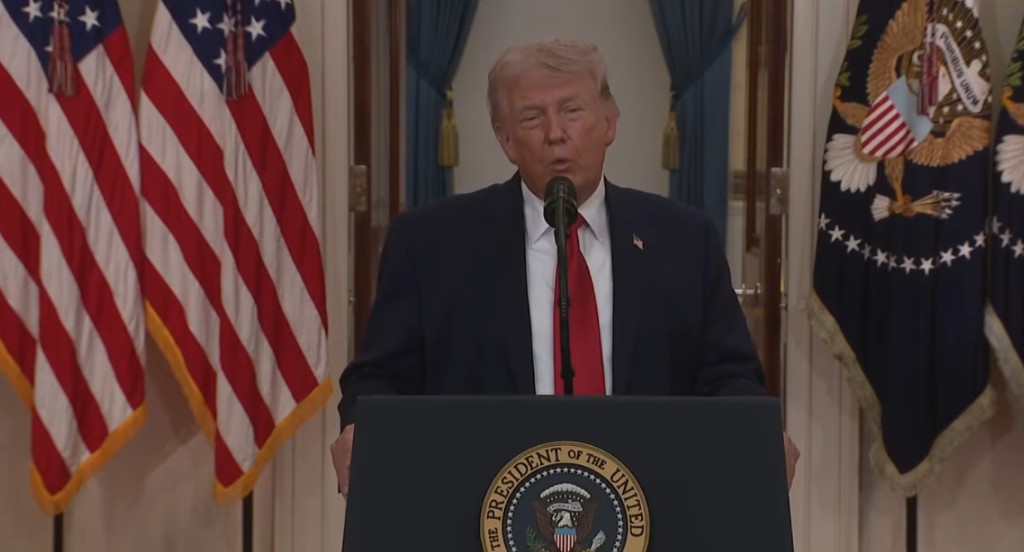
Trump stated that the US would never allow Iran to possess nuclear weapons. "The Iranian navy has now been completely destroyed, and its air force and missile program have also been severely hit."
Regarding Hormuz, Trump declared: the US does not need oil from the Middle East, "We hardly import any oil transported through the Strait of Hormuz." Once the conflict ends, the strait will naturally open.
He also mentioned having good relations with Venezuela on oil and gas issues.
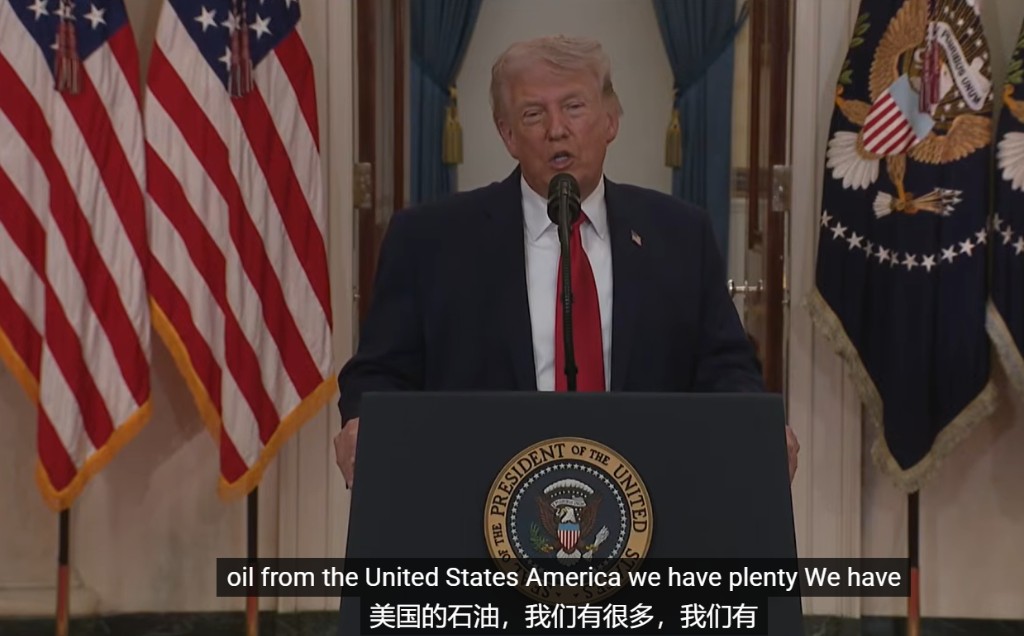
Trump's speech concluded in less than half an hour. As Trump indicated that the conflict would continue for the next two to three weeks and the Strait of Hormuz remained effectively blocked, the crude oil market erased earlier losses during the speech and surged rapidly.
Brent crude oil briefly broke above $105 per barrel during intraday trading, with a daily increase of 4%.
Concurrently, global stock markets came under widespread pressure. As of press time, S&P 500 futures fell by 0.6%; in the Asia-Pacific market, Japan's Nikkei 225 index expanded its decline to 1.1%, South Korea's Seoul Composite Index increased its intraday decline to 2.1%, and the MSCI Asia Index fell by 1%.
Bloomberg analyst Jake Lloyd-Smith pointed out that the immediate judgment of the commodity market on Trump's message was: "Detrimental to economic growth, detrimental to risk assets." Affected by this, in addition to the surge in crude oil, spot gold fell by more than 1%, and LME copper also weakened.

"If no deal, power plants will be struck," urging countries again to "grab oil" from the Strait of Hormuz
In his speech, Trump issued new strike warnings. He stated that Iran's new leadership is less aggressive and more rational. However, Trump emphasized, "If no deal is reached, we will launch extremely severe strikes against every one of their power plants."
"We will hit them extremely hard in the next two to three weeks," Trump added, "We haven't attacked their oil yet, although that is the easiest target."
In response to high gasoline prices in the US, Trump attempted to reassure the public, calling it a "short-term phenomenon" caused by Iranian attacks. He directly addressed the market: "Gasoline prices will fall rapidly. Stock prices will also rebound quickly."
However, on the issue of restoring shipping in the Strait of Hormuz, which is of greatest concern to the market, Trump did not provide a clear plan for US involvement.
According to Xinhua News Agency, Trump reiterated in his speech that the US hardly needs to import oil through the Strait of Hormuz, and countries that need to obtain oil through the Strait of Hormuz must "take responsibility for maintaining this passage themselves." "We will provide assistance, but they should take the lead."
Trump urged these countries to either "buy oil from the US" or to summon the courage and directly "grab oil" from the Strait of Hormuz. He said that when the conflict with Iran ends, the strait "will naturally open."
Market Interpretation: Missing Ceasefire Details, Nothing New
Regarding this highly anticipated speech, multiple analysts pointed out that due to the lack of substantive details to resolve the core supply chain crisis, market concerns are intensifying.
Bloomberg senior editor Derek Wallbank commented: "If you've been listening to the President over the past week, there wasn't much new tonight."
He pointed out that Trump did not mention at all the fact that Iran currently effectively controls traffic in the Strait of Hormuz. This situation, giving Iran "de facto veto power," is difficult for many Gulf countries to accept. Furthermore, according to US officials, a third US carrier strike group departed Virginia for the Middle East on Tuesday, indicating that military buildup is continuing.
Columnist Clara Ferreira Marques stated that Trump did not provide new details or a lasting solution for the Strait of Hormuz, but instead urged other countries to find "late courage" to solve the problem, a statement that "will unsettle the oil market."
From a longer-term investment perspective, the market is pricing in "energy disruptions" for the long term. Analyst Abhishek Vishnoi pointed out that Trump's remarks asking other countries to manage the Strait of Hormuz themselves increase the probability of a persistent risk premium in the crude oil market.
"Even if a ceasefire is reached and oil prices fall, the market is beginning to price in the expectation that energy prices will remain high for a longer period," Vishnoi said. "Continued shipping disruptions are seen as a potential persistent drag on global fundamentals."
Vishnoi further pointed out that the crude oil futures curve is signaling that inflation will remain high in the coming months. Based on the Brent crude oil futures curve, the market expects oil prices to remain around $85 per barrel for the next year, significantly higher than the pre-US-Israeli attack on Iran expectation of about $70. This would greatly increase the risk of declining corporate profit margins and rising interest rates, and make the outlook for non-US assets (especially emerging markets and oil-importing countries) extremely cautious.
